Differences Between Pineberry and White Strawberry, Price Per Jin, Origin and Growing Methods
Many people love strawberries for their sweet, delicious taste, but have you heard of the pineberry? It is a variety of strawberry, also called white berry or piaozi. Its appearance closely resembles a strawberry, with white flesh covered in red dots on the outside, and it shares the same genetic makeup as the strawberry. However, its flavor is surprisingly similar to pineapple, which is why it is called the pineberry. What is the difference between the pineberry and the white strawberry? What was the price per jin in 2018? Where is it produced? How is it grown?
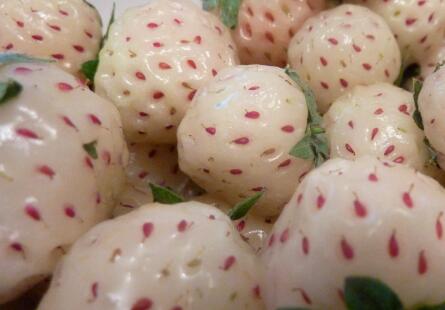
Is there a difference between the pineberry and the white strawberry?
In fact, the pineberry is also called the white strawberry, and there is no real difference between the two. However, China's wild “white strawberry” and the pineberry are not the same variety; its fruit is red when unripe and turns white when mature, with a strong fragrance and a mild sweetness, and it is a parent of the Japanese white strawberry “Peach Aroma” (Tokimeki).
It is worth noting that there are certain differences from strawberries: it contains oxalic acid substances, which can cause poor development of capillaries in a pregnant woman's fetus. Although it has some effect on brain development, pregnant women are still better off eating it sparingly.
How much does the pineberry cost per jin?
The picking price of the pineberry is about 80 to 300 yuan per jin. The pineberry is currently in its promotion phase; in the UK, a 125-gram box of pineberries sells for 3.99 pounds (about 44.5 yuan).
Pineberry Origin
It was formed by crossing a strawberry that grows on the island of Chiloé (Chile) with a strawberry that grows in the state of Virginia in North America. It is the result of crossbreeding, not genetic engineering as people might think. It tastes both like pineapple and like strawberry.
The “pineberry” is a cultivated strawberry variety that, starting in April 2009, was widely promoted in Germany as Ananaserdbeere or pineapple strawberry. It is a cross between the strawberry family of Chiloé Island in South America (Chile) and the strawberry family of Virginia in North America——the pineberry contains a substance called “bromelain” that can break down protein.
In many places in China there are many such wild “white strawberries,” such as in Qingchuan County, Guangyuan City.
How is the pineberry grown?
In China, planting from March to September is better. Planting from October to February of the following year means low temperatures, little rain and dry soil, which is unfavorable for the plants to take root, and they will not resume growth until after the warmth of spring.
Potted cultivation of the pineberry is relatively common and can be placed anywhere according to specific conditions. It is also easier to artificially create conditions suitable for growth and development. However, because the container is small and the amount of soil is limited, it is easily affected by the external environment and hard to control.
The pineberry is very suitable for courtyard cultivation. It can be grown in front of and behind the house, indoors, on balconies and other places. It provides fresh fruit to eat and also beautifies the environment. Choose a suitable container. The containers used for growing pineberries are varied: rectangular, square, round, hexagonal, and so on. You can choose according to your own preference. If you are planting many plants, choose a large pot; if planting few, use a small pot. Generally, ceramic pots are used for cultivation, as they have good aeration, drain easily and come in many styles, making them very suitable for strawberry cultivation.
Plant appropriately densely. This creates good environmental conditions for plant growth and development. The pineapple likes a warm, humid, soft and fertile growing environment, and avoids scorching sun, dry wind and low-temperature frost. Under dense planting, plant height is notably greater, leaf spread is smaller, and leaves grow more upright, forming a dense green microclimate environment.
It needs to be cultivated in a glass greenhouse. When the fruit turns from green to white and the small seeds on its surface turn deep red, this means it has matured and is ready to eat.