Fertilizing Methods for Dendrobium officinale, Yellow Leaf Treatment, and Seed and Seedling Prices
Dendrobium officinale, also known as black-node grass, Yunnan ironbark, and ironbark dou, blooms from March to June. It grows on semi-shaded, moist rocks in mountainous areas at altitudes of up to 1600 m. So what fertilizer is best for it? What should you do if the leaves turn yellow? How much do the seeds and seedlings cost? According to a nursery base in Jiangxi, the price of Dendrobium officinale seeds is around 50 yuan/jin, the most suitable temperature is 15-32°C, and the sowing rate per mu is 6-7 jin.
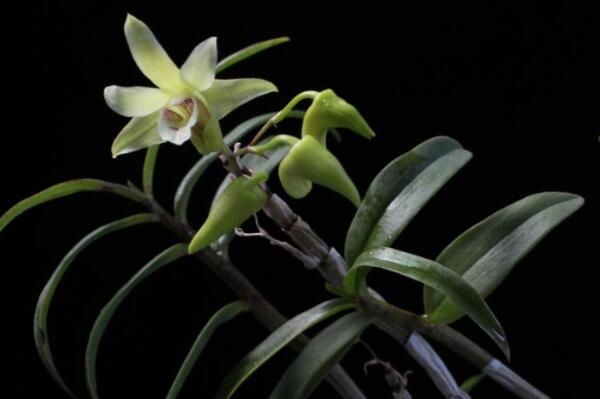
How much do Dendrobium officinale seedlings cost?
The price of Dendrobium officinale seedlings is about 3-5 yuan each, but prices vary greatly depending on seedling quality, place of origin, and the market. When purchasing Dendrobium officinale seedlings, you should choose seedlings produced by growers with reliable seed sources, pure varieties, and strong technical standards. You must not choose seedlings without a specific name or with an unknown seed source, and you should not focus only on whether the seedlings are cheap, because in the production process, having a pure variety is what matters most.
What fertilizer is best for Dendrobium officinale?
1. One week after planting bottle seedlings of Dendrobium, you can apply some fertilizer specifically for Dendrobium. Apply once every 6 months. This fertilizer is a solid controlled-release fertilizer that can supply nutrients to young seedlings stably over the long term.
2. For later fertilization management, foliar fertilizer is generally sufficient, applied twice a month. The amount of foliar fertilizer used is very small; generally 1 gram can be mixed with 3 jin of water. Spraying foliar fertilizer can promote the elongation and growth of Dendrobium officinale stems and leaves, lengthen and thicken the stem nodes and diameter, and the average fresh weight per plant is significantly higher than that of the control.
3. Dendrobium officinale is generally fertilized in two seasons per year. One season is March to April, which can promote rooting and sprouting. The second season is in November, when wintering fertilizer is applied once. Fertilizer can be fermented sheep manure or rapeseed cake (fertilizer specifically for Dendrobium is also acceptable). Foliar fertilizer should be sprayed 1-2 times per month, mixed according to the ratio. Do not use too much fertilizer, to prevent fertilizer damage.
4. For fertilizing Dendrobium officinale, it is forbidden to use chemical fertilizers or biological fertilizers that have not been registered by national or provincial agricultural departments, and it is forbidden to use undecomposed organic fertilizers. It is strictly forbidden to apply urban waste, industrial waste, hospital waste, and feces. Dendrobium officinale has very strict requirements for the substrate and fertilizer. Before planting, the substrate must be disinfected before use, and the strict requirements for fertilizer are one of the important conditions for ensuring the yield, quality, and returns of Dendrobium officinale. Applying organic fertilizer ensures that Dendrobium officinale has no pesticide residues and no heavy metal residues, laying a solid foundation for bringing safe Dendrobium to the market.
What should you do if the leaves of Dendrobium officinale turn yellow?
1. Unsuitable substrate
The first choice of substrate material is bark, followed by sawdust, both of which need to be crushed, sterilized, and fermented. Usually, several materials and substrates of different coarseness are mixed.
2. Substrate too wet
For potted Dendrobium officinale, water once every one or two weeks. After watering thoroughly, mist normally at other times, and control factors such as air circulation on the balcony. If the stems and rhizomes of Dendrobium officinale have not died, they can sprout again after the weather warms in spring, but watering should be controlled to prevent root rot.
3. Water shortage and drought
Slightly acidic to neutral water is suitable for watering, and water with too much calcium, magnesium, and other minerals should be avoided. Sufficient water is required in spring, summer, and early autumn. After mid-autumn, it gradually enters dormancy, and the amount of watering should be reduced accordingly until watering is stopped completely. You can begin reducing watering before the leaves turn yellow, reduce it further as the leaves yellow and fall, and stop watering when the leaves have all fallen. In North China, after stopping watering, relatively high indoor air humidity must be maintained to prevent the pseudobulbs from shrinking. If the indoor air is too dry, water the pot once every 1 to 2 weeks.
4. Too many miscellaneous bacteria
Use fermented bark or wood chips, coconut shells, bagasse, decomposed fallen leaves, or moss as the cultivation substrate. It must be fully dried in the sun and treated with phoxim for insect control to kill residual pests and eggs in the soil.
5. Light too strong
With sufficient light, in spring, summer, and autumn, control the shading amount between 30% and 50%. Sufficient light is needed to form a large number of flower buds.
6. Temperature too high
Dendrobium does not like excessively high temperatures in summer. In hot summers, it often stops growing, so it should be placed in a well-ventilated location. After flower buds emerge, maintain a greenhouse temperature of 20°C to 25°C during the day and around 15°C at night. It must not be too high or too low, otherwise the flower buds are prone to dropping.
7. Lack of potassium fertilizer
Spray potassium fertilizer.