When to Sow Cauliflower: Best Planting, Harvesting Times and Growing Methods
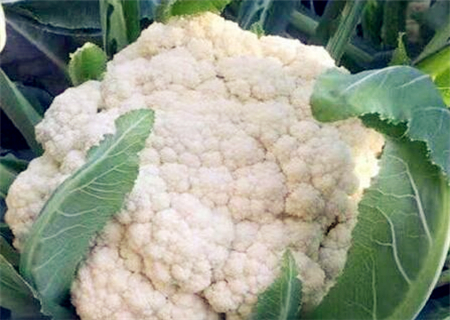
Cauliflower, scientifically known as Brassica oleracea var. botrytis, also called “fan gai lan”, “cauliflower” or “broccoli cauliflower”, belongs to the cruciferous plant cabbage (Brassica oleracea), and is eaten for its giant flower buds, one of the precious vegetables. So when is cauliflower generally sown? What is the best time to plant and harvest it? The details are organized as follows:
Planting time:
Spring cauliflower should be raised as seedlings in a greenhouse or cold frame in late December, and transplanted under protection in early to mid-March; for open-field cultivation, transplant in late March to early April, not too early or too late. For autumn cauliflower, the sowing period should be even more strictly observed, generally sowing in late June to early July, transplanting in late July to early August, and finishing harvest by late September to late October.
In spring, temperatures are low and seedlings grow slowly. The seedling age is generally 45-60 days, and they can be transplanted once they have 4-5 true leaves. When using seedling raising in a shed and transplanting in the open field, the temperature and humidity inside the seedling shed should be adjusted according to the suitable period for open-field transplanting, to ensure the seedlings can be transplanted on schedule.
There is a slight difference in sowing time between the north and south; autumn sowing takes place between June and July.
For cauliflower planting and transplanting, choose sandy loam soil with deep, fertile soil and good drainage. After plowing the soil, apply sufficient base fertilizer: 1000 kg of organic fertilizer per mu, 50 kg of compound fertilizer, 25 kg of superphosphate or calcium magnesium phosphate, 10 kg of urea, and 1 kg of boric acid. Level the land and make beds at 1.5 m including the ditch, with deep ditches and high beds. After land preparation, spray the herbicide Henaissi or butachlor to seal the soil and prevent weed damage. Conduct hardening of seedlings 7-10 days before transplanting; ventilate at noon on sunny days to lower the temperature, so the seedlings gradually adapt to the outdoor low-temperature environment and the transplant survival rate is improved. The daily hardening time should be gradually extended. Generally, the plant spacing is 35 cm-40 cm, and 2500-3000 plants are planted per mu depending on the variety. For cultivation in greenhouses and other facilities, the density should be slightly thinner, planting 2000-2500 plants per mu. After transplanting, water promptly to settle the roots and promote survival.
For cauliflower growing methods, field management: in the later growth stage, after temperatures rise in April, facilities cultivation should promptly carry out ventilation and cooling, and harvest the flower heads promptly once mature. In fertilizer and water management, apply sufficient base fertilizer to promote early seedling recovery; after recovery, slightly control fertilizer and water to improve stress resistance. After the weather warms in late February, topdress promptly, focusing on promoting growth and continuing to promote throughout, especially during the flower head enlargement period when fertilizer and water should be emphasized. Combined with intertillage and weeding, generally use 1 kg of compound fertilizer plus 8 kg of urea per mu to promote flower head enlargement. To prevent hollow flower stems, 15-20 days before budding, spray 16% liquid boron fertilizer at 1000 times dilution 2-3 times for foliar topdressing. In the early growth stage of broccoli, temperatures are low, so irrigation is generally unnecessary; to avoid a sharp drop in soil temperature caused by watering, watering should be done at noon and the amount should not be too much. After temperatures rise, maintain a certain soil humidity, especially during the head-forming period, do not let the soil dry out, to avoid inhibiting flower head formation and causing reduced yield. For open-field cultivation, drain promptly after heavy rain, do not allow waterlogging, and spray fungicides promptly to prevent the occurrence and spread of diseases.
Planting methods:
1. Choose good varieties.
In spring, use mid- and late-maturing varieties; in autumn, use early- and mid-maturing varieties.
2. Sow and transplant at the right time.
3. Cultivate strong seedlings of the right age. Use nutrient pots for seedling raising. The germination and seedling stages of autumn cauliflower occur in the hot, rainy season, so mulching and shading measures should be taken. Generally, autumn cauliflower seedlings are 25—30 days old and are transplanted at 5—6 leaves; spring cauliflower seedlings are kept at 70—80 days and transplanted at 5—7 leaves.
4. Ensure water and fertilizer supply. After cauliflower transplanting, along with watering to help seedling recovery, topdress 10 kg of urea per mu, then begin seedling restraint; when the flower head diameter is about 3 cm, end seedling restraint, and with watering apply 25 kg of urea per mu. After that, water every 4—5 days, taking care to keep the bed surface moist.
5. Pay attention to pest control. Spray with 2.5% deltamethrin at 5000 times dilution and 20% fenvalerate at 2000 times dilution to control aphids and cabbage caterpillars; take care not to use highly toxic pesticides.
6. Cover the flower heads in time and harvest at the right time. After the small flower head forms, fold the leaves inward to carefully and promptly cover the flower head. When the flower head has fully grown, is white and clean, dense in texture, neat on the surface, and the edges have not yet opened, it is the harvest period.