Forsythia Latest Price, 2018 Market Prospects and Planting Profit Timeline
Forsythia, also known as Huanghuagan, Huangshoudan and other names, is a deciduous shrub of the genus Forsythia in the family Oleaceae, produced in Hebei, Shanxi, Shaanxi, Shandong, Anhui, Henan, Hubei, Sichuan and other places. So how much is forsythia worth per jin now? What are its 2018 market prospects? How many years of planting before it yields a profit? Here is a summary for you:
How Much Is Forsythia per Jin
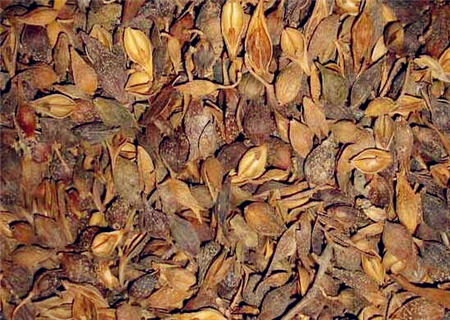
The price of forsythia is about 20-25 yuan per jin, but prices vary considerably depending on quality, variety, place of origin and market. Medicinal forsythia is divided into two types: green forsythia and old forsythia. Green forsythia is harvested in early September when the fruit skin is still green and not yet ripe, briefly boiled in boiling water or steamed in a steamer for about 0.5 hours, then taken out and sun-dried. Old forsythia is harvested in early October when the fruit is fully ripe and yellow and the shell has split open, then sun-dried and screened to remove seeds and impurities.
How Many Years of Forsythia Planting Before It Yields a Profit
Forsythia grown from seed generally takes 3-4 years to bloom and bear fruit. Cuttings take root and survive the same year, and generally bloom and bear fruit in the same year they are transplanted or the following year.
Propagation and Cultivation:
It can be propagated by cuttings, sowing and division. Cuttings are taken from February to March. For sowing, seeds are collected in October in autumn, stratified in damp sand, and sown in rows in February to March of the following year. Seedlings are transplanted during the leaf-drop period, chosen on sunny, well-drained, fertile soil; after flowering each year, cut out dead branches, weak branches and leaves, and overly dense or old branches, and pay attention to fertilizing around the roots. Not fertilizing is not a big problem either; many flowers only grow leaves and do not bloom, but this plant is very tenacious and can grow in almost any quality of soil.
Cultivation Techniques:
1. Site selection and land preparation: Choose a plot that is sunny, with fertile soil, loose texture and good drainage, sandy loam soil. Plough in autumn to a depth of 20-25 cm, and apply base fertilizer while preparing the land, with 2000-2500 kg of barnyard manure per mu, then rake fine and level. For direct sowing, use a plant-to-row spacing of 150 cm × 200 cm, with holes 30-40 cm deep and 30-40 cm in diameter; for seedling beds, make flat beds 1 m wide, with length depending on the terrain.
2. Propagation methods are mainly seed propagation and cutting propagation, and layering and division can also be used.
(1) Seed propagation by direct sowing: in the south in early to mid-March, in the north in early April, dig a small hole about 3 cm deep in the prepared planting holes, select mature, plump, disease-free seeds, sow 5-10 seeds per hole, cover with soil and press lightly so that the seeds and soil are closely combined. It generally blooms and bears fruit after 3-4 years.
Seedling raising and transplanting: On a level, finely raked seedbed, open furrows 1 cm deep at a row spacing of 20 cm, mix the seeds with fine sand and scatter them evenly into the furrows, cover with soil and press lightly, using 2 kg of seeds per mu. For spring sowing, seedlings emerge in about half a month; when the seedlings are 5 cm tall, thin them to a set spacing; when they are 10 cm tall, loosen the soil and hoe weeds, and apply 10 kg of urea per mu as a top dressing, applied with irrigation water, to promote seedling growth. Transplant in autumn of the same year or before bud break in spring of the following year. Use a plant-to-row spacing of 200 cm × 150 cm, hole diameter 30 cm, apply 5 kg of miscellaneous manure, mix evenly with soil, plant 2-3 seedlings, fill soil to half the hole, lift the seedlings slightly so the roots spread out, then cover with soil to fill the hole and firm it. If the soil is dry, water after transplanting, and after the water seeps down, cultivate soil to preserve moisture.
(2) Cutting propagation: On cloudy and rainy days in summer, cut the middle and upper parts of 1-2 year old tender branches into 30 cm long cuttings, and on the seedbed at a plant-to-row spacing of 5 cm × 30 cm, open furrows 20 cm deep, place them diagonally in the furrows, then cover with soil and press firm, keep the bed moist, and they will take root and survive the same year. Transplant before bud break in spring of the following year, and they generally bloom and bear fruit in the same year of transplanting or the following year.
3. Field management: During the seedling stage of seed propagation, when the seedlings are 20 cm tall, weed, loosen the soil and thin the seedlings. When thinning, leave 2 plants per hole and water in good time. When the seedlings are 30-40 cm tall, apply diluted human and animal manure urine once to promote growth. When the main trunk is 70-80 cm tall, cut off the top shoot to encourage more side branches and cultivate main branches. Afterward, select and keep 3-4 strong branches on the main branches to cultivate into secondary main branches, and let out side branches. Through pruning and shaping, form a natural open-center tree shape with a low trunk and low crown, hollow inside and rounded outside, ventilated and light-transmitting, with sparse small branches and early fruiting. At any time cut out thin and weak branches, excessive vegetative branches and diseased and pest-infested branches. During the fruiting period, apply farmyard manure and phosphorus and potassium fertilizers to promote early fruit set and ripening.
Medicinal Effects of Forsythia
1. Clearing heat and detoxifying: For wind-heat colds, it is often used together with honeysuckle; for mouth and tongue sores, it is often used together with coptis and gypsum; for sore and swollen throat, it is often used together with isatis root and burdock seed.
2. Reducing swelling and dispersing nodules: For carbuncles, swellings and boils, it is often used together with honeysuckle, dandelion, prepared pangolin scales, Chinese honeylocust spine and the like.
3. Clearing heat and promoting urination: For heat-type urinary retention or painful urination, it is often used together with phellodendron, adzuki bean, talc and licorice.