Do strawberries bear fruit all year round? Investment and profit per mu for greenhouse cultivation
Strawberries are expensive, as everyone knows, and strawberries are a distinctive sight on the fruit market. If winter strawberry cultivation and sales are handled well, growers can make a handsome profit. So, do strawberries bear fruit all year round? How much does it cost to invest per mu for greenhouse cultivation? How much money can be made?
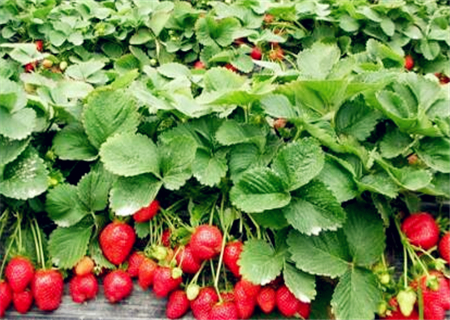
Do strawberries bear fruit all year round?
The fruiting period of strawberries is very long, lasting 6-8 months. In the subtropical regions of the south, planting is generally done in late September and early October, the fruit ripens 50 days later, and harvesting continues until the arrival of the heavy rains in March of the following year, when it ends, with 2 to 3 batches of fruit harvestable. In the central regions using greenhouses, planting is generally done from late August to early September, the fruit ripens after about 90 days, and harvesting continues until May of the following year, with 3 to 4 batches of fruit harvestable. In the northern regions, planting is generally done from mid-August to late August, the fruit ripens after about 100 days, and harvesting continues until June of the following year, with 4 to 5 batches of fruit harvestable. The timing of planting depends on the fact that the climate varies from place to place, so the planting time also varies. The strawberry fruit is the aggregate berry of the strawberry plant in the Rosaceae family; planting generally begins around May, and strawberry cultivation has a three-year cycle. In the first year only very few strawberries can be harvested, in the second year a great many are harvested, but by the third year or after three years, the yield of strawberries drops markedly and the plants need to be replaced. Therefore, by reasonably arranging the cultivation of new plants and ensuring that some strawberries are second-year plants every year, the greatest economic benefit can be obtained.
When strawberries are growing well, they produce a kind of runner, and at the end of the runner new small plants form. When the small plants grow to 3-4 leaves, they can be cut off and planted in another flower pot, taking care to water them. It is best not to let the new first-year plants bear strawberries, and only let them grow more leaves. So when you find that a one-year-old strawberry plant has flowered, remove the flowers. At the same time, do not forget to hang a small tag on the plant with the planting date of the new plant written on it, so as not to forget later. Remove the other excess runners from the new plant. If the strawberries are planted in the ground in the yard, also pay attention to weeding. When watering, be careful not to get the strawberries wet, because once strawberries are splashed wet with water, they easily rot.
Strawberries are suitable for planting in soil with plenty of sunlight and good drainage. The soil depth should be about 8-10 inches. For large strawberry plants, the row spacing should be 12 inches and the plant spacing about 18 inches. Remove the runners from the plants in good time, as this helps the strawberries bear fruit. Strawberry yields are cyclical, so it is best to cultivate some new plants in the first few years of planting. If you do not like managing strawberries, you can plant one strawberry every 18-24 inches, so that the strawberries can spread and grow freely. Of course, it will look a bit messy, and the strawberries will not be large. If you want to avoid this situation, you can remove some of the runners as appropriate.
In autumn, spread a layer of soil over the plants to prevent frost. After the soil freezes, you can spread another 3-4 inches of dry hay over the plants. By the following spring, when new leaves have grown, remove the hay. When the weather turns warm and stable, remove the covering soil from the surface of the plants. But leave some dry hay between the rows to prevent the growth of weeds and to maintain soil moisture.
How much money can one mu of strawberries make?
Investment per mu on one's own land: seedlings 3,000, fertilizer 500, pesticides 500, plastic mulch and drip irrigation 500, steel-pipe greenhouse 6,000 yuan (this is the ordinary kind, usable for 5 to 7 years; the best quality costs 12,000 yuan and is usable for 20 years), totaling about 10,000 yuan; if land is rented and people are hired, then add land rent of 1,000 and labor of 2,000, for an investment of 13,000 yuan per mu. Yield is generally 4,000 to 6,000 jin, the price is 5 to 12 yuan per jin, the output value is 20,000 to 30,000 yuan, and the profit is about 10,000 to 20,000 yuan.
The input cost of strawberry seedlings:
Assuming the cultivation rack length is 40 m, non-woven fabric is used as the cultivation substrate container in each cultivation trough. With a four-tier stepped cultivation rack, the top cultivation trough plants 2 rows of strawberry plants, and the remaining cultivation troughs plant 1 row each; each cultivation rack bed can plant 8 rows of strawberries. In a standard production greenhouse with a span of 8.1 m, a length of 82.3 m and an area of 667 sq m, a total of 8 four-tier stepped cultivation racks can be placed, that is, a total of 64 rows of strawberry plants can be planted. Now, planting at a plant spacing of 0.2 m, each mu can plant 64 rows × (40/0.2+1) plants/row = 12,864 plants. Calculating the survival rate at 90%, one mu of land requires the purchase of 14,294 strawberry seedlings in total; at the current price of about 0.45 yuan per strawberry seedling, the investment in strawberry seedlings per mu is 6,432.3 yuan.
Planting two crops of strawberries per mu each year, the fixed investment is 7,548.84 yuan + 6,432.3 yuan × 2 + 8,000 yuan × 2 = 36,613.44 yuan.
Based on the above analysis, the profit is: 142,940 yuan - 36,613.44 yuan - 24,000 yuan = 82,326.56 yuan.
Wealth-building case:
Can the annual income from one mu of strawberries reach 40,000 yuan?
For locals in Zhangqiu, being able to eat locally grown strawberries in winter was something they would not have dared to imagine in the past. Today, the "Weizhijin" strawberry cultivation base in Diao Town of that city has not only made what was once unimaginable come true, but has also opened up a new path for local farmers to build wealth and increase income.
Inside the greenhouse of the "Weizhijin" strawberry cultivation base, warm sunlight shines on the plastic mulch, and among the lush green leaves are hidden delicate, ready-to-drop red fruits.
“Cultivation in greenhouses is not constrained by the seasons. I originally thought of planting some strawberries during the slack winter farming season to make a bit of money, but I never expected that this one mu of strawberries could bring in 40,000 yuan a year.” Speaking of the sweetness of growing strawberries, the plain Diao Town farmer Wei Jin immediately opened up, “An annual income of 40,000 yuan from one mu of strawberries - that is the return a farmer can only get from growing forty mu of grain.”
During the interview, the reporter was puzzled: strawberries on the market now cost only about 10-odd yuan per jin, so why is it that "Weizhijin" strawberries, at 30 yuan per jin, are still in short supply? Wei Jin explained that most of the strawberries originally sold on the market were processing-type strawberries, with a short growth cycle and a large size but poorer taste, whereas this strawberry variety is good, is fertilized entirely with anaerobically fermented farmyard manure, and has bees specially introduced to pollinate the strawberries; the strawberries are also sprayed with milk, so they grow large and sweet, with an especially good taste, and therefore sell well on the market. During the Spring Festival, the picking garden at the strawberry cultivation base was extremely busy, strawberries once sold for 60 yuan per jin, and potted strawberries at 300 yuan per pot were also snapped up until sold out.