Cycad (Gymnosperm) Seed Sowing Time, Price per Jin, Planting Methods and Toxicity
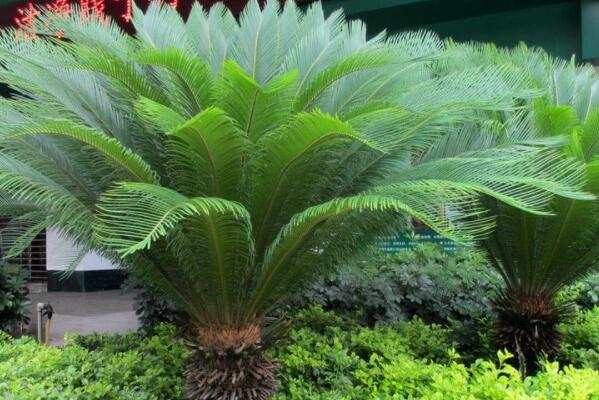
The cycad, scientific name Cycas revoluta, also known as sago palm, is a gymnosperm. So when should its seeds be sown? What is the price per jin? How do you plant it? Is it toxic? According to a Jiangxi seedling base, the market price of cycad seeds has remained very stable, with the price per jin of seeds at 150 yuan--180 yuan, and 50--60 jin sown per mu.
When should cycad seeds be sown?
1. Cycad seeds are collected in late autumn and sown immediately after collection, or they can be stored in sand and sown in the following spring; because the seed coat is thick and hard, germination is slow, generally sprouting after 4 to 6 months; the temperature must be kept above 15 degrees, and the soil cover should be deeper, about 3 cm; at 30 to 33°C under high temperature, they can germinate in about 2 weeks; the seedlings grow slowly, and the seedlings need 2 to 4 years before they can be transplanted.
2. Cycas revoluta prefers a warm, hot and humid environment, is not cold-tolerant, grows very slowly, and has a lifespan of about 200 years. In the tropics of southern China and the southern subtropics, trees over 10 years old flower and set seed almost every year, while cycads cultivated in the Yangtze River basin and various northern regions often never flower, or occasionally flower and set seed.
It likes light and likes iron, and is slightly tolerant of partial shade. When planted in the open ground in the Shanghai area, warmth measures such as wrapping with straw are needed in winter. It likes fertile, moist and slightly acidic soil, but can also tolerate drought. It grows slowly, and plants over 10 years old can flower.
How do you plant cycad seeds?
Sowing seeds immediately after collection
1. Seed treatment: before sowing cycad seeds, soak them in warm water at about 50°C in a thermos for 12 hours, pour them out and spread them for 1 hour, then replace with water of the same temperature with 0.1% ferrous sulfate and potassium dihydrogen phosphate added, put them back into the thermos and soak for another 12 hours, after which they can be used for sowing.
2. Sowing method: cycad sowing uses spot sowing in pots, with a soil cover of 2 cm; at a high temperature of 30 to 33°C, they can germinate in two weeks, and the seedlings can only be transplanted after 2 to 4 years of cultivation.
Sowing seeds the following year
1. Seed treatment: choose plump seeds no more than two years old, soak them in warm water at about 50°C for 24 hours, then soak them in dilute hydrochloric acid or dilute sulfuric acid for 10 to 15 minutes, then rinse them clean with fresh water; during soaking, change the fresh water every other day, and after the seed coat has fully absorbed water, expanded and softened, manually peel off the outer seed coat, wash off the fruit flesh, dry the seeds, and then store them well,
2. Sowing method: around December, carry out sand storage treatment of the seeds; first sow the prepared seeds into the bed, at a depth of about 3 cm, then immediately cover with river sand to a thickness of 3 cm. Sand storage generally takes 4 to 6 months, during which the suitable temperature of 18 to 25°C and relative humidity of 80 to 90% must be maintained, and winter warmth measures must be done well, not below 12°C. In May to June of the following year, the seeds break through their shells and emerge, and in July to August they sprout and grow one true leaf, after which they can be transplanted.
Propagation by tillers
Cut tillers from the trunk and plant them in sandy loam, with row spacing of 20-30cm and plant spacing of 10-15cm, cover with 6-8cm of soil, and shade them; they easily survive under semi-shade conditions.
Propagation by trunk cuttings
Cut the trunk into sections of about 10cm, bury them in sandy soil, cover with 4-6cm of soil, water frequently to keep them moist, and once the trunk sections send out new shoots, they can be planted separately.
Are cycad seeds toxic?
1. The cycad is somewhat toxic: the seeds and the pith at the top of the stem are toxic.
2. Symptoms of poisoning: after eating, dizziness and repeated vomiting occur, and it can also induce tumors.
3. Treatment of poisoning: once poisoning is discovered, seek medical treatment promptly.
4. Note that:
(1) The cycad has a good air-filtering effect and can be cultivated indoors, but because of its toxicity, it is best not to place it within reach of children, to prevent children from accidentally eating cycad seeds.
(2) Sometimes redness and swelling occur from being pricked by a cycad, but this is only an ordinary infection, not cycad poisoning. It is enough to do a good job of cleaning and disinfecting.
Appendix: Cycad knowledge extension
1. Purification effect: the cycad is also quite beneficial for purifying and improving the air, and has the effect of absorbing toxic and harmful gases such as sulfur dioxide, nitrogen peroxide, benzene, fluorine, mercury vapor and lead vapor.
2. Ornamental value: the cycad has an elegant ancient form, with a thick, sturdy trunk as hard as iron; its feathery leaves are smooth and glossy, evergreen all year round, making it a precious ornamental tree species. In the south it is mostly planted in front of courtyards, beside steps and in lawns; in the north it is suitable as a large potted plant, arranged in courtyards, corridors and halls, and is especially beautiful.
3. Other uses: the cycad is a graceful ornamental tree species and is extremely commonly cultivated; the stem contains starch and can be eaten; the seeds contain oil and abundant starch, are slightly toxic, and are used for food and medicine, having the effects of treating dysentery, relieving cough and stopping bleeding.