How much can one mu of perilla sell for? Seed prices, germination time and planting methods
Perilla is also known as guiren, white perilla, red perilla, hongsu, heisu, white perilla, qingsu, suma, and shuishengma, and its seeds are also called perilla seeds. So how much can one mu of perilla sell for? How much is the seed price per jin? How long does germination take? What are the planting methods? From the nursery base in Suqian we learned that perilla seeds currently cost about 15—18 yuan per jin.
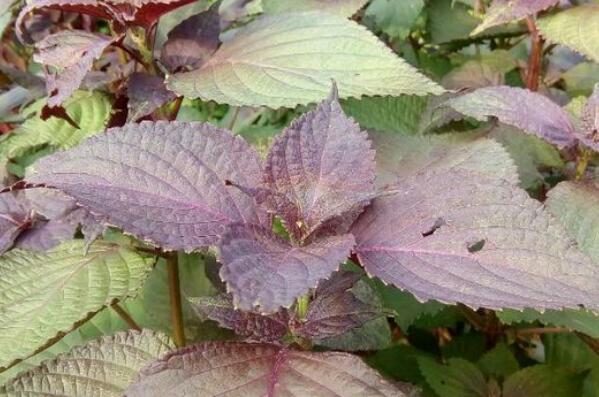
How much can one mu of perilla sell for?
Perilla, an annual herbaceous plant, is mainly produced in Southeast Asia, Taiwan, China, Zhejiang, Jiangxi, Hunan and other central and southern regions, and the Himalayan region. Its stems, leaves and fruits can all be used as medicine. It mainly treats colds with fever, aversion to cold, absence of sweating, chest tightness and cough, and relieves abdominal pain, diarrhea and vomiting caused by crab poisoning. Its antibacterial effect is also very good.
One mu of greenhouse perilla produces 3 tons of leaves a year, and the price per kilogram sold to Japan is 35 yuan. Calculated this way, an income of 100,000 yuan per mu is no problem. However, that is not pure profit. After deducting comprehensive costs, the actual profit is 60,000 to 70,000 yuan.
How long does perilla take to germinate?
Perilla does not require any deliberate measures; it can simply be broadcast on the soil surface. It is best to first mix it with some fine soil or fine sand, so it can be sown relatively evenly. Keep the soil moist. How long germination takes depends on temperature; the higher the temperature, the faster the germination. At the fastest, about one week. Sow 4-5 jin per mu.
What are the planting methods for perilla?
I. Nursery site selection
Soil quality directly determines the yield of perilla. If the soil is very good and the growing environment is very good, then the maintenance work for the staff will be much easier, and the yield will increase accordingly. Perilla does not have strict soil requirements; it can be sandy soil, yellow soil, clay, or soil with a high sand content, and that is not a problem either. Perilla is cold-tolerant, not afraid of drought, and not afraid of flooding. The planting base requires gently sloping terrain, and the land must drain well. When the rainy season comes and rainfall gradually increases, accumulated water must be able to drain away immediately, otherwise a large number of seedlings will easily die. The key to the terrain is that it must be conducive to drainage; ordinary soil is fine, and sunlight must be sufficient.
II. Land preparation
1. Deep plowing: Perilla responds quite quickly to nutrients. If the soil has sufficient nutrients, it will grow glossy green and vigorous, with robust plants. However, the soil in a very small number of medicinal herb fields is on terrain with only ordinary nutrients. Therefore, if you want high perilla yield, you must apply sufficient green manure before sowing. Spread 2.5~7 thousand kilograms of cow dung and sheep dung per mu. After fertilizing, plow deeply once and harrow finely once, so that the soil and nutrients are evenly mixed together, with no large clods of soil, making sowing easier and increasing seedling emergence.
2. Making beds: To make irrigation, weeding, fertilizer application and other necessary management measures throughout the entire growth period of perilla more convenient, Changjing Landscape recommends that everyone make the land into fixed-standard beds 1.4 m wide and 16~22 m long. The details depend on the site.
III. Sowing
Perilla seeds are medium in size and have a relatively good emergence rate. Before sowing, you can simply do some pregermination treatment. Some of the steps are actually very simple: soak them in clean water for 1 day, then take them out and dry them, and they are ready for planting. The sowing depth should be moderate or preferably very shallow, and the covering soil should be no more than 4 cm thick. Drilling is commonly used. Choose weather with little wind, mix the perilla seeds in wet sand, and spread them evenly on the ground. After sowing, you can cover the soil by raking manually or by machine. After covering the soil, irrigate once, and after roughly 6~11 days seedling emergence will increase.
IV. Seedling stage management
The management and maintenance workload during the growth period of perilla is relatively small. It rarely has pests or diseases, and its growth condition is good. The most important tasks are only irrigation, weeding, and preventing pests and diseases. During the peak growth period of perilla, it needs a large amount of water and fertilizer. During this period, 35 kg of quick-acting fertilizer can be applied per mu. During the fastest growth period of perilla, even more water is needed. At this time, refer to the rainfall conditions and choose the right time to water.