What Is the Market Price of Akebia trifoliata? Flowering and Fruiting Times and Planting Prospects Explained
Akebia trifoliata is distributed in China's Hebei, Shanxi, Shandong, Henan, southern Shaanxi, southeastern Gansu and all provinces and regions along the Yangtze River basin. So what is the market price of Akebia trifoliata? In which months does it usually flower and fruit? And what are its planting prospects? The details are compiled as follows:
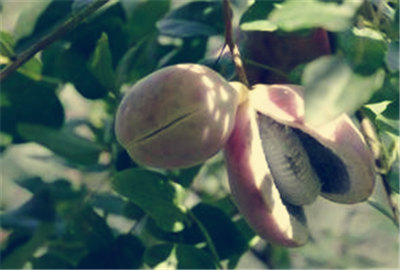
Akebia trifoliata generally flowers in April-May and fruits in July-August.
The price of Akebia trifoliata
Akebia trifoliata, a wild vine fruit tree of the genus Akebia in the family Lardizabalaceae, is commonly known as "September cracker" or "August melon." It is an important medicinal plant, and its roots, vines, fruits and seeds can all be used as medicine. It is native to China and Japan. In China it is distributed in areas south of Shandong, Hebei and Shanxi; in Henan it is produced in the Taihang Mountains, Funiu Mountains, Dabie Mountains and Tongbai Mountains, growing in areas at altitudes of 250 m to 2,500 m, mostly in sparse forests beside mountain gullies or in hilly shrubland. It is the woody stem of the Lardizabalaceae plant Akebia trifoliata. Form: deciduous woody. Ecological environment: grows in low mountain and hilly shrubland or at forest edges and roadsides.
Below are some prices of Akebia trifoliata for reference:
Natural kidney-tonifying medicinal fruit, supplying sweet and nutritious August melon, Akebia trifoliata fruit sold in bulk wholesale: 12.00 yuan.
Supplying August melon, August melon seedlings, the most sought-after Akebia medicinal fruit: 4.50 yuan.
An emerging green anti-cancer fruit for both medicine and food——Akebia trifoliata (Chinese kidney fruit): 5.00 yuan.
Supplying the country's first domesticated, cultivated and improved seedlings (multi-seed type) of the wild rare fruit Akebia trifoliata: 15.00 yuan.
The above lists five prices of Akebia trifoliata, from which you can see that the price of Akebia trifoliata is very low, a price that virtually everyone can afford. This is another characteristic of traditional Chinese medicine: low price, no added processing fees, and completely natural. The production process of most traditional Chinese medicines is as simple as digging, sun-drying and decocting, without the complex processing of Western medicine, so seeing a traditional Chinese medicine doctor and taking traditional Chinese medicine to treat illness is now more popular. It is just that taking traditional Chinese medicine calls for persistence and long-term use. So people who are currently taking traditional Chinese medicine are advised to persevere, so that the true effect of Chinese herbal medicine can be brought into play.
What are the planting prospects of Akebia trifoliata?
The fruit, roots, stems and seeds of Akebia trifoliata can all be used as medicine. The fruit in particular has beauty-enhancing and anti-cancer effects. Clinical evidence shows that taking it consistently has a clear relieving effect on diabetes. The prospects are excellent.
A case of getting rich
Have you ever seen "Akebia trifoliata" at 25 yuan per jin?
Various autumn fruits have come onto the market one after another, enriching consumers' choices. This year, the reporter found that besides common autumn fruits of previous years such as citrus and persimmons, a fruit with purplish-green skin and a slightly curved shape that looks a bit like a large eggplant has also appeared in street fruit shops, priced at about 25 yuan per jin.
When this fruit ripens, its skin splits open like a durian, revealing a white strip of flesh inside somewhat like a banana. Scooping out the flesh with a spoon to taste it, it is a little sticky, with a rich, sweet fragrance, and also somewhat like a banana.
It is understood that this fruit is the fruit of the medicinal plant Akebia trifoliata, and because the fruit ripens and splits open in the eighth lunar month it is called "August cracker" or "August melon." It is distributed in all provinces north and south of China, especially abundantly in the Yangtze River basin.
In Xianju, there is also wild Akebia trifoliata on the mountains, which locals call "dao ke." As a medicinal material, the roots, branches and leaves of Akebia trifoliata can all be used as medicine, with the effects of promoting the flow of qi and blood circulation and reducing inflammation and promoting diuresis.
In recent years, besides its medicinal value, the edible function of the Akebia trifoliata fruit has also been valued by people. It is understood that agricultural departments in Hunan, Jiangxi and Shaoxing, Zhejiang and other places have, through wild domestication and artificial cultivation, domesticated Akebia trifoliata into an organic fruit of high nutritional value and formed related industries. According to relevant news reports, the Akebia trifoliata fruit also commands a fairly high price in various places, from over ten yuan to over twenty yuan per jin.
In the past two years, growers in our city have also paid attention to the market value of this fruit and introduced it to Taizhou. This year, the Akebia trifoliata in some fruit shops in our city comes from the Xianju Haoguo Breeding Professional Cooperative.
Yu Haishui, head of the Xianju Haoguo Breeding Professional Cooperative, told the reporter that the cooperative introduced and planted it from Shaoxing 4 years ago and has now developed more than 100 mu.
"Last year the Akebia trifoliata at the base began to bear fruit, but the yield was not much; this year the fruiting rate reached 90 percent." Yu Haishui said that this year the fruit came onto the market around September 10, the ripening period lasted about 40 days, and the total output of large and small fruits combined is expected to reach 100,000 jin.
"At present, this fruit is still in the promotion period in Taizhou. At first customers did not know it and did not know its medicinal value, but after buying it to try something new, there have been more repeat customers." Yu Haishui said that after the fruit came onto the market, it was supplied to chain fruit shops and sold to Jiaojiang, Luqiao and even Hangzhou and other places. The price of large fruits weighing more than half a jin is 30 yuan/jin, and the price of medium fruits is 20-25 yuan/jin.
Yu Haishui also told the reporter that in order to further tap the value of the fruit, the cooperative has also separately developed the seeds and peel of Akebia trifoliata, developing products such as Akebia tea and Akebia oil.