How much does organic loose-curd cauliflower generally cost per jin, its differences from regular cauliflower, yield and cultivation techniques
When going to the market to buy cauliflower, you often hear some vegetable vendors say their cauliflower is so good, it is organic cauliflower, its nutritional value is higher than regular cauliflower, so the price is a bit higher. Many consumers are half-believing and half-doubting when they hear this, because they do not know where the difference between organic cauliflower and regular cauliflower lies. In fact, organic cauliflower is also called loose-curd cauliflower or spread cauliflower, a type within cauliflower of the genus Brassica in the family Brassicaceae. It was first grown and consumed in Fujian and Taiwan, China, and in recent years has spread rapidly from the Fujian-Zhejiang region to North China and Central China. So, how much does loose-curd cauliflower generally cost per jin? What about its yield?
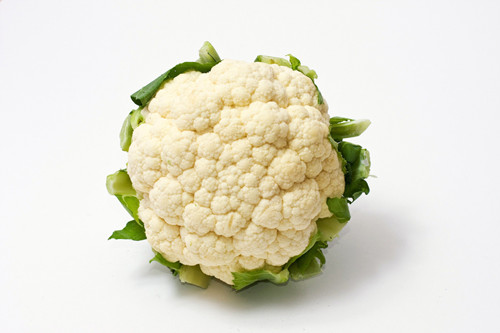
Loose-curd cauliflower is not much different from regular cauliflower in form and color, but tastes better. Because its curd is relatively loose, it is larger in size. Loose-curd cauliflower tastes sweeter and crisper, and sells at a higher price. Regular cauliflower costs about 3 yuan per jin, while this organic cauliflower variety costs about 4-6.5 yuan per jin, and the wholesale price is about 1.5 yuan.
Organic cauliflower is a type of cauliflower, but it offers more guarantees in terms of food safety, because organic cauliflower is produced according to organic agriculture standards. During its production, no pesticides or chemical fertilizers are used, nor are other substances containing chemical components used. It is the safest and healthiest vegetable on the market today.
Loose-curd cauliflower and ordinary tight-curd cauliflower also show obvious differences in nutritional quality. Research has confirmed that loose-curd cauliflower is significantly higher than ordinary tight-curd cauliflower in chlorophyll and carotenoid content, and its soluble sugar content is also higher than that of ordinary cauliflower, which is also why loose-curd cauliflower has green stalks and a slightly sweet taste. Other nutrients such as vitamin C, dietary fiber and crude protein show no significant difference.
Compared with regular cauliflower, loose-curd cauliflower has a loose curd, long stalks and green stalks, and tastes sweeter, crisper and more tender. When stir-fried, it does not easily become mushy, and the stalk color turns greener after heating. It can also be dehydrated and processed into dried loose-curd cauliflower, mainly for eating the stalks, which are emerald green with a unique flavor and are deeply loved by consumers.
Loose-curd cauliflower also has multiple health benefits. After people eat it, the body can quickly digest and absorb the organic cauliflower, and it can tonify the spleen and stomach and strengthen the kidneys and bones, among other effects. Eating more of it regularly can also reduce oxidative reactions in the body and inhibit the occurrence of malignant diseases such as cancer.
The yield of one mu of loose-curd cauliflower is generally more than 4000 jin.
Loose-curd cauliflower cultivation techniques
1. Select suitable varieties and arrange farming seasons reasonably
The growth period of loose-curd cauliflower after transplanting is generally about 60-100 days, belonging to the medium-maturity type. The loose-curd cauliflower seeds currently promoted mainly come from varieties bred in Taiwan, China and Wenzhou.
Loose-curd cauliflower is generally sown in batches from July 15-23, and depending on the variety, the harvest period is from November to December.
2. Cultivate strong seedlings and advocate plug tray seedling raising
The sowing period of loose-curd cauliflower often coincides with high temperatures and the rainy season, so seedbeds should be chosen on fields with higher terrain, not easily flooded, and with convenient drainage and irrigation. Loose-curd cauliflower seedling raising methods can use the two-stage seedling method, the nutrient block method or the plug tray seedling method.
Plug tray seedling raising is advocated. Choose 50-cell or 72-cell plug trays, mix soilless substrates such as peat + perlite + vermiculite in a certain ratio, add a small amount of soil fungicide and a trace amount of compound fertilizer, mix evenly with water and then fill the trays. The sowing depth is about 0.5 cm, sow 1-2 seeds per cell, cover with a layer of substrate after sowing, water thoroughly, and cover with a shade net to retain moisture. In summer, cover the frame with a 50% light-transmitting shade net. Water management is especially important; note that the plug tray substrate moisture must not remain too wet or too dry for long periods. During the seedling stage, 1000-fold Jinyun'e can be used to prevent damping-off and Rhizoctonia solani, and to control beet armyworm, tobacco cutworm, diamondback moth, flea beetle, aphids, etc. Generally, the seedling age is controlled at about 23 days, and hardening off begins one week before transplanting.
3. Reasonable close planting and scientific application of fertilizer and water
Before transplanting loose-curd cauliflower, apply 500 kg of organic fertilizer, 40 kg of 45% ternary compound fertilizer and 1 kg of borax per mu of production field. The bed width is determined according to the terrain, soil fertility and management level. Generally the bed width is 1.2 m, the plant spacing is 0.48-0.6 m, and depending on variety differences, 1800-2400 plants per mu. 33% Shitianpu 100-150 ML per 50 kg for weeding.
Loose-curd cauliflower is planted in the afternoon or on cloudy days, with chlorpyrifos granules applied in the holes, and after planting, rooting water is poured continuously (thoroughly). Topdressing is carried out in 2-3 applications. 10 days after planting, apply 5-10 kg of urea or 1500 kg of decomposed biogas slurry per mu; before and after row closure (1 month after transplanting), combine with intertillage and earthing up to apply 40 kg of 45% compound fertilizer per mu; at the early curd-forming stage, apply 10 kg of urea per mu as topdressing. Drain promptly after heavy rain to prevent waterlogging in the field, and keep the soil moist during the curd-forming stage.
4. Safe use of pesticides and integrated control of diseases and insect pests
The main diseases and insect pests of loose-curd cauliflower include root rot, downy mildew, soft rot, cabbage caterpillar, aphids, whitefly, flea beetle, diamondback moth, beet armyworm, tobacco cutworm, etc. Choose disease-resistant varieties, distinguish fungal from bacterial disease types, implement crop rotation, and drain promptly. After continuous rainy weather, actively prevent and control root rot, downy mildew and soft rot, once every 7 days, for 2-3 consecutive times. According to pest and disease information, actively adopt moth sex pheromones, lights and other insect control methods, clarify the feeding characteristics of the pests, apply pesticides in a targeted way, choose biological pesticides as much as possible, reduce the amount of pesticides used, and strictly observe the pesticide safety interval.
5. Prevent frost damage
6. Harvest at the right time and handle residual leaves promptly
Generally, about 20 days after the curd forms, loose-curd cauliflower reaches the harvest period. To make the curd white and clean, when the curd is 5 cm in size, methods such as folding leaves over it or tying leaves to wrap the curd can be used to protect the curd from direct sunlight. When the curd is fully expanded and the edges begin to loosen, this is the suitable harvest period for fresh-eating loose-curd cauliflower; for curds used for dehydration processing, the harvest can be appropriately delayed. When harvesting, 3-5 leaves can be kept to protect the curd and avoid mechanical damage or contamination during storage and transport. After harvesting, loose-curd cauliflower should be sold as soon as possible, or pre-cooled and kept fresh in a cold storage at about 4°C.
After the loose-curd cauliflower curds are harvested, promptly handle the residual roots, stems and leaves in the field and carry out harmless treatment to reduce the occurrence of diseases and insect pests. The roots, stems and leaves are excellent green fodder for sheep and rabbits.