How long do Chinese pennywort (Hydrocotyle sibthorpioides) seeds take to germinate? Sowing methods and their benefits and effects in the bedroom
Chinese pennywort, formerly known as pennywort. It is native to Hunan, Sichuan and Yunnan in China. It grows along ditches and on damp, shady roadside grassland. It has high ornamental and medicinal value, and many people keep a pot of it at home. So, how long do pennywort seeds take to germinate? What sowing methods are there? Can it be placed in the bedroom? What are its benefits and effects? It is understood that pennywort seeds generally germinate in about 15-20 days; be careful to keep the soil moist and the sunlight sufficient.
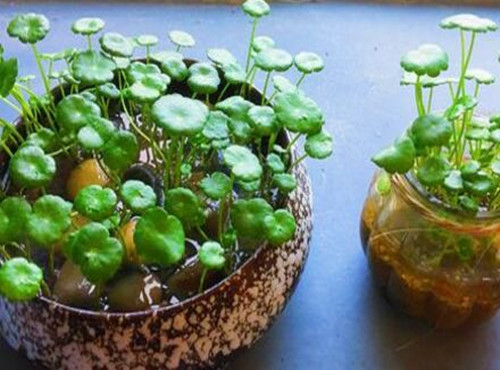
What sowing methods are there for pennywort?
As for sowing methods for pennywort, there are mainly two: one is the conventional, by-the-book sowing method, and the other is rather rough and ready - just toss them into water, soak them, and they will germinate on their own.
Sowing method one: Pour the seeds into a small container, add just enough water to cover the seeds. If the temperature is low, wrap it with plastic wrap, change the water frequently, and place it in a cool, ventilated spot. After a few days they will germinate; once the sprouts reach about 1 cm, they can be planted.
Sowing method two: Soak the seeds in a small amount of water for half an hour, put soil in a pot, water it thoroughly, then pour the seeds together with the water they were soaked in into the pot, trying to spread them evenly rather than letting them pile up. Cover with a thin layer of soil, spray with water twice a day, just enough to keep the surface moist. Place in a warm, dark spot, and they will sprout in about three days; once true leaves grow, they can be transplanted to water culture.
Can pennywort be placed in the bedroom?
There is no need to worry that keeping pennywort indoors will have any bad effects; pennywort is not toxic. The pennywort that was once rumored to be carcinogenic is actually Lysimachia christinae, whose other names also include pennywort and ground pennywort. These two plants share the same alternative names, but they are essentially different plants, so everyone can cultivate pennywort with peace of mind.
Pennywort can, first, purify water quality, and second, purify indoor air - it is practically a must-have for the home. However, pennywort should not be kept in the bedroom for long periods; pennywort likes dew and mist, and being kept indoors for a long time will make it wither!
What are the benefits and effects of pennywort?
The whole plant is used as medicine; it relieves pain, clears heat and drains dampness, and treats abdominal pain, difficult urination, eczema and so on.
How is pennywort cultivated?
1. Soil preparation
For soil preparation, a mixed substrate made from leaf mold, river mud and garden soil can be used, with a ratio by volume of 0.5:2:2. It tolerates wet conditions and is an emergent type, so it is also suitable for growing in water basins and ponds. If grown in water, be sure to change the water once a week and add a special nutrient solution for foliage plants.
2. Fertilizing
Chinese pennywort has a relatively high demand for fertilizer; during the vigorous growth stage, fertilize pennywort once every 2-3 weeks. If grown in a pot or container, then only a small amount of fertilizer is needed, such as the quick-acting fertilizer Hyponex No. 2, which can maintain its fertilizing effect in water for a relatively long time; just ensure the water quality is slightly acidic or neutral.
3. Watering
It likes a relatively moist growing environment. Because it has many leaves and a high transpiration rate, in summer spray the plant frequently to maintain relatively high air humidity; the leaves should be kept clean to facilitate photosynthesis. In winter, the pot soil is best kept on the dry side; watering follows the principle of preferring moist over dry, and waterlogging should be avoided, otherwise the roots rot easily. Tap water in the north should be left to sit in the sun for 1-2 days before use. During the growing season, water once every 2-3 days to keep the pot soil moist. For water culture, change the water once every 7-10 days in spring and summer, and once every half month in autumn and winter. If grown in water, be sure to change the water once a week and add a special nutrient solution for foliage plants. If soil culture is used, then water retention must be maintained long-term. Water once every morning; do not use too much water - just until water flows out of the drainage holes at the bottom, ensuring the pot soil is thoroughly moistened.