Crotalaria Seed Price and Planting Methods, Effects and Functions
Crotalaria, also known as white crotalaria, wild bitter bean, big-eye orchid, wild soybean grass, crotalaria green, wild peanut, etc. It is the whole plant of the legume Crotalaria. It is distributed in Shandong, Zhejiang, Taiwan, China, Hunan, Guangdong and other places. So, how much is crotalaria seed per jin? How is it planted? What effects and functions does it have? It is understood that the price of crotalaria seed is 24 yuan/jin, and prices vary in different regions.
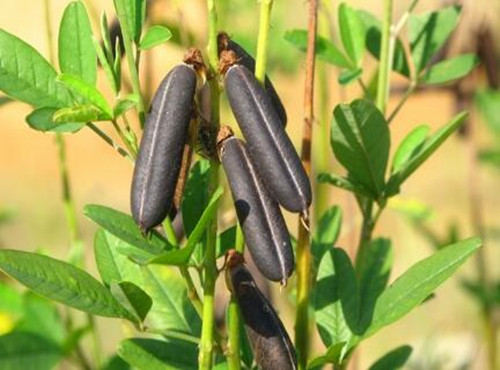
How is crotalaria planted?
Crotalaria is a very tough plant that can grow in riverbeds, beside embankments, under scorching sun, and in sandy and gravelly environments. On such land, there is not much soil, and naturally not much nutrients either; lacking the cover of tree shade, changes in temperature and humidity naturally fluctuate dramatically with shifts in the weather. On a clear hot day it is scorched hot, and when a cold wave arrives it bears the brunt, yet crotalaria can still grow normally.
What effects and functions does crotalaria have?
1. Landscaping effect: Crotalaria has a long flowering period and a habit of tolerating barren soil and drought, so it is quite suitable for landscape cultivation on slopes beside roads. Crotalaria is a legume, so it is also very suitable for planting in fields as a green manure plant. The seeds of plants in this genus also contain galactomannan gum, which is widely used in industries such as petroleum, mining, textiles and food. Because it likes to grow in sandy soil, it is a relatively good plant for soil and water conservation. Many species are commonly used green manure and cover plants in the tropics and subtropics.
2. Medical effect: Plants of this genus contain pyrrole-derived pyrrolizidine alkaloids with relatively strong biological activity. Many species can be used medicinally, with effects such as clearing heat and detoxifying, dispelling wind and removing dampness, reducing swelling and relieving pain, and treating conditions such as rheumatic paralysis, scabies, and traumatic injuries. In recent years, trial use in anti-cancer treatment has achieved relatively good results, mainly with relatively good efficacy against squamous cell carcinoma, basal cell carcinoma, acute leukemia, cervical cancer, and penile cancer. In some provinces and regions in China, the seeds of plants in this genus have been used to replace the Chinese medicine Tongjili, and this should be corrected.
Note: Crotalaria seeds and young tender leaves are toxic.
What does crotalaria look like?
Crotalaria is a perennial herb, or shrub-like; stems and branches cylindrical, with small groove lines, densely covered with closely appressed short soft hairs. Stipules very small, bristle-like, usually falling early; leaves trifoliate, petiole 2-4 cm; leaflets oblong or elliptical, 3-6 cm long, 1.5-3 cm wide, apex obtuse-rounded or slightly concave, base broadly cuneate, upper surface hairless, lower surface slightly covered with silky short soft hairs, veins clear on both sides; petiolules 1-2 mm. Racemes terminal, up to 25 cm, with 10-40 flowers; bracts linear, about 4 mm long; falling early, bracteoles similar in shape to bracts, about 2 mm long, very small at flowering, less than 1 mm long, born at the middle or base of the calyx tube; pedicels 3-5 mm; calyx nearly bell-shaped, 4-6 mm long, five-lobed, calyx teeth triangular, about equal in length to the calyx tube, densely covered with short soft hairs; corolla yellow, extending beyond the calyx, standard petal round or elliptical, about 10 mm in diameter, base with two callosities, wing petals oblong, about 8 mm long, lower margin with soft hairs, keel petal longest, about 12 mm, curved, nearly 90 degrees, with a long beak, base margin with soft hairs; ovary sessile. Legume oblong, 3-4 cm long, 5-8 mm in diameter, hairy when young, shedding after maturity, valves twisting after dehiscence; seeds 20-30. Flowering and fruiting period between September and December.