Cotton in the Malvaceae family: when is it generally planted and harvested? Plus pre-sowing precautions
Cotton is the seed fiber of plants in the genus Gossypium of the Malvaceae family. Its place of origin is the subtropics, and it was first introduced into China for cultivation at the end of the 19th century. It has since been widely cultivated in all cotton-producing regions across the country. So when is cotton generally planted? In which month is it harvested?
Cotton planting time
Because weather and climate differ from region to region, cotton planting times also differ. Generally speaking, cotton is planted around April each year. China's cotton is divided into three major cotton-producing regions: the Yellow River basin, the Yangtze River basin and **. The sowing period in the Yellow River basin and the Yangtze River basin is March and April each year (the specific time is related to factors such as variety and latitude), while the sowing period for cotton in ** is between April and May. The cotton maturity and picking period is September and October in all cases. In fact, starting in the third month of spring, farmers begin to buy cottonseed and plant cotton.
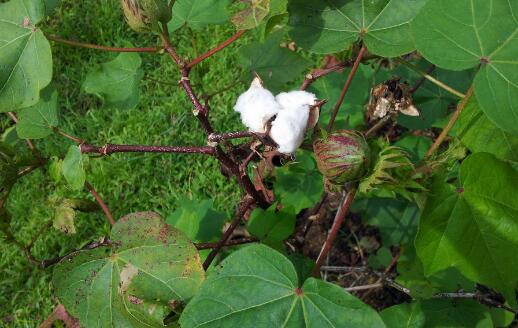
Cotton maturity and harvest time
From squaring to maturity and boll opening, cotton generally takes 75-100 days. Depending on the growing region, the cotton harvest time also differs slightly.
1. In the provinces of the middle and lower reaches of the Yangtze River, the flowering period of cotton is from late July to early September.
2. In the provinces of the middle and lower reaches of the Yellow River, it is from early July to early August.
3. In ** Turpan, it is from mid-July to early September.
Precautions for sowing cotton
The suitable period for sowing cotton is one in which, on the premise of ensuring a full stand, uniform seedlings and strong seedlings, early seedlings are pursued. The seeds of insect-resistant cotton varieties have a low fat content, an imbalanced ratio of protein to fat and an overall low nutrient content. They supply less of the nutrients and energy needed for cottonseed germination and emergence, have poorer tolerance to low temperatures, emerge slowly and produce weak seedlings.
Therefore, cotton should not be sown too early. The principle of sowing at the “suitable period” must be followed.
Cotton is a warmth-loving crop and requires relatively high temperatures when germinating and emerging. If sown too early, the temperature is low, emergence takes a long time, nutrients are consumed heavily, the cotton seedlings have weak vitality and seedling diseases are severe, often resulting in “early but not complete” or “early but not vigorous” stands. If sown too late, although emergence is “fast and uniform”, the effective growing season cannot be fully utilized, often causing the cotton to stay green and mature late, with low quality and poor grade.
Generally, in cotton fields with good soil fertility, when the 5 cm soil temperature steadily passes 14°C-15°C for 5 consecutive days, soil moisture is good, humidity is suitable and there is no strong cold wave weather process in the near future, you can choose a sunny day to sow in one concentrated effort. Within the range of the suitable sowing period, the sowing period should be shortened as much as possible, striving to sow cotton within the optimal suitable period so as to achieve a full stand with one sowing.
In a normal year, in northern Xinjiang (April 10-20) is the suitable sowing range for plastic-film cotton; for cotton fields on saline-alkali land, it is advisable to sow when the 5 cm soil temperature steadily passes 16°C. Within the range of the suitable sowing period, the sowing period should be shortened as much as possible, striving to sow cotton within the optimal suitable period so as to achieve a full stand with one sowing.
To achieve this goal, the following preparatory work and precautions before sowing cotton must be done well.
1. Prepare pesticides
At present, coated seeds are generally used, so there is no need to prepare insecticides and fungicides; the main thing is to prepare herbicides. For herbicide, prepare 160-180 ml of 33% pendimethalin per mu, to be used 2-5 days before sowing.
Requirements for herbicide application
When applying herbicide, make sure the sprayer nozzles are not clogged, the spray is uniform and consistent, with no overlapping or missed spots, to avoid causing herbicide damage, which is conducive to uniform emergence.
2. Land preparation
First, remove residual cotton stalks, plastic film and other debris from the cotton field, to reduce cotton field pollution and disease and create a good environment for cotton growth.
Before sowing, the cotton field must be prepared by breaking up the plow pan, breaking up soil compaction, improving soil properties and promoting cotton root growth. The quality requirement for land preparation is a loose top and firm bottom. When harrowing, the requirements are “uniform, level, loose, fine, clean and moist”, meeting the standards of uniform (neatly planned, with no blank strips left at the field edges or in the middle during mechanical operations such as plowing and harrowing), level (after plowing, harrowing and manual levelling, the ground surface is flat, with no ridges or obvious pits on the soil surface), loose, fine (the plow layer is loose, with a loose top and firm bottom, the soil is finely broken, and there are no clods with a diameter over 2 cm on the surface), moist (plow when soil moisture is suitable; at this time the soil is loose and land preparation is easy, and it can also keep appropriate water content in the soil at sowing, which is conducive to seed germination and to drought resistance and moisture conservation) and clean (no crop stubble, weeds or waste plastic film in the field).
Two points to note in harrowing operations
1. Nowadays, wheeled high-horsepower machines are used for harrowing. When harrowing, it is better if the soil is a little dry, because when the soil is wet, the places where the wheels press during harrowing are prone to compaction, and compacted spots are not conducive to seed emergence.
2. For a field that has been harrowed and is waiting to be sown, if it rains, unless the rain is especially heavy, it is best not to harrow again. Too many operations tend to compact the soil, and mixing the dry surface soil with the moist soil below is not conducive to sowing to capture soil moisture for emergence. Repeated harrowing also tends to make the surface layer too loose, which is not conducive to emergence after sowing.
After the cotton field is plowed, it should be harrowed in good time. Land preparation is best completed 3-5 days before sowing.
3. Prepare good seed and treat the seed
Seed selection
When buying good seed, do not blindly pursue new specialties or high yield; choose according to your own soil fertility, yield and management level. You should choose excellent cotton varieties with good insect and disease resistance, strong growth vigour, concentrated boll setting, easy management, and early maturity without premature senescence, and be careful to choose excellent varieties suitable for local planting.
When choosing new cotton varieties, do so on the basis of trials and demonstrations. In the first year, plant only a small amount on trial; in the second year, expand the planting only when disease resistance, growth vigour, boll-setting ability and yield-increasing performance all exceed those of the original variety.
To buy high-quality cottonseed, go to a legitimate seed supplier and choose high-quality seed with good purity, a high germination rate and guaranteed quality.
Sunning the seed
Sunning the seed can promote after-ripening of the seed, accelerate the absorption of water and oxygen, raise the germination rate and also sterilize and reduce disease. Sunning can be done about 15 days before sowing; choose sunny days and sun the seed for 4-5 consecutive days, until the seed rattles when shaken by hand.
Be careful not to sun the seed on concrete or stone slabs, to avoid excessive water loss from the seed forming hard seeds and lowering the germination rate. While sunning the seed, remove broken seeds, insect-damaged seeds, shrivelled seeds and oddly shaped seeds, keeping plump, sound seeds that match the characteristics of the variety for use as seed, so as to improve seed purity, germination vigour and germination rate.
Determining the seed germination rate
The germination vigour and germination rate of cottonseed determine how many seedlings emerge, how good and how fast they are, and how much seed to sow. Therefore, before sowing, germination vigour and germination rate must be determined. In production, a germination rate above 85% is generally required before the seed can be used for sowing.
The method for determining the germination rate is generally the germination test method. Take 100-200 cottonseeds that have been soaked and have absorbed enough water, keep the temperature at 25-30°C; the percentage that germinate on the 3rd day is the germination vigour, and the percentage that germinate on the 9th day is the germination rate.
4. Prepare the techniques
First, prepare the technique for a full stand with one sowing and master sowing at the suitable period; second, prepare the technique for rational close planting, and determine the row and plant spacing according to the characteristics of the selected variety and the soil fertility conditions; third, prepare the technique for pest and disease control at the seedling stage, and apply pest and disease control methods from the start of sowing.
Requirements for cotton sowing operations:
1. Sowing must achieve uniform seed drop and a low rate of empty hills.
2. Uniform soil covering and consistent depth; firm film pressing, which is conducive to seed emergence and wind resistance.
3. Straight sowing rows, which is conducive to field mechanical operations and machine-picking cleanliness.