Vegetable chrysanthemum greens: growing methods, simple and tasty recipes, and benefits and effects
Chrysanthemum greens are one of the most common dishes on home dining tables, and chrysanthemum greens duck egg soup in particular is an excellent dish for preventing heatstroke and clearing internal heat in summer. Chrysanthemum greens are rich in nutrients and are a wild vegetable with great development prospects. So how do you grow chrysanthemum greens? How do you prepare them in a tasty yet simple way? What benefits and effects do they have?
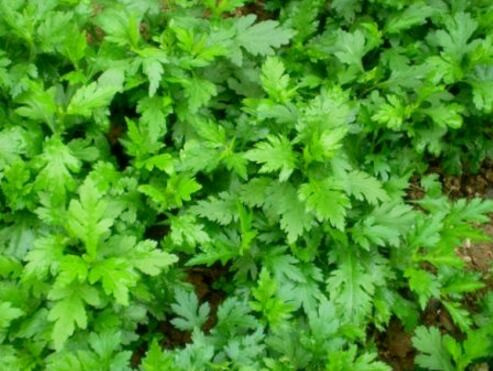
How to grow chrysanthemum greens?
Chrysanthemum greens are easy to cultivate. For small-scale planting, division propagation can be used; for large-scale planting, direct seeding or seedling transplanting can be used, and multi-year cultivation is also possible. With perennial cultivation, the plants age after 3--4 years and need to be renewed.
1. Site selection and soil preparation: Fertile sandy loam soil is best. Before sowing or transplanting, apply sufficient base fertilizer, prepare the soil finely, and make beds 1.2--1.5 m wide and about 20--30 cm high.
2. Propagation methods: Chrysanthemum greens can be propagated by seed, division, and cuttings. Cuttings are the preferred method. The method is: in May--June, select young shoots about 5--6 cm long, remove 2--3 leaves from the base of the stem, insert the young shoots into a seedling bed to a depth of 1/3 of the shoot length, keep the soil moist after insertion, and shade with a shade net; they root in about half a month. Planting density is 30 cm--30 cm.
3. Field management: First, apply sufficient base fertilizer and frequently apply “shoot-growing fertilizer.” Apply about 2500 kg of decomposed organic fertilizer per 667 sq m. At planting, apply a thin slurry of human and livestock manure once together with the root-setting water, about 1500 kg per 667 sq m, to help survival. After each harvest, apply a topdressing once together with watering, applying about 2000 kg of decomposed human and livestock manure per 667 sq m each time. If perennial cultivation is used, after the aboveground stems and leaves have completely dried up, cut off the stems before frost, apply a heavy wintering fertilizer once, and mound soil about 5 cm high, which helps them overwinter safely and sprout early in spring. Second, carry out intertillage and weeding well, and also pay attention to pest and disease control. Chrysanthemum greens rarely suffer from pests and diseases; for perennial chrysanthemum greens, the main concern is aphid control, and the method is to spray water on the leaves regularly.
4. Harvesting and seed saving: In protected cultivation, harvesting can begin as early as March; in open-field cultivation, harvesting generally begins in April--May. The peak harvest period is May--August, harvesting once every half month until budding and flowering in October--November. The more times they are harvested, the more vigorously they branch; frequent harvesting can also help avoid aphid damage. The harvest standard is that the stem tips are tender and break immediately when bent by hand; tie them into small bundles for market. For contiguous planting, 150--200 kg can be harvested per 667 sq m at one time, with an annual yield of 4500--5000 kg. In the early harvest period, pick by hand or cut with scissors; later, as the plants grow larger, they can be cut with a sickle. When harvesting, pay attention to the stubble height to maintain enough buds, which helps maintain high yields later. In spring, leave a stubble of 3--5 cm; in autumn and winter, leave a stubble of 6--10 cm. In spring and summer, 4--5 harvests can be made; in autumn and winter, 3--4 harvests can be made.
For chrysanthemum green plants kept for seed, do not harvest after summer; let them grow naturally, and appropriately apply phosphorus and potassium fertilizer to promote flowering and seed setting. After the seeds mature in December, cut off the flower heads, dry them, and rub out the seeds; generally 5--6 kg of seeds are produced per 667 sq m. After seed collection, leave the old stubble in the field, and in March of the following year the young shoots can again be harvested for market.
How do you prepare chrysanthemum greens in a tasty yet simple way?
Chrysanthemum greens egg soup
1. Remove impurities from the chrysanthemum greens, keep the tender tips, and rinse them clean under running water; take two eggs and beat them into egg liquid for later use.
2. Put water in a pot and bring to a boil over high heat.
3. Slowly pour in the egg liquid and stir it apart with a spoon or chopsticks, trying not to let the egg liquid form large clumps.
4. After the water boils, add the washed chrysanthemum greens.
5. After the water boils again, add salt and sesame oil to the pot for seasoning, and it is ready.
What benefits and effects do chrysanthemum greens have?
1. Relieve dizziness and blurred vision
Used for wind-heat common cold with fever and dizziness; heat in the liver meridian; red eyes with excessive tears, or yin deficiency of the liver and kidney with blurred vision; hyperactivity of liver yang with vertigo and headache; sores and swellings with pain. In modern use, it is also used for coronary heart disease and hypertension.
2. Sedative and antibacterial
It has sedative and antipyretic effects. It has inhibitory effects on Staphylococcus aureus, beta-hemolytic streptococcus, Shigella dysenteriae, Salmonella typhi, Salmonella paratyphi, Escherichia coli, Pseudomonas aeruginosa, human-type Mycobacterium tuberculosis, and influenza virus. It can noticeably dilate the coronary arteries and increase blood flow. It can enhance capillary resistance. Chrysanthemin has a blood pressure-lowering effect.