How much is cinnamon wholesale per jin? Cinnamon cultivation methods, harvest years and production areas
Cinnamon, also known as yugui, mugui, yushu, dagui, lagui, ping'an tree, Chinese cinnamon, is the dried bark of the cinnamon plant in the Lauraceae family. So how much is cinnamon wholesale per jin on the market? How many years does cinnamon take to harvest? Where are the main production areas? How is it cultivated?
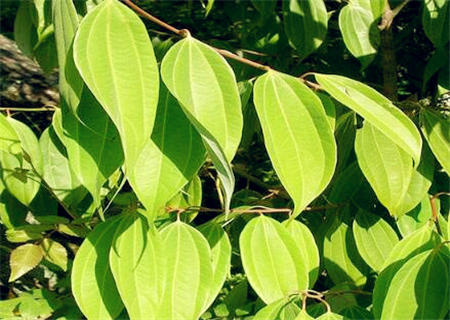
How much is cinnamon per jin:
The market wholesale price of cinnamon is about 7-10 yuan per jin. Cinnamon is a commonly used traditional Chinese medicine, and also a food spice or cooking seasoning. The original plants of commercial cinnamon are relatively complex, with about ten or more species, all belonging to the genus Cinnamomum in the Lauraceae family. Eight species are commonly used in various places, among which the main ones are gui tree, blunt-leaved cinnamon, yinxiang and South China cinnamon, while other species are mostly used regionally. Various varieties were used as spices in ancient Western times. In Chinese cuisine it is used to season stewed meat and is one of the ingredients of five-spice powder. It is one of the earliest spices used by humans.
After cinnamon is planted, it can be harvested and stripped of bark after 15-20 years. Bark harvested in February-March is called spring cinnamon and is of poor quality. Therefore, in late June, a ring of bark can first be stripped from the base of the tree. This can both increase the accumulation of oil in the phloem and facilitate bark stripping.
Processing specifications of cinnamon after harvest:
Quanbian cinnamon: Strip bark from cinnamon trees over 10 years old, cut both ends neat, clamp them between wooden concave-convex boards, and sun-dry.
Ban cinnamon: Clamp the cinnamon bark in cinnamon clamps, sun-dry until 70-80 percent dry, take it out, stack it crisscross, press it, and dry it.
Guangui (guitong): Strip the trunk bark and thick branch bark of 5-6 year old young trees, air-dry for 1-2 days, roll into tube shapes and dry in the shade.
Cinnamon, also known as guipi. Sources: yugui, whose branches (cinnamon twig), mugui, yushu, dagui, lagui, ping'an tree, and gui tree bark. Chinese cinnamon is the dried bark of the plant cinnamon in the Lauraceae family. The bark is aromatic and can be used as a spice. It is mainly distributed in the hot and humid regions of Guangxi, Guangdong, Fujian, Taiwan, China and Yunnan in China, with the largest amount in Guangxi. Generally, it grows better in foggy and humid mountainous areas than on flat land.
Seed selection: Seeds from robust 12-15 year old trees.
Sowing: Mixing seeds with New High Lipid Film can prevent disease and increase the germination rate. On the prepared nursery bed surface, sow the seeds at a row spacing of 20-25 cm and a plant spacing of 5-7 cm. After sowing, cover with soil level with the bed surface, cover with a thin layer of grass, pay attention to watering, and spray New High Lipid Film to keep the bed soil moist. After 20-30 days, the seeds begin to germinate. When the seedlings grow 3-5 true leaves, start topdressing with dilute human manure or urea liquid fertilizer, then topdress once every 1-2 months, with the last topdressing in August-September, applying plant ash or turf mud, etc. While topdressing, spray Zhuangjingling solution, which can make the plant stems thick and strong, the leaves thick, the leaf color fresh and tender, and the plant luxuriant, with a rich natural taste. At the same time, it can improve disaster resistance, reduce the amount of pesticides and chemical fertilizers, and save costs.
Transplanting: The transplanting time for cinnamon seedlings is suitable before new buds sprout in March, and should be done on cloudy days or in light rain. Before lifting the seedlings, first prune the lower side branches and leaves, and cut off 2/3 of the upper leaves. When lifting the seedlings, keep as much soil as possible, and if the main and side roots are too long, shorten them appropriately. If the afforestation site is far away, dip the roots in yellow mud slurry and wrap them well with rice straw. When planting, place the seedling into the hole, straighten the roots, fill fine soil into the root gaps, lift the seedling gently to spread the root system, then cover with soil and press firmly, so that the hole surface is 1-2 cm lower than the ground, and water thoroughly to settle the roots. In dry weather, cover the hole surface with rice straw or leaves. Within 1-2 months after planting, water regularly to keep the soil moist. In February-March, before the plants sprout and form buds, apply one application of dilute human and livestock manure water. Before flowering, at the young fruit stage, and at the fruit expansion stage, spray Zhuangguodiling once each time to thicken the fruit stalk and increase nutrient transport. Prevent flower drop, fruit drop, fruit cracking, stiff fruit and deformed fruit, making the fruit brightly colored, beautiful in shape and good in taste. In July-August, apply turf ash, superphosphate and human manure once, 10 kg per plant. After winter begins, use 100 kg of barnyard manure plus 3-5 kg of phosphate rock powder, compost for one month, then apply 10-15 kg per plant. Open a ring ditch beside the plant and apply it in, then cover with soil after application. If dry fertilizer is applied, water if there is no rain. The main disease of cinnamon is anthracnose, and the main pests are clearwing moths and longhorn beetles, so attention should be paid to prevention and control.