When is the best time to plant cauliflower? High-yield growing techniques and profit analysis per mu
Cauliflower, also known as Chinese kale, broccoli, and cauliflower, is a relatively common vegetable in China. It is deeply loved by people for its high vitamin and mineral content. At present, it is grown in many regions of China. So when is the best time to plant cauliflower? How do you grow it for high yield? About how much money can you earn from growing one mu?
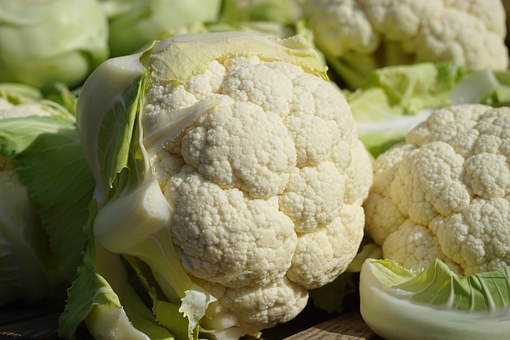
Cauliflower planting time:
Spring cauliflower should be raised as seedlings in a greenhouse or cold frame in late December and transplanted under protection in early to mid-March; for open-field cultivation, transplant in late March to early April, not too early or too late. For autumn cauliflower, the sowing period should be even more strictly followed, generally sowing in late June to early July, transplanting in late July to early August, and completing harvest from late September to late October.
In spring, the temperature is low and the seedlings grow slowly. The seedling age is generally 45-60 days, and they can be transplanted once they have 4-5 true leaves. When using greenhouse seedling raising and open-field transplanting, the temperature and humidity in the seedling greenhouse should be adjusted according to the suitable period for open-field transplanting to ensure the seedlings can be transplanted on schedule.
There is a slight difference in sowing time between the north and south. The autumn sowing time is between June and July.
Planting methods:
1. Choose good varieties. In spring, it is advisable to use mid- and late-maturing varieties, and in autumn, early- and mid-maturing varieties.
2. Sow and transplant at the right time. Spring cauliflower should be raised as seedlings in a greenhouse or cold frame in late December and transplanted under protection in early to mid-March; for open-field cultivation, transplant in late March to early April, not too early or too late. For autumn cauliflower, the sowing period should be even more strictly followed, generally sowing in late June to early July, transplanting in late July to early August, and completing harvest from late September to late October.
3. Cultivate strong seedlings of the right age. Use nutrient pots for seedling raising. The germination and seedling stages of autumn cauliflower are in the high-temperature and rainy season, so shading measures should be taken. Generally, autumn cauliflower seedlings are transplanted at 25—30 days of age with 5—6 leaves, while spring cauliflower seedlings are transplanted at 70—80 days of age with 5—7 leaves.
4. Ensure water and fertilizer supply. After cauliflower is transplanted, along with watering to help the seedlings recover, apply 10 kg of urea per mu, then begin seedling hardening. When the curd diameter is about 3 cm, end seedling hardening and apply 25 kg of urea per mu with irrigation. After that, water once every 4—5 days, taking care to keep the bed surface moist.
5. Pay attention to pest control. Spraying with 2.5% decamethrin 5000-fold solution and 20% fenvalerate 2000-fold solution can control aphids and cabbage caterpillars. Be careful not to use highly toxic pesticides.
6. Cover the curd in time and harvest at the right time. After the small curd forms, fold the leaves inward to carefully and promptly cover the curd. When the curd has fully grown, is white, firm in texture, regular in surface, and the edges have not yet spread open, it is the harvest period.
Planting benefit analysis:
Cauliflower is generally sown in early spring and autumn. Autumn yield is higher than spring sowing yield. Taking autumn sowing as an example:
1. Early-maturing harvest period is 45-60 days. Taking Yamei as an example, the yield per mu is 4000-5000 jin;
2. Mid-maturing harvest period is 65-80 days. Huafei yields 4500-6000 jin per mu;
3. Late-maturing varieties have a harvest period of 85-100 days. Baishengwang has an average yield of 6000-7000 jin per mu, and Dongjiang at 100 days yields 6500-8000 jin.
Cauliflower prices fluctuate with market supply, and off-season cultivation makes it easy to obtain high prices.