Planting Time, Blooming Period, Planting Methods and Yield per Mu of Biennial Winter Rapeseed
Winter rapeseed, also known as yuntai, hancai, hucai, kucai, taijie, piao'er cai and fofu cai, refers to rapeseed that needs to overwinter during its growth. So when is winter rapeseed planted and when does it bloom? How is it planted? What is the approximate yield per mu?
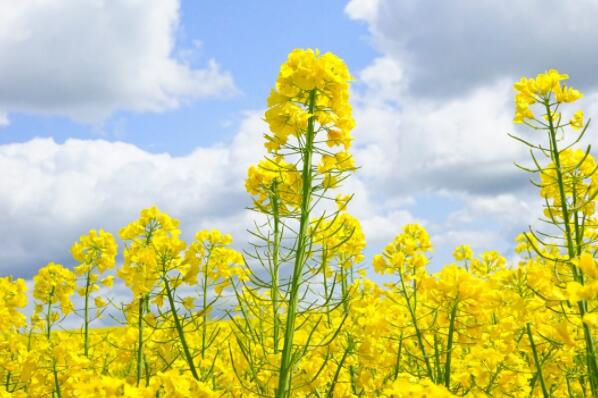
When is winter rapeseed planted and when does it bloom?
Planting:
1. Choosing a suitable sowing time is very important for rapeseed cultivation. Rapeseed is generally sown from late September to mid-October. However, this timing also varies by region and can be divided into spring sowing and autumn sowing; it can be rotated and intercropped with other crops. Sometimes two or three harvests a year are possible. For winter rapeseed in the north, some winter manure can be applied to protect the rapeseed from freezing.
2. In northwestern Chongqing, sow in early to mid-September; in southeastern Chongqing, sow in mid to late September. In the same region, places with higher altitude sow earlier, while places with lower altitude sow slightly later. Before sowing, mix the seed with Xin Gaozhi Mo (new high-fat film), which can preserve warmth, retain moisture, promote imbibition, increase the seed germination rate and make the seedlings strong. It repels underground pests and isolates viral infection. It can also be mixed with seed coating agents. Sow quantitatively by bed with even seed drop; after sowing, apply diluted human and livestock manure to soak through, then scatter plant ash as a shallow cover so the seeds are not exposed.
Blooming:
Winter rapeseed accounts for more than 90% of both area and production, mainly concentrated in the Yangtze River Basin, while spring rapeseed is concentrated in the Northeast and Northwest regions, with the Hailar area of Inner Mongolia being the most concentrated. Planted at the end of September and harvested at the end of May, it is sown in autumn and blooms in spring.
How is winter rapeseed planted?
Winter rapeseed plants are tall and have a long growth period, so they need more fertilizer. The following points should be noted in fertilization:
1. For every 100 kg of rapeseed produced, 8.8-11.3 kg of nitrogen, 3-3.9 kg of phosphorus and 8.5-10.1 kg of potassium need to be absorbed. According to the target yield, combined with differences in soil fertilizer supply and cultivated varieties, determine the type, quantity and application timing of the fertilizer needed.
2. Rapeseed base fertilizer is divided into bottom fertilizer and seed fertilizer. For bottom fertilizer, apply about 3 tonnes of farmyard manure per mu, together with 11-16 kg of urea or 25-27 kg of ammonium sulfate (nitrogen fertilizer used as bottom fertilizer generally accounts for more than 30%-50% of the total nitrogen fertilizer), 20-30 kg of superphosphate and 5-10 kg of potassium chloride. If the bottom fertilizer is insufficient, use seed fertilizer to make up for it, generally using decomposed human manure and urine plus quick-acting phosphorus and potassium fertilizer, applied concentrated in the rows or holes when sowing or transplanting rapeseed.
3. Rapeseed topdressing is mainly used as seedling fertilizer and stem fertilizer. If the bottom fertilizer is lacking and the rapeseed grows poorly, apply the seedling and stem fertilizer early and appropriately increase the amount of topdressing. When the rapeseed seedlings have 4-5 true leaves at the seedling stage, during thinning and final thinning, apply 3 kg of ammonium sulfate per mu together with decomposed human and livestock manure and urine as a seedling-promoting fertilizer. Stem fertilizer plays a great role in promoting the growth and development of rapeseed, increasing branches and pods; bud and stem fertilizer generally accounts for 30%-40% of the total topdressing. The number and weight of rapeseed seeds are related to late nutritional conditions. At flowering and pod-setting, if ventilation and light transmission are good and there is no shading, spray 1% urea or superphosphate or potassium dihydrogen phosphate.
4. Although rapeseed requires less phosphorus than potassium, it is sensitive to it. Phosphorus can promote growth and development and increase the oil content of seeds. Phosphorus can be repeatedly used within the rapeseed plant, so it is best applied as seed fertilizer or in holes during transplanting. It should be applied at the latest before the 5-leaf stage. Rapeseed roots have a strong ability to absorb phosphorus; for planting rapeseed in acidic soil, calcium magnesium phosphate fertilizer should be used. Applying sparingly soluble phosphate rock powder also works well. The amount of phosphate fertilizer is generally 20-30 kg of superphosphate or calcium magnesium phosphate fertilizer per mu.
5. When the soil lacks potassium and the available potassium content is below 90 mg/kg, the combined application of potassium fertilizer with nitrogen and phosphorus fertilizers has an obvious effect, while applying potassium fertilizer alone has a relatively low effect. Potassium fertilizer works best when applied concentrated as bottom fertilizer, using 5-10 kg of potassium chloride per mu.
6. Rapeseed is sensitive to the trace element boron; boron deficiency causes “flowers but no seed”. For boron application in the rapeseed field, spray once each at the seedling stage, stem stage and early flowering stage, using 50 g of borax per mu each time, diluted in 50 kg of water, sprayed on the leaves, with good results. However, boron must not be applied excessively to avoid toxicity.
What is the approximate yield per mu of winter rapeseed?
1. According to statistics from Zhejiang Province, a rapeseed production area, the current average rapeseed yield in Zhejiang is 167.93 kg per mu. Among this, there are rapeseed fields with a yield of less than 100 kg per mu, as well as experimental fields with a yield reaching 303.8 kg per mu.
2. Generally, sowing about 0.5-0.75 kg of seeds per mu of seedbed can produce 100,000-160,000 seedlings, enough to transplant more than 10 mu of field.