A Detailed Guide to Clivia Seed Germination Time, Price and Planting Methods
Clivia, also known as sword-leaf lycoris and large-leaf lycoris, is an ornamental flower of the genus Clivia in the Amaryllidaceae family. It is native to southern South Africa. It is a perennial herbaceous plant, and its flowering period lasts as long as 30-50 days. So, how long does it take for clivia seeds to germinate? How much does one jin cost? How do you plant them?
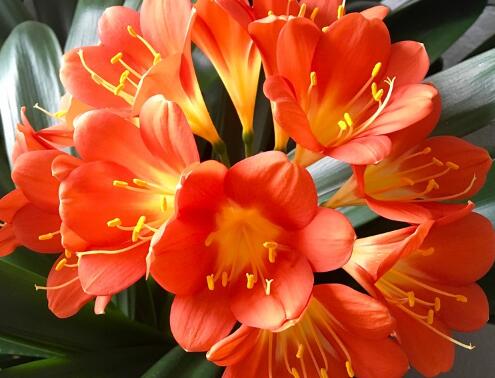
How long does it take for clivia seeds to germinate?
Clivia seeds germinate slowly; from sowing to the emergence of the coleoptile usually takes 40-45 days, and in ordinary home cultivation germination and sprouting can take as long as 2 months.
How much does one jin of clivia seeds cost?
The price of clivia seeds is 180 yuan/jin; prices vary depending on region and variety.
How do you plant clivia?
1. Choosing soil
The roots of clivia are fleshy roots, and it is suited to growing in loose, fertile soil with good aeration, so the soil used for cultivating clivia should be chosen to meet the above requirements.
2. Watering
Remember the watering principle——do not water if the soil is not dry, and when you do water, water thoroughly. Never water just a little at a time; that skim-the-surface approach is especially harmful to clivia. Also pay attention to the timing of watering, preferably in the morning or evening; at midday in summer, when the temperature is very high, it is not suitable to water. One more point: when watering, avoid the center of the plant, so as to prevent the heart from rotting.
3. Fertilizing
There is no doubt that fertilizer is an essential and important source of nutrients for vigorous plant growth, and of course clivia is no exception; it too likes fertilizer to supply nutrients. Fertilizing clivia should be determined specifically according to the size, variety and growth and development of the clivia. Too much or too little fertilizer is no good. Too much will cause root burn, while too little will lead to a lack of nutrients, and the leaves will noticeably become narrower and no longer stand upright.
4. Light
Clivia is a plant that likes moisture and is suited to growing in a high-humidity environment, but it has low light requirements; as long as the temperature is suitable, it does not matter whether the light period is a little longer or a little shorter. Although good light can ensure that the clivia flowers are brightly colored, it still prefers slightly weaker light, so be sure to avoid strong light.
5. Repotting
When clivia grows up, it is like a child growing up and no longer fitting in a small bed; at this point it needs to be given a larger pot, which is what is called “repotting and changing the soil.” The best time to change the soil is in spring and autumn, because clivia grows vigorously then and changing the soil will not affect the plant's growth. The most crucial point when changing the soil is to pack the soil firmly around the roots; otherwise, if there is no soil around the roots, then water and nutrients cannot reach the roots, and root rot is likely to result.
What is the flower meaning of clivia?
Flower meaning
Clivia belongs to the Amaryllidaceae family; its plant is elegant and handsome, with the bearing of a gentleman, and its flowers resemble orchids, hence its name.
The flower meaning of clivia carries the implication of “nobility.” This is also the origin of its species name nobilis (from the Latin nobelesse, meaning “noble.”).
In addition to “nobility” and “preciousness,” the flower meaning of clivia also carries the implication of “abundance and the demeanor of a gentleman.”
Clivia's flower meaning: noble, with the demeanor of a gentleman.