How much does a horse chestnut tree cost? Full analysis of planting methods and medicinal effects
The horse chestnut tree has a graceful shape, large and beautiful flowers, and peculiar fruit shapes. It is a rare tree species for foliage, flowers, and fruit viewing, and is one of the world's famous ornamental tree species. So, how much does a horse chestnut tree cost? How do you plant it? What effects and functions does it have? It is understood that a horse chestnut tree of 5cm costs 65 yuan; 6cm 130 yuan; 7cm 220 yuan; 8cm 380 yuan. Prices may vary due to different regions, specifications, and varieties.
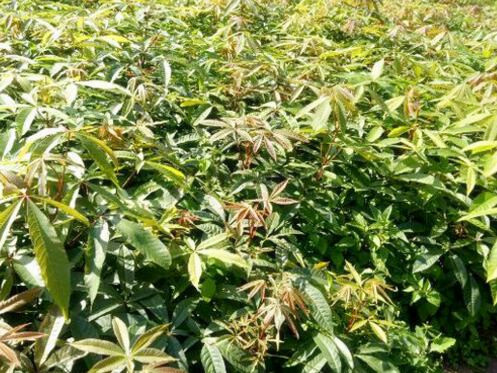
How do you plant a horse chestnut tree?
1. Planting pit
The horse chestnut tree has a deep main root and few lateral roots, and is a tree species that does not tolerate transplanting well. Therefore, when transplanting, it must be moved with a soil ball, and the diameter of the soil ball should be 6 to 8 times the diameter at breast height of the tree. Planting horse chestnut trees should be carried out in early spring before bud break or in late autumn after all the leaves have fallen. In order to improve the survival rate of planting, the planting pit should be dug as large as possible before planting, as this is beneficial to the growth of the plant. When planting, care should be taken not to plant too deep, as too deep can easily cause the plant to suffocate its buds. Generally speaking, the planting depth can be slightly higher than the upper surface of the soil ball by 3 cm to 5 cm. When planting, the backfilled soil should be compacted layer by layer.
2. Watering
After planting, water immediately for the first watering, water the second time after one week, and water the third time after about another 10 days. After the third watering, watering can be done according to soil moisture conditions. Generally, a thorough watering can be given once a month. July and August are periods of abundant rainfall, so watering can be reduced or omitted. In September and October, a thorough watering can be given each month. In late November or early December, water thoroughly and sufficiently for the freezing water. In early March of the following year, water thoroughly and sufficiently for the thawing water. April and May are spring drought periods, and the spring monsoon lasts a long time with strong winds, so the transpiration of the plant is relatively high. Therefore, the watering frequency can be increased to once every 15 days, and thereafter once a month with thorough watering. At the end of autumn, water well for the freezing water. In the third year, water according to the method used in the second year. From the fourth year onward, five waterings must be done well each year: the thawing water in early spring, water before flowering, water after flowering, water for fruit enlargement, and freezing water in late autumn. Each watering is very important and should be done thoroughly. In addition, during dry seasons, water should be replenished in a timely manner. Doing so is beneficial to the growth of the plant and can make the crown full and the branches thick and strong.
3. Fertilizing
The horse chestnut tree likes fertilizer, so sufficient base fertilizer should be applied before planting. The base fertilizer is preferably farmyard manure such as cow and horse manure and decomposed leaf fertilizer. Although these fertilizers have low nutrient content, they are mild and also help improve soil looseness. The base fertilizer should be thoroughly mixed with the planting soil. Sufficient fertilizer can accelerate its growth rate and improve the plant's resistance to pests and diseases. In addition to applying base fertilizer at planting, fertilizer should also be applied throughout the entire growth period, including for some large-specification street trees. In mid-June of the first year after planting, urea can be applied once. This fertilization can promote branch and leaf growth and increase the nutritional area. In late August, a phosphorus and potassium fertilizer can be applied once. This fertilization can improve the lignification degree of new branches, enhance the plant's resistance to freezing damage, and help the plant overwinter safely. At the end of autumn, in conjunction with watering the freezing water, some semi-decomposed fermented leaf fertilizer can be applied. This fertilization can be applied in a larger amount and should be applied shallowly. In early April of the following spring, urea can be applied once as a top dressing. In mid-August, a phosphorus and potassium fertilizer can be applied once as a top dressing. At the end of autumn, farmyard manure can be applied once according to the method used in the first year. In the third year, fertilize according to the method used in the second year. From the fourth year onward, a three-element compound fertilizer can be applied once each spring as a top dressing, and farmyard manure can be applied once at the end of autumn. This is beneficial both for accelerating plant growth and for helping the plant overwinter safely.
4. Pruning
The shaping and pruning of horse chestnut trees should be carried out after leaf fall in winter each year or before bud break in the following spring. Since the crown of the horse chestnut tree is a natural round-headed shape, it is best to maintain the original crown shape. Shaping and pruning should mainly follow the principles of maintaining a beautiful crown and ventilation and light penetration, thinning out overly dense branches and shortening overly long branches so that the branches are evenly distributed and grow robustly. Dead branches, pest- and disease-infected branches, inner canopy branches, slender branches, and poorly growing branches should also be pruned away, which is beneficial for concentrating nutrient supply and forming a good crown.
What effects and functions does the horse chestnut tree have?
1. Landscaping
The horse chestnut tree has a towering and straight trunk, a large and dense crown, and is covered with abundant flowers in early summer. Its huge white inflorescences resemble a magnificent candelabra and are truly spectacular. It is an excellent street tree and garden ornamental plant. It can be used as a greening tree species for pedestrian walkways, parks, and plazas. It can be planted alone or in groups, or mixed with evergreen trees and broadleaf trees. In Europe, the United States, Japan, and other places, horse chestnut trees are widely cultivated as street trees and shade trees. In North America, horticultural varieties of horse chestnut with red or pink flowers and double flowers are planted along roadsides, and the scenery is very beautiful when the flowers bloom.
In China, horse chestnut trees are often planted alone or in front of buildings and among sparse forests. China has a relatively large number of tree species in the Hippocastanaceae family and they are widely distributed, but most tree species are still at a stage where they have not been properly managed and utilized.
2. Medicine
[Yi medicine] Pizou: The bark is used for acute and chronic gastritis and stomach cold pain, "Yi Medicine Chronicles", "Chu Yi Materia Medica".
[Mongolian medicine] Daoluoqi-Jimusi, Baosuocha, Suoluozi: The seeds treat chest and epigastric distending pain, malnutrition in children, and dysentery, "Mongolian Medicine".
[Miao medicine] The fruit is used for stomach duct distending pain, "Xiang Lan Kao".
Seed (Semen Aesculi): Sweet, warm. Regulates qi and relieves stagnation in the middle, harmonizes the stomach and relieves pain. Used for liver-stomach qi pain, abdominal distension and fullness, premenstrual abdominal pain, breast distension, malnutrition and worm pain in children, and dysentery.
3. Economy
The horse chestnut tree can be used as food, medicine, timber, and more. The leaf buds can be used as a tea substitute, the bark and roots can be made into soap, the leaves and flowers can be used as dyes, and the seeds can be used to extract starch and oil. They can also be eaten and taste similar to Chinese chestnuts, and can be used as medicine, with effects such as calming the nerves, regulating qi, and killing insects. The wood is light in texture and can be used for papermaking, carving, and making furniture and handicrafts.