Can hyacinths, which are perennial herbaceous plants, be placed in the bedroom? Seed prices and planting methods
Hyacinth, also known as Dutch narcissus, Western narcissus, five-color narcissus and shiyangjin, is the most fragrant variety among the flowering plants discovered by research. So can hyacinths be placed in the bedroom? Roughly how much is a jin of seeds? What are the planting methods? Learned from flower grower Aunt Li that generally the flower market sets prices according to the size of its bulbs; large ones are 10 yuan or more, and small ones are 3 yuan or more!
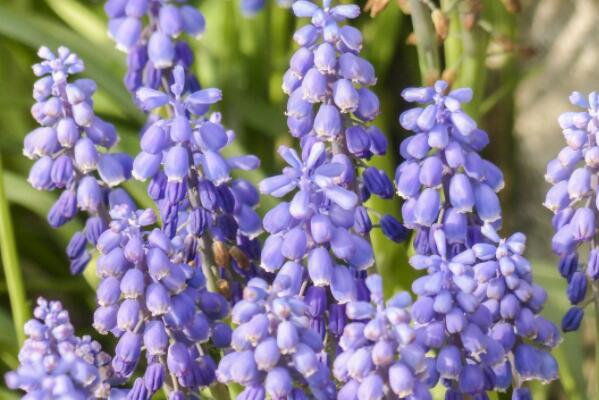
Can hyacinths be placed in the bedroom?
Hyacinths cannot be placed in the bedroom.
1. Hyacinth is actually a flower that contains a small amount of toxins. The flowers it produces are not toxic, but the pollen it produces can cause allergic reactions in people with an overly pollen-sensitive constitution.
2. Although hyacinth generally will not cause much of a problem if you do not touch it, its pollen can spread in the air, and this pollen easily causes allergies in the human body. The fragrance of hyacinth can affect people's sleep. If it is placed in the bedroom, smelling too much of the fragrance while sleeping at night may cause insomnia, make the fresh air in the bedroom become stale, and bring adverse effects on the body. At the same time, hyacinth should also be kept out of the study as much as possible, because that easily affects reading efficiency and causes a lack of oxygen to the brain. Therefore, try not to place hyacinth in the bedroom, and you can choose other flowers to place instead.
What are the planting methods for hyacinth?
1. What kind of environment is suitable for hyacinth
Hyacinth by nature likes sunlight and has the characteristic of being cold-tolerant. Generally, relatively loose and fertile sandy soil is more suitable for its growth, and it must not retain too much water, so everyone must pay attention to doing a good job of drainage measures for planting, which is very crucial. In addition, hyacinth can grow better in a cool and moist environment. Whether it is planted outdoors or appears in the form of a pot, as long as such a growing environment is ensured, it can grow better.
2. How should the land be prepared for sowing hyacinth
When sowing hyacinth, the soil must be handled well for drainage, but attention must also be paid to maintaining a certain degree of moisture. Of course, the nutrients in the soil also need to be ensured. At this time, choosing a ratio of leaf mold soil to garden soil of 5:3 is relatively good. Before sowing, choose to apply formalin to the soil surface, and then immediately cover it with plastic film. After three days of suitable temperature weather, remove the plastic film, let it air for one day, and then carry out the planting of hyacinth. This is to better kill the bacterial substances in the soil and can better create a good growing environment for the germination and growth of hyacinth.
3. How to plant hyacinth
There are two ways to plant hyacinth. One is the method of dividing bulbs, and the other is direct sowing. Bulb division mainly involves digging up the bulbs in June every year, and then cultivating the large bulbs and small bulbs separately to achieve the purpose of propagation. Generally speaking, large bulbs can bloom in early spring of the second year, while small bulbs need to be cultivated for three years before they can bloom. As for the sowing method, sowing is carried out in autumn, covering the seeds with about 1 cm of soil, and they can sprout in early spring of the second year. Of course, any cultivation and planting process actually requires a lot of time, so everyone must not be too impatient, but should treat it carefully and cautiously.
4. How to care for hyacinth
Although hyacinth is not a very delicate plant, it is also troubled by many pests and diseases, and a little carelessness in maintenance may lead to planting failure. Generally speaking, the more common diseases include bud rot and soft rot. For such situations, the main thing is to handle the aforementioned foundation disinfection issue well. In addition, the selection and disinfection of bulbs are also essential. The growth of hyacinth does not require too much water, so in terms of maintenance, attention must be paid to controlling the amount of watering, and at the same time strengthening ventilation management.