How to Grow Acanthaceae Nerve Plant? Treatment Methods for Wilting and Its Benefits
Nerve plant belongs to the Acanthaceae family, genus Fittonia. Because it is delicate and compact, with clear leaf veins, elegant leaf color, and symmetrical texture, it is deeply loved by people and is currently a very popular small potted variety in Europe and America. So, how do you grow nerve plant? What to do if it wilts? What are its benefits?
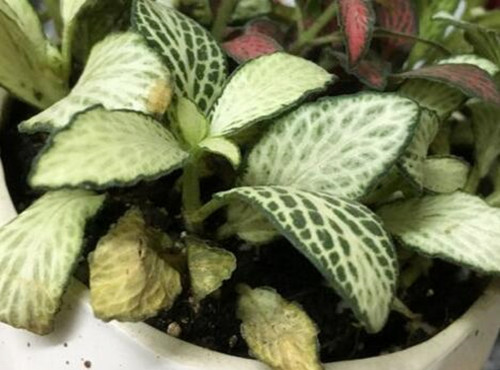
How to Grow Nerve Plant?
1. Potting soil: The best growing medium for nerve plant is sandy loam rich in humus, or you can use a mix of 50% fine tree fern fiber, 20% peat moss, and 30% river sand. For potted nerve plant, you can use equal parts peat soil, leaf mold, and river sand mixed together.
2. Potting up: When potting up nerve plant cuttings, be careful not to damage the roots, and keep them separate from fertilizer to avoid burning the roots. After planting, water to settle the roots, then you can move to normal care.
3. Light: Nerve plant prefers moderate light intensity and dislikes direct sunlight, but it is also fairly shade-tolerant. Indoors, it is best placed by a bright window.
4. Watering: You must be careful when watering nerve plant. If the potting soil dries out completely, the leaves will curl up and fall off. If it is too wet, the stems are prone to rot.
5. Fertilizing: For vigorously growing nerve plant, you can apply a nitrogen-based compound fertilizer at half the normal concentration once every half month.
6. Temperature: Nerve plant prefers warmth, with an optimal growing temperature of 18-25°C. Nerve plant has poor cold tolerance; when the temperature drops below 12°C, the leaves will suffer cold damage, and at around 8°C the plant may die.
What to Do If Nerve Plant Wilts?
1. Lack of water
Because some growers do not water thoroughly, nerve plant ends up short of water. The best solution is to replenish water immediately; generally, it will recover within half a day. The correct watering method is to check the surface soil, water alternately when dry and moist, and water thoroughly when you do water. Do not water on a fixed schedule; adjust based on the soil and the weather. The surface soil refers to the top 3-5 cm shallow soil layer. Test the moisture with a toothpick or tweezers, and water thoroughly once it has dried out.
2. Overwatering
Frequent watering causes water to accumulate inside the soil, preventing the roots from breathing properly, which leads to root rot and wilting. Generally, plants with root rot from water accumulation are hard to revive. Growers can try pulling it out and replanting, but the chances of recovery are not very high.
3. Temperature too low
When the temperature drops below 13°C, nerve plant will develop yellowing, withered leaves and wilting. So in regions where the temperature cannot be maintained in winter, it is advisable not to grow nerve plant casually.
What Are the Benefits of Nerve Plant?
1. Nerve plant has a light and graceful posture, a small and exquisite plant form, clear leaf veins, elegant leaf color, and symmetrical texture. Its leaves are fresh and beautiful, making it especially suitable for potted ornamental display, with extremely high ornamental value. It is already very common on windowsills, balconies, and in living rooms in Europe and America, which shows that nerve plant has a special charm.
2. Nerve plant's leaves are fresh and beautiful, especially suitable for potted ornamental display. Using it to decorate rest areas, display windows, and lobbies of hotels, shopping malls, and airports, whether placed individually or in groups, can achieve good results. Potted plants or hanging baskets used for home decoration, placed on desks, coffee tables, or windowsills, are verdant and elegant, light and soft, making people feel fresh and comfortable. Small-leaf nerve plant is also commonly used in Europe and America to make bottle gardens or box gardens for ornamental display, which is also quite unique.
3. Nerve plant is petite and exquisite, with vivid leaf color. The clear grid-like patterns on the leaves often give people a sense of elegance and refinement. In addition, it is very shade-tolerant and can grow vigorously indoors. Moreover, as nerve plant grows, its branches and leaves often droop, making it suitable as a small potted foliage plant. Nerve plant can increase indoor air humidity, beautify the environment, and also produce oxygen, relieving nervous tension and visual fatigue. When you feel mentally tired, you can look at the nerve plant beside you to open up your thoughts and relax your tense nerves.