Common Morning Glory in Rural Areas: Blooming Time, Medicinal Value and Planting Techniques
Morning glory, belonging to the genus Ipomoea in the family Convolvulaceae, is an annual twining herb. The flowers of this plant closely resemble a trumpet shape, so in some places it is called "trumpet flower." So, when does the common morning glory in rural areas generally bloom? What medicinal value does it have? What are the planting techniques?
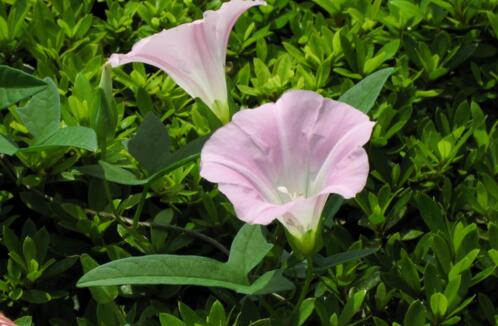
I. When does the common morning glory in rural areas generally bloom?
The flowering period of morning glory is at its peak in summer. The flowering period of morning glory generally runs from June to October, usually blooming at 4 or 5 o'clock in the early morning, and by around noon the flowers have withered. This is because the flowers of morning glory are large and thin, and contain abundant moisture; when the sun shines on them, the moisture in the flowers evaporates in a relatively short time. If in a cool place, morning glory wilts more slowly, and sometimes the flowers are still open even in the afternoon.
II. What medicinal value does it have?
The seeds of morning glory are a commonly used traditional Chinese medicine. The black ones are called "Hei Chou" and the pale yellow ones are called "Bai Chou." They contain resin glycosides, pigments, fatty oils, organic acids and other components. Hei Chou is mostly used in medicine, with the effect of promoting diuresis, mainly treating edema and abdominal distension, difficulty in urination and defecation, and other symptoms. The traditional Chinese medicine Hei Chou, that is, the seeds of the black morning glory, ground into fine powder and mixed with egg white, applied to the affected area before bedtime, then washed off with clean water the next morning, used continuously for one week, has the effect of eliminating freckles. It is particularly important to note that Hei Chou is somewhat mildly toxic, so never take it orally.
III. What are the planting techniques for morning glory?
1. Planting: When planting morning glory, sow 4 to 5 seeds per pot, and crack the seed coat slightly. Keep the temperature at 25°C, and germination will occur in about 7 days. When the leaves grow out, they can be transplanted, separating the tray with soil. When planting morning glory, first choose well-drained soil, provide appropriate ventilation and sufficient sunlight, and water it; apply dilute fertilizer once every half month, control the amount of nitrogen fertilizer well to prevent the stems and leaves from growing too luxuriantly.
2. Setting out: When the seedlings grow 6 to 7 leaves and are about to extend their vines, take the whole root ball out and repot it into a standard pot (inner diameter 24 cm) for final planting. The potting soil should be fertilized culture soil, and apply 50 g of hoof pieces as base fertilizer, then water thoroughly after planting. Morning glory is not afraid of heavy fertilizer; horse hooves, cooked sesame residue and the like can be used as base fertilizer. The root system development of morning glory needs temperature; using a black pot absorbs heat better than using a red pot. Frequently turn the pot so that sunlight is even and the root system develops fully.
3. Soil: For potted morning glory, it is best to do this in early April, using ordinary culture soil and plain sandy soil in equal halves. When potting, remove 1 cm from the lower end of the main root accordingly, and plant it in a No. 2 tube pot with ordinary culture soil, one plant per pot. Note that when transplanting morning glory in the open field, never bruise the main root; transplant seedlings when small and early, and the larger the soil ball the better.
4. Water and fertilizer: For growing morning glory, choose well-drained culture soil, provide sufficient sunlight and a well-ventilated environment. During the growing period, water when the soil surface in the pot is slightly dry, apply dilute liquid fertilizer once every half month, and nitrogen fertilizer should not be too much, so as to avoid the stems and leaves growing too luxuriantly. Potted plants need supports to hold them up.
5. Pinching: After the potting soil has settled, insert a thin bamboo pole 1 m long straight into the center of the pot. Then use about 3 m of galvanized wire, wrap one end around the bamboo pole level with the soil surface, then spiral upward from the pot rim, forming an evenly tapered tower-shaped spiral frame that is wide at the bottom and narrow at the top. Fix the upper end of the wire to the top of the bamboo pole. Morning glory is a left-twining plant, so the spiral direction of the galvanized wire must match the habit of morning glory twining to the left. When the main vine climbs to the top of the pole along the wire, pinch off the growing tip. Pinch the side vines each time they grow to 6 to 7 leaves; this makes the flowers large and keeps producing vines and flowers.