How much is Pinellia ternata (banxia) seed per jin? 2018 planting prospects analysis
The herbal medicine Pinellia ternata seed, Huzhang, is an annual herbaceous plant of the genus Pinellia in the Araceae family. Common names: banxia, banxiazi, da san bu tiao, du bai jia zi, gou zhua banxia, lü yu zi, ma yu guo, ma yu zi. So how much is the price of “banxiazi” per jin in 2018? What are the planting prospects?
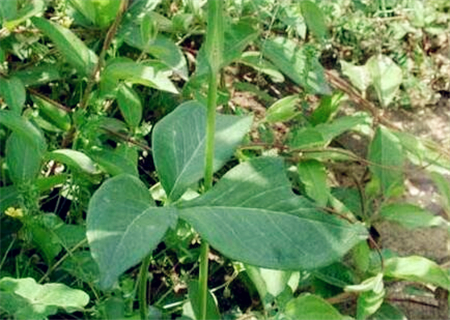
The purchase price of banxiazi is about 7 yuan per jin. The useful part of the rhizome should be picked off, and the leaves can only be thrown away.
Planting prospects for banxiazi
1. Pinellia ternata has inconsistent light requirements throughout its life cycle. In the early growth stage in spring, because temperatures are relatively low, it needs light; in the mid-growth stage in summer, when temperatures are high and sunlight is intense, it can only grow normally under shaded conditions; entering the late growth stage in autumn, because sunlight intensity gradually weakens, and there is more rain, with high soil and air humidity, it again needs light.
2. Pinellia ternata cultivation has strict requirements for soil and terrain selection. It is afraid of both drought and waterlogging, afraid of salinity and alkalinity yet cannot tolerate too much acidity, likes organic matter yet fears chemical fertilizers; therefore, low-lying land is unsuitable, and slightly clayey soil is also not good. It must be sandy loam or light loam, and it must be able to drain when waterlogged and be irrigated when dry. Only when this standard is met can it be planted, with no room for compromise.
3. Pinellia ternata requires relatively high investment. Generally, the total investment for seed stems, fertilizer, labor, and so on is about 1500 yuan per mu, which generally makes farmers fearful, worried that once invested the money will be wasted. In addition, not understanding the technology or hearing about and seeing others' failures makes them afraid to plant it.
2. At present, the area of artificial cultivation of Pinellia ternata is not what it claims to be. Some time ago, during field investigations, quite a few medicinal herb farmers asked: “Why is it that with the Pinellia ternata I planted before, however many seed stems I sowed, I still harvested the same number of seed stems, with almost no increase in yield?” This is also one of the most common questions in recent telephone consultations.
The reasons are many. The main reason is that some units or individuals whose purpose is to sell seeds deliberately ignore the difficulty of cultivation technology, creating the illusion for growers that it is easy to plant, easy to manage, highly profitable, and a quick way to get rich. Some do not possess high-yield, high-quality cultivation technology at all, and may even have less traditional planting experience than old herb farmers, so how can they speak of high-quality, high-yield technology?
Second, China has many wild varieties of Pinellia ternata, but few are suitable for artificial cultivation after domestication. Using wild Pinellia ternata as seed under artificial cultivation conditions results in low adaptability to the man-made environment, an increased probability of “stem collapse,” and, combined with improper storage methods, more seed stem diseases and unstable yields.
Therefore, as far as China's artificial cultivation of Pinellia ternata is concerned, it is still in the initial stage. Bases that truly cultivate more than 100 mu to produce commercial Pinellia ternata are few and far between; while some so-called large-area Pinellia ternata planting bases generally exist in name only. Their real purpose is to obtain special support funds for Chinese medicinal materials from the state. Once that purpose is achieved, the so-called Pinellia ternata base changes its name and identity. This is a fact, and the author has absolutely not fabricated it.
3. Wild resources are gradually decreasing. Pinellia ternata grows wild on hillsides, by streams in damp grassy areas or under sparse forests. In addition, it also grows in farmland, but with deep plowing and intensive cultivation and the widespread use of chemical fertilizers, chemical pesticides, and herbicides, Pinellia ternata in farmland has basically disappeared.
Because hillsides, stream banks, and forest understories have been reclaimed for farming, forests have been cut down, and there has been uncontrolled large-scale digging year after year, the growing environment of Pinellia ternata has suffered severe damage, and its resources have gradually decreased. In addition, wild Pinellia ternata is rather scattered in distribution, and natural disasters such as drought and waterlogging are frequent, so it is currently on the verge of exhaustion.
The results of comprehensive analysis from all sides show that the Pinellia ternata market cannot become saturated within 3-5 years, prices will remain stable with a slight rise, the market is optimistic, and prospects are broad. However, it is precisely because of the special habits of Pinellia ternata and the difficulty of cultivation technology that its market prospects are viewed favorably. Therefore, it is recommended that first-time growers proceed cautiously.
Pinellia ternata belongs to the Araceae family and is an herb whose underground corms are used medicinally. It has the functions of drying dampness and transforming phlegm, and dispersing masses and eliminating stuffiness. It has very good effects on treating damp phlegm and cold fluids, vomiting, nausea, cough, excessive phlegm, headache, and insomnia. It is used in large amounts and is also a major export variety year-round, with very high planting prospects!
Current market situation of Pinellia ternata
1. Reduced output of wild Pinellia ternata: The Pinellia ternata goods on the market have always been mainly supplied by wild products. Because rural barren hills and wastelands are constantly being reclaimed and used, their wild environment has been destroyed, and in addition herb farmers have dug them without restraint year after year, in recent years their wild resources have been nearly exhausted. It is understood that in recent years the amount newly dug in main producing areas is less than two-thirds of previous years.
2. Increased domestic demand for Pinellia ternata: Pinellia ternata has the effects of relieving cough and transforming phlegm, lowering adverse qi and stopping vomiting, and reducing abscess swelling. It is a commonly used medicinal material. In the past two years, as domestic related pharmaceutical enterprises have developed and utilized new drugs and special drugs using it as a raw material, market demand for the commodity has increased day by day. In 2008, the transaction volume of the Pinellia ternata commodity market had already exceeded 7000 tons, an increase of more than 45% in sales compared with 2007.
3. Increased export trade of Pinellia ternata: Pinellia ternata is one of China's main export medicinal material varieties. As the international community recognizes the therapeutic effects of traditional Chinese medicine, orders for Pinellia ternata from countries such as those in Southeast Asia are increasing day by day, and the export volume of the commodity is constantly growing. According to statistics from foreign trade departments, in the past two years the export volume of this product has increased at a rate of 20%, and in 2008 the export volume was more than 3000 tons.
Cultivation conditions for Pinellia ternata. From the current production and sales situation of Pinellia ternata, the contradiction between supply and demand of the Pinellia ternata commodity will become increasingly prominent, and it will be difficult to ease within three to five years. Therefore, it is currently suitable to develop Pinellia ternata production. Farmers with the conditions can plant Pinellia ternata according to local conditions to increase income. Below let us look at the cultivation conditions for Pinellia ternata!