How much does a jin of Calendula officinalis seeds cost? Detailed explanation of planting methods and medicinal effects
Calendula officinalis, also known as pot marigold, was used in ancient Western times as medicine or dye, and also as cosmetics or food. Its leaves and petals are edible and used as a garnish for dishes. It is native to western Europe, the Mediterranean coast, North Africa and West Asia, and is now cultivated all over the world. So, how much does a jin of Calendula officinalis seeds cost? How to plant? What effects and functions does it have? It is understood that Calendula officinalis seeds cost 70 yuan/jin, though prices vary from region to region.
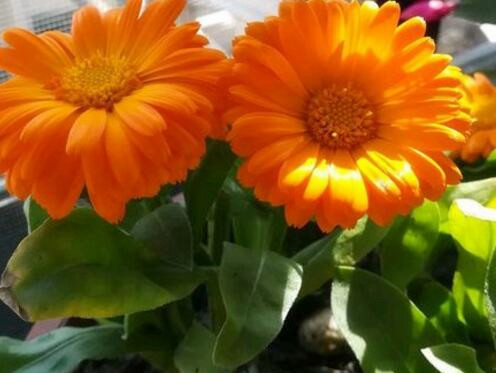
How to plant Calendula officinalis?
1. Shade in spring, summer and autumn: Calendula officinalis cannot tolerate strong direct sunlight, and needs timely shading in spring, summer and autumn. If the daytime temperature exceeds 25°C, do not place it directly in the sun, otherwise the leaves will noticeably become smaller, the distance between nodes will shrink, the lower leaves will gradually turn yellow and drop, and the plant's growth will gradually slow down or even enter a semi-dormant state. In winter, because the temperature is not high, direct light can be given to promote photosynthesis, which helps Calendula officinalis form flower buds, bloom and bear fruit. After the plant blooms, it can be kept indoors for 10~15 days, then moved to a shaded outdoor environment for one month. Alternating care in this way helps the plant accumulate nutrients and prolong the flowering period.
2. Needs warmth, avoid extreme heat: Calendula officinalis likes a warm climate and fears extreme heat. When the summer temperature is above 34°C, growth will be poor; it is not tolerant of frost and cold, and when the winter temperature is below 4°C, it will enter dormancy or even die. The most suitable growing temperature for Calendula officinalis is 15~25°C. During year-round care, attention should be paid to controlling the temperature well, opening windows in time for ventilation, and spraying water to cool down to control the indoor temperature.
3. Pinching and pruning: Cut off branches with old and yellow leaves once every two months. As long as the temperature is suitable, it can bloom in all four seasons. Before flowering, pinching is generally done twice to encourage more flowering branches to sprout: one to two weeks after potting, or when the seedlings are 6~10 cm tall and have six or more leaves, remove the top shoot and keep the lower 3~4 leaves to encourage branching. Three to five weeks after the first pinching, or when the side branches grow to 6~8 cm long, carry out the second pinching, that is, remove the top shoots of the side branches and keep the 4 leaves below the side branches. After two pinchings, the plant shape will be more ideal and the number of flowers will also be greater.
4. Control humidity and spray water in time: Calendula officinalis likes a moist environment. Keep humidity at 75~85%, and spray water in time during care to increase humidity, 1~3 times a day. On sunny days when the temperature is higher, appropriately increase the number of sprays; on cloudy and rainy days when the temperature is lower, appropriately reduce the number of sprays. However, with excessive spraying, the heading is easily infected by pathogens and rots, so water quality should also be noted when spraying.
What effects and functions does Calendula officinalis have?
1. It has the effects of clearing heat and detoxifying, and invigorating blood and regulating menstruation. It mainly treats conditions such as otitis media and irregular menstruation.
2. Calendula officinalis has a strong resistance to sulfur dioxide and also has a certain resistance to cyanide and hydrogen sulfide. It is an excellent pollution-resistant flower and is also a main material for spring flower beds. It can be used as a cut flower and potted plant.
3. Calendula officinalis is rich in a variety of vitamins, especially vitamin A and vitamin C; almost all parts can be eaten; its petals have a cosmetic function. The flowers contain carotenoids, lycopene, violaxanthin, rubixanthin, volatile oil, resin, mucilage, malic acid, etc. The roots contain bitter substances and arnidiol; the seeds contain glycerides, wax alcohols and alkaloids. Putting it into shampoo can lighten hair color.