How much does dandelion cost per jin? Plus yield per mu and planting methods and timing
Dandelion is also known as Huanghua Diding, Popodding, Huahualang and so on. It is a perennial herbaceous plant in the Asteraceae family. It grows widely in hillside grasslands, roadsides, fields and riverbanks in low- and mid-altitude areas. So how much does dandelion cost per jin on the market? What is the yield per mu? Below is a summary of dandelion planting methods and timing.
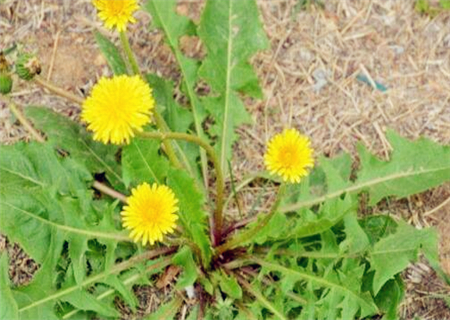
How much does dandelion cost per jin on the market? Dandelion tea: after the Spring Festival, trading in the flower tea market has been trending upward, dandelion tea is selling briskly, and the current market price is around 35 yuan.
What is the dandelion yield per mu?
Dandelion can be cut 6-7 times a year, producing 7200-8000 kg of fresh greens per mu, and can continue for 4-5 years.
If sold as medicinal material, the yield of dried product per mu is 580-650 kg, and the price is 5-6 yuan/kg.
After dandelion has grown continuously for two years, in late autumn the roots are dug out and dried in the sun, yielding 200-250 kg per mu, and the price is 12-15 yuan/kg.
Dandelion planting methods and timing
Early-maturing cultivation of dandelion
In early spring, when the soil temperature at a depth of 5 cm reaches 1-2°C, dandelion planted the previous year begins to sprout and grow new buds. Generally, before Qingming Festival (April 5), the new buds emerge from the ground, and by this time the "white bud" part in the soil is already 3-4 cm long. Therefore, wild dandelion can generally be marketed around April 20, when fresh leafy vegetables are scarce on the market, making it very popular with consumers. Artificially cultivated dandelion, because the growing environment and conditions are improved and measures such as plastic film mulching have been adopted, is marketed earlier than wild dandelion, which is of even greater practical significance for the vegetable market supply. Carry out bed-surface mulching: in northern regions, when the soil begins to thaw on March 20, plastic film or discarded plastic agricultural film can be laid flat as mulch, so that it can be harvested and marketed from April 7 to 10, about 10 days earlier than wild dandelion. For early-maturing cultivation in Northeast China, dandelion is usually planted in late July or early August, covered with agricultural film in late February or early March of the following year, and can be harvested and marketed in late March.
Field management of perennial plants
The longer the dandelion plant grows, the more developed its root system and the more luxuriant its aboveground growth, and the higher the yield and better the quality of the harvested product. Therefore, perennial cultivation should be carried out in production. For plots under perennial cultivation, attention should be paid to repeatedly pulling out weeds, and water and fertilizer management should be strengthened during the growing season, with timely harvesting. To bring it to market earlier, small arch sheds can be used for covering in early spring. In late autumn and early winter, one thorough watering should be given, and then the bed surface should be covered with horse manure or wheat straw, etc., to help the roots overwinter and to promote earlier sprouting of new plants in the following spring.
Harvesting methods for dandelion
When harvesting dandelion, a hook knife or small knife can be used to dig it up, cutting horizontally 1-1.5 cm along the ground surface, keeping the underground roots so they can grow new buds. Harvest the large plants first, leaving the medium and small plants to continue growing. It can also be harvested as some places in Northeast China do when picking celery leaves, but the leaves are scattered and do not form leaf bunches. For open-field cultivation, the average yield is 0.8-1.0 kg per sq m. For greenhouse cultivation, the average yield is 1.2-1.7 kg per sq m. For glasshouse cultivation, the average yield is 1.5-2.4 kg per sq m.