Medicinal plant Andrographis paniculata market price per jin, seed planting, and differences from Panax notoginseng
Andrographis paniculata, also known as Chuanlianqiuliu, Yijianxi, Lanhelian, Kudancao, Jinxiangcao, Jin'ergou, Yinducao, Kucao, etc. It is a medicinal plant with effects of clearing heat and detoxifying, reducing inflammation, reducing swelling and relieving pain. So what is the market price of Andrographis paniculata per jin? How are the seeds planted? What is the difference from Panax notoginseng?
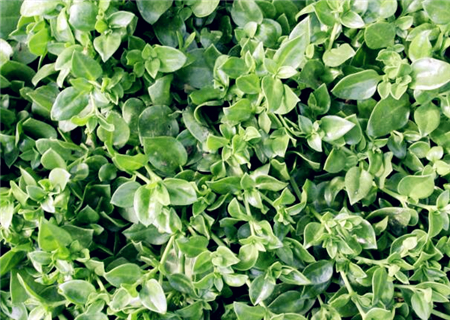
It is understood that the market for Andrographis paniculata has remained stable compared with the earlier period, and the current market price of Andrographis paniculata leaves is 9-10 yuan per jin.
How to plant Andrographis paniculata seeds
Site selection and land preparation
Andrographis paniculata prefers a hot and humid climate. It prefers sufficient sunlight and is fond of fertilizer. The optimum temperature for seed germination and seedling growth is 25-30°C. When the temperature drops to 15-20°C, growth slows; when the temperature drops to about 8°C, growth stops. When exposed to low temperatures of about 0°C or frost, the whole plant withers. Cultivation is best in fertile, loose, well-drained acidic and neutral sandy loam soil, and it can still grow normally in alkaline soil with a pH of 8.0.
Seed treatment
Andrographis paniculata commonly uses the seedling transplanting method or the direct seeding method, with the seedling transplanting method as the main method. When the fruit turns a uniform brown in September-October, pick in batches before the morning dew dries, place in a shady place to after-ripen for a few days, and cover with a lid to prevent loss from seeds bouncing out. After the pods have all split open, sieve away the fruit skin to obtain the seeds. Andrographis paniculata seeds are very small, with a 1000-seed weight of 0.93-1.52 grams. The seed coat is hard and covered with a layer of waxy material, so the sowing technique requirements are relatively high. Before sowing, rub the seeds with fine sandpaper or sand to remove the waxy seed coat, then soak the seeds in warm water, then place them in a 30°C incubator to sprout, and then sow.
Sowing time
The seedbed soil for Andrographis paniculata should be fertile and loose, raked level and fine. In Guangdong, Fujian and other places, sow in late February to early March in spring, and in July in autumn on high-ridge seedbeds. In Jiangsu, Zhejiang and Sichuan, use hotbeds for seedling raising in mid-to-late March, and cold frames for seedling raising in April. In North China and Northwest China, greenhouses should sow in early-to-mid March, hotbeds in early April, sunny cold frames in mid-April, and plastic tunnels are best sown from April 15-20.
Seedbed management
Seedbed management for Andrographis paniculata mainly involves controlling appropriate temperature and humidity. Before emergence, the seedbed should be kept moist frequently, and the relative humidity in the bed should be kept at 70-80%. After the seedlings emerge completely, soil moisture should be controlled to prevent damping-off. When the seedlings are 6-7 cm tall and have 3-4 pairs of true leaves, they can be transplanted. For direct seeding in Jiangsu and Zhejiang, it should not be earlier than mid-to-late April; in Sichuan, mid-April to early May; in Beijing, mid-May is suitable. When cultivating, it is best to divide into two types: seed fields and commercial fields. Seed fields should be transplanted from May to early June, with a row spacing of 50-65 cm and a plant spacing of 30-35 cm. Commercial fields can be planted from late May to early June, with a row spacing of 25-33 cm and a plant spacing of 16-20 cm, planting 105000-195000 plants per square millimeter.
Field management
Field management for Andrographis paniculata mainly involves timely watering to help the seedlings develop new roots. After that, cultivate and weed and apply topdressing once every 15-20 days. The topdressing is mainly nitrogen fertilizer, and human and livestock manure water, urea, etc. can be used. Field management is especially important in June, July and August; apply more nitrogen fertilizer and water frequently. When the plant height is 30-40 cm, earth up to prevent wind damage.
Pest and disease control
The diseases of Andrographis paniculata include damping-off, which occurs at the 1-2 pairs of true leaves stage; soil moisture can be reduced, soil can be treated with 50% carbendazim, or the diseased area can be irrigated with a 1000-fold solution. Damping-off occurs at the 2-3 pairs of true leaves stage; temperature can be controlled, ventilation should be paid attention to, and seedbed management should be strengthened. Black stem disease occurs at the adult plant stage; field management can be strengthened, standing water should be drained promptly, continuous cropping should be avoided, and during the disease period spray or irrigate the diseased area with a 50% carbendazim 1000-fold solution. For phytophthora blight, during the disease period spray or shallowly irrigate the diseased area with a 50% carbendazim 1000-fold solution. Pests include cotton bollworm, mole crickets and others.
Differences between Andrographis paniculata and Panax notoginseng
1. Andrographis paniculata. It is an annual plant, with relatively many branches on the lower stems, relatively few leaves on the inflorescence axis, very small floral bracts, and a very small corolla that is white with purple markings on the lower lip. It is mainly cultivated in Fujian Province, Guangdong Province, Hainan Province, Guangxi Province and Yunnan Province in China.
2. Panax notoginseng. Its main root is conical or cylindrical, grayish brown or grayish yellow, with stem scars on the top and protruding tumor-like structures around it. Panax notoginseng is mainly cultivated in Yunnan Province in China.