How to grow the medicinal plant Pinellia ternata? Planting time, suitable growing regions and income per mu
Pinellia ternata, also known as Diwen, Scorpion Grass, Hegu, Shoutian, and Mayu Guo, is a relatively common medicinal herb in China. Because it has anti-tumor, blood pressure-lowering, and cell division-promoting properties, it is widely used as medicine, and it is now grown in many regions. So when is the best time to plant Pinellia ternata? Which regions are suitable for growing it? How do you grow it? About how much money can you earn per mu?
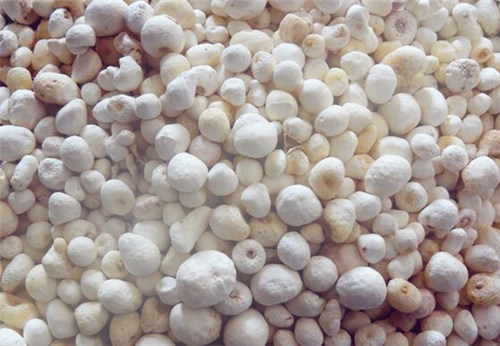
Planting time:
The season for planting Pinellia ternata should be determined according to the climate of each region. In the Jiangnan region, Pinellia ternata is best planted in the second month of spring. In the north and north, the planting time for Pinellia ternata should be pushed later, with planting from April to May being most appropriate.
Suitable growing regions:
Pinellia ternata is mainly distributed in Hubei, Henan, Anhui, Shandong, Sichuan, and Gansu; it is also distributed in Zhejiang, Hunan, Hubei, Jiangsu, Hebei, Jiangxi, Shaanxi, Shanxi, Fujian, Guangxi, Guizhou, and Yunnan.
Pinellia ternata is mainly produced in Wuchang, Laohekou, Xiangyang, Yangxin, and Tianmen in Hubei; Runan, Lingbao, Lushi, Mianchi, Xi County, Huaibin, and Tanghe in Henan; Huaining, Xuancheng, Ningguo, Funan, and Yingshang in Anhui; Jinxiang, Juye, Jiaonan, Wulian, and Laiyang in Shandong; and Suining, Anyue, Wanxian, Zhaojue, Yuechi, Bishan, Longchang, Rongchang, Zhongxian, and Yingshan in Sichuan.
Growing techniques:
1. Site selection and land preparation
For planting Pinellia ternata, loose and fertile soil is best. When preparing the land, apply 3000-5000 kg of farmyard manure, 25-30 kg of phosphate fertilizer, and 100 kg of plant ash per mu. Do not apply ammonium hydrogen phosphate. Plow deeply and harrow finely. Make beds 1.3 m wide and 0.17 m high, with ditches 0.3 m wide. Tall crops such as wheat, corn, sorghum, or kenaf can be intercropped in the ditches.
2. Sowing method
Tuber propagation is usually used, with three plantings and three harvests a year, namely planting in April and harvesting in July; planting in July and harvesting in October; planting in October and harvesting in April of the following year. The amount of seed tubers used per mu varies with size, and generally more than 40 kg of seed is needed per mu. When planting, a seed drill can be used to open furrows, with row spacing of 18 cm. Select white, disease-free tubers and plant them at a spacing of 10-15 cm, then cover with soil and press firmly. If dry weather occurs, open the furrows and water along them, then place the seeds and cover with soil.
3. Field management
The main tasks are weeding and hilling soil. Weed as soon as weeds appear, first shallowly and then deeply. After about 1.5 months of growth, bulbils form on the leaf stalks, and hilling should begin. Along with hilling, phosphate fertilizer and plant ash or potassium dihydrogen phosphate can be applied as a top dressing. If soil is not hilled, the bulbils are exposed outside and do not grow new bulbs. If drought occurs, water frequently in small amounts, and after watering, carry out intertillage and hilling. In the later stage of Pinellia ternata growth, remove the flower stalks to avoid consuming nutrients and affecting tuber growth.
Analysis of growing benefits:
The general yield of Pinellia ternata is 150-200 kg per mu. Calculated at a market price of 40 yuan per kg, the benefit per mu is more than 6000 yuan. If the soil is fertile and management is proper, the yield per mu can reach more than 250 kg. Subtracting the cost of 15-20 kg of seeds, which is 600 yuan, the profit is between 5500 yuan and 9500 yuan per mu. Dry Pinellia ternata can be intercropped with crops such as corn in the field, and can also be intercropped under fruit tree orchards for three-dimensional cultivation, giving even better benefits.