How much does a jin of annual herbaceous Kochia scoparia seeds cost, plus planting methods and benefits
Kochia scoparia, also called dimai, luozhou, broom seedling, broom vegetable, peacock pine, green broom and guanyin vegetable, has tender stems and leaves that can be eaten, and the old plant can be used to make brooms. So how much does a jin of Kochia scoparia seeds cost? How is it planted? What benefits and effects does it have? Learned from Manager Li of the Suqian Seed Company, the price of Kochia scoparia seeds is around 30 yuan/jin, the sowing rate per mu is 4-5 jin, and it can be planted in spring and summer.
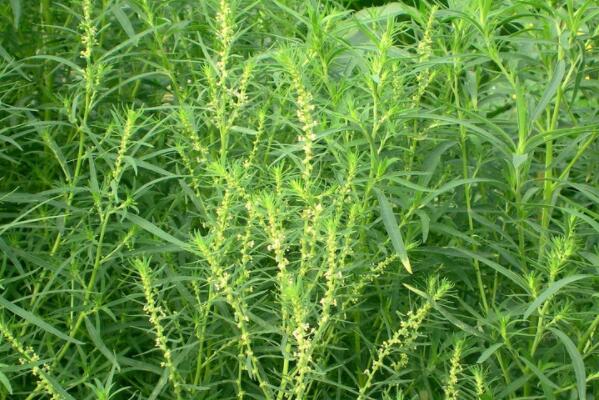
How is Kochia scoparia planted?
I. Nursery site selection
The place of origin of Kochia scoparia is southern Europe and south-central Asia; China is also a place of origin of Kochia scoparia, such as Heilongjiang, Jilin, Liaoning, Jiangsu, Shandong, Inner Mongolia, Hebei, Shanxi, Shaanxi, Gansu, Ningxia, Qinghai, ** and other places. In the wild, Kochia scoparia is mainly distributed in mountain ditch wetlands, riverbanks, roadsides, seashores, field ridges and other places. It has strong adaptability, likes to grow in warm, sunny environments, has strong drought tolerance, and has low soil requirements; it is suitable for growing in loess, black soil, clay, gravelly soil and saline-alkali soil, and grows best in fertile, loose good farmland.
II. Land preparation
1. Deep ploughing: if planting in scenic areas and parks, the land can be ploughed and then directly sown, or seedlings can be raised and then transplanted. For nursery farmers growing it and needing to harvest it, fine cultivation is required to get a big harvest. First clear weeds and miscellaneous trees from the selected land, then apply base fertilizer, with a per-mu amount of 3~5 tons, cow manure being the best, while chicken manure, sheep manure and pig manure are equally effective, broadcast on the ground. After fertilizing, plough and harrow once carefully, breaking the soil fine and mixing the fertilizer evenly, with no large clods of soil being best.
2. Making beds: Kochia scoparia is not tolerant of waterlogging, so the land needs to be prepared well to facilitate drainage and irrigation. Make the land into beds of a fixed 1.5 m width and 10~30 m length, and dig drainage ditches around them.
III. Sowing
Kochia scoparia can be planted in front of and behind houses, at the edges and corners of fields and other places. It is planted by dibbling or drilling, with a plant-row spacing of 60*80 cm and a planting depth of about 3 cm. After sowing, press the soil lightly, spray water to keep it moist; for spring sowing, cover with plastic film, and seedlings emerge after about 10 days. Kochia scoparia seeds have a high germination rate, and the seeds do not need to be sprouted.
IV. Seedling stage management
After the Kochia scoparia seedlings emerge completely, thin and finalize the seedlings in time within the first week, keeping the strong seedlings and the seedlings that sprout early, and pulling out the weak seedlings. Also loosen the soil and water, and remove weeds. When the seedlings are 40 cm tall, apply fertilizer for the first time, using 50 kg of compound fertilizer per mu, broadcast. Kochia scoparia turns red in autumn, its seeds mature, and its branches harden and become tough. When the fruit matures in autumn, cut the whole plant, dry it in the sun, thresh out the fruit, remove impurities, and dry it in the sun for later use.
What benefits and effects does Kochia scoparia have?
Main functions and indications of Kochia scoparia fruit:
Promotes urination and clears damp-heat. Treats difficult urination, gonorrhea, leukorrhea, hernia, rubella, sore poison, scabies and tinea, and damp itching of the genital area.
Landscape uses: flower beds, flower borders, flower clusters, flower groups:
Used to arrange flower hedges, flower borders, or several plants planted in clumps in the center of a flower bed, and can be pruned into various geometric shapes for arrangement. Potted Kochia scoparia can be used to accent and decorate halls, rooms, conference venues and so on. In landscape cultivation, mainly its variety the fine-leaf broom grass is used, which has a short plant shape, fine soft leaves and tender green color, turning red-purple in autumn.