How much does a jin of castor seeds cost, and what are the planting methods and benefits?
Castor, also known as darmazi, laomale, and caoma, is a fairly common annual or perennial herbaceous plant in daily life. Because of its high oil content, it is used as an important raw material for the chemical, electromechanical, metallurgical and other industries, and it is now grown in many regions. So how much does a jin of castor seeds generally cost? How do you grow it? What are the planting benefits?
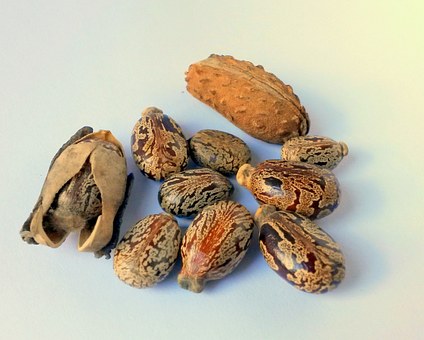
Latest seed prices:
According to the Yulin market, buyers seeking goods have decreased recently, with small-batch and scattered demand mainly; because supply is sufficient, many traders are actively selling, and the market sentiment appears slightly weak. Currently, the price of Anhui castor seeds in the market is 7.5-8.5 yuan. Anguo market: recently, market supply movement has been average, and the market situation still shows no major difference from the previous period; the current price of castor seeds in the market is 7 yuan. Puning market: merchant attention is not high, market supply movement is scattered, and castor seed prices remain flat; the current price of Anhui castor seeds in the market is 7.5-8.5 yuan.
Planting techniques:
I. Sowing methods for castor
1. Carefully select seeds: generally, seeds from the middle of the main ear or the first-order branch ears that mature earlier are top-quality seeds. Seed selection methods such as salt selection, grain selection, screening, and winnowing can be used. Then, on a sunny day, spread the selected seeds in a thin layer and dry them for 2-3 days, turning them 2-3 times each day.
2. Seed treatment: for disinfecting castor seeds, use a paste-like lime slurry to dress the seeds, or prepare a disinfectant solution with 40% formalin and water at a ratio of 1:300 and evenly wet the seeds with it, then let them sit covered for 3 hours. 2-3 days before sowing, soak the seeds in 45 degC warm water for 4 hours, or soak them in 25 degC warm water for 1 day and night, during which replace with hot water to maintain the water temperature and stir 5-6 times. After soaking, place the seeds in a 25 degC greenhouse to germinate for one day and night, turning them several times; once the seed coat is seen to crack, they can be sown.
3. Sow at the right time: for plots with poor soil moisture, sow on April 15-20 to seize the moisture; for plots with better soil moisture, sow around the end of April. A sowing depth of 5-7 cm is suitable. Place 2-3 seeds per hole and cover with soil after sowing. Sowing density should be reasonably determined according to variety characteristics and local natural conditions. If humidity is high at sowing time, first "air the soil" and press only after it is "dry on the back"; when soil moisture is moderate or insufficient, first tread the holes, and after sowing press the soil in time.
II. Key field management points for castor
1. Thinning and final singling: castor transplants easily during the seedling stage (before 3 true leaves), and if missing plants are found, transplant promptly to fill the gaps. Final singling is carried out at 3-4 true leaves, leaving 1 plant per hole. If final singling is too late, weak seedlings will form and yield will be affected. For planting on barren hills and slopes, final singling can be postponed somewhat.
2. Reasonable fertilization: use 8-10 kg of diammonium per mu as seed fertilizer for castor, applied 6 cm away from the seeds. On poor land with little base fertilizer, apply topdressing twice, once at final singling and once at ear formation, each time applying 15 kg of diammonium or ammonium nitrate per mu, or 7.5 kg of urea, deeply applied 8-10 cm from the seedlings. If base fertilizer is sufficient, apply ammonium nitrate once at thinning, 15 kg per mu.
3. Intertillage and weeding: castor cultivation generally involves one pass of tilling in early June, mid-June, and early July, with one hoeing before the second and third tilling, and then one autumn ridge. Tilling and topdressing can be combined. Note that after tilling, if drought occurs, irrigate promptly to ensure healthy growth of castor.
4. Topping and pruning: when castor has formed 5-6 true leaves, choose a sunny day to remove the terminal bud of the main stem. Afterward, control the number of ears according to the variety type. For branches of all orders that only grow leaves and bear no fruit, remove them all during pruning. Pruning cannot be interrupted, and the number of branches retained depends on growth vigor. Another method is to retain the terminal bud of the main stem and control the number of ears retained according to the variety type.
5. Drought resistance and waterlogging prevention: castor needs more water during the seedling stage and the grain-filling stage. If drought occurs, irrigation is needed; if heavy rain follows irrigation, drain water promptly. During the growth period, it is suitable to keep soil water content at 18-20%. If dry weather occurs, in places with irrigation conditions, irrigate once before flowering to increase the number of pods per plant and the number of grains per pod, and irrigate once more during pod setting to increase grain weight and extend the flowering time.
Planting benefit analysis:
Generally, the input is about 100 yuan per mu, and the income per mu is 500-700 yuan. Adopting composite production modes gives higher benefits, such as raising castor silkworms and intercropping wheat, potatoes, etc. Castor likes warmth and tolerates drought, poor soil, and salinity-alkalinity. It has strong adaptability and stress resistance, but is not tolerant of flooding. As long as field planting is managed scientifically, significant economic benefits can be obtained. Castor is one of the important sources of oil, and its prospects are very promising.
Now, as petroleum resources gradually decrease, finding alternative energy sources has become an urgent issue for countries around the world. Castor is a renewable resource, and most of the series of products obtained from petroleum can be obtained from deep processing of castor oil. Castor oil is regarded by relevant experts as a renewable "petroleum" resource with great development potential. Therefore, promoting the cultivation of castor is a choice of strategic significance.