How should cotton be planted for the best results? What are the high-yield techniques?
Cotton is an annual herbaceous plant of the genus Gossypium in the mallow family (Malvaceae) and is one of the most important economic crops in the world. Cotton cultivation has very high growing value, so how should cotton be planted for the best results? Below, we introduce the high-yield cultivation techniques for cotton, so let's take a look.
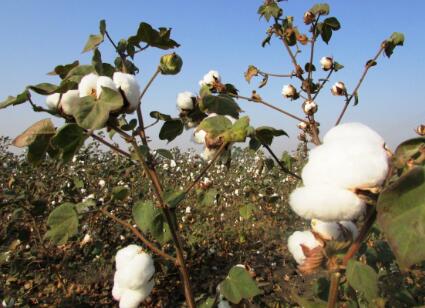
I. The growing conditions for cotton
1. Light conditions: Cotton is a light-loving crop and grows best under relatively abundant light conditions. Both its light compensation point and light saturation point are high. According to measurements, the light compensation point of a single cotton leaf is 750-1000 lux, and the light saturation point is 70,000-80,000 lux. Under normal circumstances, the suitable range of light intensity for cotton leaves is 8000-70000 lux, and within this range the photosynthetic intensity increases as light intensity increases.
2. Moisture conditions: Cotton growth requires absorbing water from the soil, and the physiological water requirements differ at each growth stage. From sowing to emergence, the water content of the 0-20 cm soil layer should preferably be 70-80% of field capacity; at the seedling stage, the water content of the 0-40 cm soil layer should preferably be 60-70% of field capacity; at the early bud stage, the water content of the 0-60 cm soil layer should preferably be 65-75% of field capacity; after the full bud stage, the water content of the 0-80 cm soil layer should preferably be 70-80% of field capacity and must not fall below 60-65%; at the boll-opening stage, the relative soil water content should preferably remain at 55-70%. According to relevant research, about 2/3 of the water consumed in a cotton field over the entire growth period is lost through transpiration, and 1/3 is lost through soil evaporation.
3. Soil conditions: Cotton growth and development require water and nutrients, which are mainly obtained from the soil through the root system; the needed temperature and air are partly drawn from the soil, and at the same time soil mechanical support is needed for growth. The quality of the physical, chemical, and biological properties of cotton field soil largely restricts cotton yield and quality. Soil moisture, nutrients, temperature, air, salt-alkali content, and texture all have a great influence on cotton growth.
4. Heat conditions: Cotton is most sensitive to heat conditions in the two stages of early and late growth. From sowing to emergence generally takes 7-20 days and requires an active accumulated temperature of 160-320°C. When the air temperature remains above 20°C after sowing, seedlings can emerge in 7-8 days. If the air temperature is unstable after sowing, although it averages 15-17°C, it takes about 20 days for emergence. The lower the daily average temperature, the more accumulated temperature is needed from sowing to emergence. From flowering to boll opening, heat conditions not only affect cotton yield but also seriously affect cotton quality. In years when the interval from flowering to boll opening is markedly prolonged in the same area and for the same variety, the accumulated temperature in this stage is higher, and cotton yield and quality decline markedly.
II. Cotton cultivation techniques
1. Pre-sowing preparation: When buying good cotton seed, it is advocated to change seed every year. Never be tempted by cheap prices and use second- or third-generation cotton seed, because self-saved seed reduces yield by about 10% each year. Use about 1.5 kg of seed per mu. Sun the seed before sowing, with a cumulative sunning time of no less than 30 hours, and keep turning it. Be careful not to spread it directly on cement ground, brick ground, or metal sheets. Before sowing, soil moisture must be built up in good time and preserved, so that sowing is done with sufficient soil moisture.
2. Fertilizing and sowing: Generally, apply 3-4 cubic meters of high-quality farmyard manure per mu, 10 kg of urea, 20 kg of diammonium phosphate, 20 kg of potassium sulfate compound fertilizer, plus 2 kg of micro-fertilizers such as boron, zinc, manganese, and iron. Sowing too early will cause incomplete emergence due to low temperatures, worsen seedling-stage diseases, and lead to premature aging later. Sowing too late easily causes excessive vegetative growth, bolls set higher on the plant, missing the best boll stage, and is unfavorable for high yield. The best sowing time is around April 20, with a sowing depth of about 3 cm. According to soil moisture, generally keep the depth no more than one cun and shallow enough not to expose the seed; where moisture is good and the soil is rather clayey, sow slightly shallower, and where moisture is poor and the soil is sandy, sow slightly deeper.
3. Reasonable close planting: For sandy soil and poor fertility, plant somewhat densely; for clay soil and good fertility, plant somewhat sparsely. The recommended practice is wide-narrow row planting, with wide rows about 1 m, narrow rows 55 cm, and plant spacing about 40 cm. Use a tractor for plastic-film mulching planting. At present, quite a number of cotton farmers leave too many seedlings at the seedling stage, so the cotton canopy closes early, ventilation and light penetration are poor, photosynthesis is reduced, square and boll shedding is serious, cotton pests and diseases worsen, ineffective fruiting branches increase, field operations are hindered, and cotton yield and quality decline, affecting income.
4. Topdressing and watering: Generally no watering is needed at the seedling stage. At the flower and boll stage, topdress 20 kg of urea per mu. At the early flowering stage, when drought generally lasts about 15 days and leaves slightly wilt at noon, water promptly; even if it rains, if the rain does not soak through, still water. Finally, after cotton boll opening, if drought occurs, water once as well. This can improve root vitality, delay cotton aging, increase boll weight, and raise yield by about 10%.
5. Chemical regulation and topping: Scientifically using mepiquat chloride and chlormequat is a key measure for building a good high-yield framework and obtaining high yield. Chemical regulation begins at the squaring stage: at 6-8 leaves, use 0.5 g of mepiquat chloride per mu; at the early flowering stage, use 1.5 g per mu; after topping, use 3 g per mu. Grasp the principle of "light first and heavy later, small amounts many times." For topping, grasp "top by time even if branches are not ready; if branches are ready, judge by growth vigor." Generally, cotton fields complete topping on July 15-20.
6. Pest and disease control: At the seedling stage, you can choose Tianda 2116 plus hymexazol plus imidacloprid, which can prevent disease and control pests. Thereafter, add carbendazim solution to each spray for sterilization. Pesticides such as phoxim, malathion, cypermethrin, and abamectin can be used alternately to control cotton bollworm, mirids, red spider mites, and others. While spraying, alternately add potassium dihydrogen phosphate, urea, micro-fertilizers, and so on.