Coltsfoot (Tussilago farfara, Asteraceae): Price, Planting, Culinary Uses, and Benefits
Coltsfoot, also known as winter flower, butterbur, or coltsfoot dandelion, belongs to the genus Tussilago in the Asteraceae family. It is distributed in Northeast China, North China, East China, Northwest China, and Hubei, Hunan, Jiangxi, Guizhou, Yunnan, Tibet, and other places. So, how much does coltsfoot cost per jin? How do you plant it? How do you eat it? What benefits and effects does it have? It is understood that coltsfoot costs 70-80 yuan per jin, with considerable price variation between different regions.
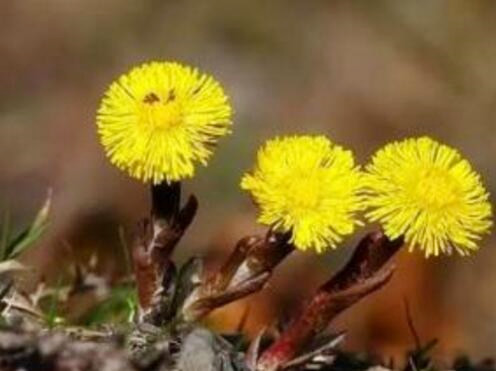
How do you plant coltsfoot?
1. Site selection and soil preparation: It is best to choose loose, fertile, moist sandy loam with good drainage and irrigation conditions for planting. In Shandong, the soil commonly known as "night-damp soil" is the best choice. Avoid continuous cropping to prevent severe disease. When preparing the soil, apply about 4000 kg of barnyard manure or farmyard manure per mu, break it up finely, and plow it into the ground. Plow to a depth of about 20 cm, harrow finely, level, and make beds ready for planting.
2. Propagation method: Propagate using underground rhizomes. When harvesting the flowers in winter, store the rhizomes in sandy soil to keep them as seed stock. In mid-to-late March of the following year, or for winter planting in early-to-mid October to early November, select disease- and pest-free, thick, yellow-white rhizomes from the stored rhizomes as seed stock. Rhizomes that are too tender and slender, as well as rhizome tips, are not suitable as seed stock. Winter planting always uses the method of planting immediately after digging. Whether spring planting or winter planting, cut the rhizomes into 7-8 cm segments, keeping 2-3 nodes per segment, and cover them well with moist sandy soil to prevent air-drying; they can be taken as needed for planting.
Planting is usually done in rows or in holes. For hole planting, open furrows with a row spacing of 30-35 cm and a furrow depth of 7-10 cm, with a hole spacing of 23-27 cm. In each hole, arrange 3 rhizome segments in a triangle, place them flat in the furrow, cover with 4 cm of soil, and press firm. For row planting, use a row spacing of 27 cm and a furrow depth of 7-10 cm, place one rhizome segment every 10-13 cm, and cover with soil and press firm. When temperature and humidity are suitable, seedlings generally emerge in 15-20 days. Use about 35 kg of rhizome seed stock per mu. After planting, appropriately interplant corn for shade to benefit the growth of coltsfoot.
3. Watering and loosening the soil: Before the seedlings emerge, if the soil is dry, water appropriately. When moisture is suitable, loosen the surface soil to help preserve moisture and promote emergence. After the seedlings emerge, loosen the soil shallowly to avoid damaging the roots. After all seedlings have emerged, generally water less to harden the seedlings. If it is too dry and the leaves collapse, water appropriately. Loosen the soil after rain or watering to keep the soil loose and weed-free. During the rainy season, pay attention to timely drainage to prevent waterlogging and avoid water accumulation in the field. Especially after rain in the hot summer, well water should be applied promptly to lower the temperature and prevent the plants from being scalded to death.
4. Leaf thinning and ventilation: In June-July, temperatures rise. Coltsfoot leaves expand very quickly. At this time, scissors can be used to cut off withered, yellow, and overly dense, overlapping leaves from the base of the leaf stalk to improve ventilation and light penetration. Never tear the leaves off by hand when thinning. If leaves later grow too densely, they should still be thinned. In early-to-mid September, old leaves can be cut away, leaving only 3-4 heart leaves.
5. Topdressing: Coltsfoot likes fertilizer, but do not apply topdressing in the early spring and summer to avoid excessive vegetative growth of stems and leaves. After "Start of Autumn," in early August, topdressing can be carried out. Apply about 1500 kg of barnyard manure and about 50 kg of phosphorus and potassium fertilizer per mu to promote flower bud formation. Spread the fertilizer beside the plants, then earth up to cover the fertilizer.
6. Earthing up: To prevent flower buds from being exposed above the ground, earth up frequently. For the first earthing up, before the flower buds form around "White Dew," in early-to-mid August, earth up to cover the fertilizer together with topdressing, preferably without covering the leaves. For the second earthing up, in early October, take soil from between the rows and pile it on the main stem, without covering the leaves. For the third earthing up, in early November, earth up to completely cover the entire plant.
7. Intercropping for shade: Coltsfoot prefers cool shade. In an east-west coltsfoot field, plant one row of corn every two rows to provide shade for coltsfoot, achieving a double harvest of grain and medicinal material.
How do you eat coltsfoot?
1. Coltsfoot bean-puff rolls: Cut coltsfoot into pieces the size of bean puffs, roll them inside bean puffs, add soup stock, cooking wine, soy oil, and simmer.
2. Coltsfoot with minced meat: Cut coltsfoot into small sections, stir-fry minced meat in the pan, then add coltsfoot, add soup stock and cooking wine, and season with salt.
3. Coltsfoot chicken rice: Cut chicken into diagonal shreds, cut coltsfoot into sections, add soup stock, cooking wine, and soy oil for seasoning, and cook into a mixed rice dish.
4. Cold-tossed coltsfoot: Crush peanut kernels, add sesame and walnut, sprinkle over blanched coltsfoot, and season with sweet bean sauce.
What benefits and effects does coltsfoot have?
1. Moistening the lungs and directing qi downward: Coltsfoot is sweet and can tonify, pungent and can disperse, warm and can dispel cold, so it can be used for syndromes such as lung distension, lung atrophy, pulmonary tuberculosis, and lung abscess. (1) For lung atrophy, due to weak lung qi, inability of qi to transform fluids, and fluids becoming drool, with symptoms such as coughing up frothy saliva that is clear, thin, and abundant, no thirst, shortness of breath, and mental fatigue with lack of strength, use this product together with items that strengthen the spleen and dry dampness, such as astragalus, codonopsis, atractylodes, Chinese yam, and coix seed; (2) For lung abscess, that is, pulmonary abscess, it can be used together with reed root, coix seed, peach kernel, and winter melon seed; (3) For lung distension, that is, patients with emphysema, it can be used together with heterophylly falsestarwort root, astragalus, fragrant solomonseal rhizome, adenophora root, and dwarf lilyturf tuber.
2. Relieving cough and calming asthma: Coltsfoot has the effects of warming and transforming cold phlegm, moistening the lungs and nourishing yin, and transforming phlegm and relieving cough. It can treat cough and asthma caused by cold pathogens attacking the lungs. For phlegm cough and asthma that flare up on exposure to cold, it can be used together with honey-fried ephedra, apricot kernel, and perilla fruit; if the cough brings blood, it can be made into honey pills with lily bulb ground into powder; if used to treat sudden severe cough, it can be used together with apricot kernel, fritillary bulb, and schisandra fruit.