How to manage mint during the first-cut period? Key points and methods of planting management explained
Mint is a plant of the genus Mentha in the Lamiaceae family. It is an aromatic crop with special economic value, combining edible value and medicinal value. At the same time, mint also has good ornamental value, with excellent refreshing and mind-clearing effects, and can help excite the brain nerves. It is most suitable for placing on the desk of a study or office. In the process of growing mint, the period from seedling emergence to the first harvest is called the first-cut period. So, how should mint be managed during the first-cut period of planting? The key points and methods for managing mint during the first-cut period are summarized as follows:
A. Checking seedlings and replanting: After the field has basically full stands, check the seedlings promptly, and replant the spots and patches where seedlings are missing or sparse.
B. Cultivation and weeding: After full stands, carry out inter-row cultivation and weeding, and hand-weed between plants, so as to preserve soil moisture, raise (soil) temperature, eliminate weeds, and promote seedling growth. Carry out cultivation and weeding 2-3 times before the rows close. Pull out all weeds in the field before harvest to prevent the smell of other weeds from affecting the quality of mint oil.
C. Timely topdressing: When the seedlings are 10-15cm tall, open furrows and apply topdressing, applying 10kg of urea per mu; after the rows close, spray twice per mu with 5ml of Pen Shi Bao + 150g of potassium dihydrogen phosphate + 150g of urea.
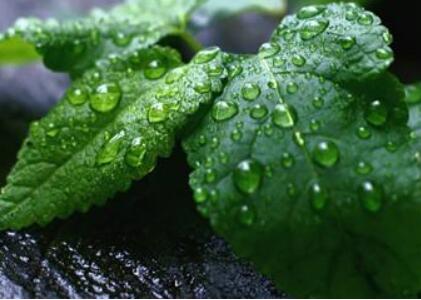
D. Scientific watering: Mint needs more water in the early and middle stages, especially in the early growth stage when the root system has not yet formed, so it needs more water. Generally, water about once every 15 days, and water 4-5 times from seedling emergence to harvest. After the rows close, water lightly in appropriate amounts to avoid excessive rampant growth of stems and leaves, which can cause lodging, lead to shedding of lower leaves, and reduce yield. Stop watering 20-25 days before harvest. At harvest time, it is best for the ground to be "whitish".
E. Disease control: ① Black shank, which occurs at the seedling stage; symptoms are shrinkage and sunken areas at the base of the stem, turning black and rotting, with plants lodging and withering. For control, during the disease period, use 70% chlorothalonil or 40% carbendazim at 100-150g per mu, diluted with water and sprayed; ② Mint rust, which occurs easily from May to July; use a 25% triadimefon 1000-1500 times solution for foliar spraying; ③ Leaf spot, which occurs from May to October; in the early stage of the disease, spray a 65% zineb 500 times solution once a week to bring it under control.
F. Pest control: The main pest of mint is the "looper", with damage periods around mid-June and around late August. Generally, when the pest density reaches 10 insects/m2, use 15-20ml of Decis per mu and spray 1-2 times, or spray with 80% dichlorvos at 1000 times dilution.
G. Timely harvest: In early July, when 10-30% of the flower buds on the main stems of mint are in full bloom, begin harvesting. When harvesting, cut off the upper stems and leaves evenly at ground level. The cut mint should be spread out immediately to dry and must not be piled up, so as to avoid fermentation. Harvesting mint too early will reduce the oil extraction rate; harvesting too late will increase the furan content in the mint and affect the quality of the oil. Bundle the wilted mint promptly for later distillation to extract oil.
In the management of mint during the first-cut period, doing well in areas such as checking seedlings and replanting, cultivation and weeding, and timely topdressing is key. The above has introduced the key points for managing mint during the first-cut period, and I hope it can help everyone!