A full analysis of the Redbud (Cercis chinensis) in the Fabaceae family: morphological characteristics, flowering period, seedling prices and uses
Redbud, also known as "mantiaohong", "luozhishu" and "zizhu", belongs to the genus Cercis in the Fabaceae family. It is a deciduous tree or shrub native to China and has high medicinal and ornamental value. So what does the redbud tree look like? Roughly how much does one seedling cost? When does it bloom? What are its uses? What are the cultivation methods? According to seedling grower Uncle Fang, trees of different heights and sizes have different prices, ranging from 10 yuan to 55 yuan.
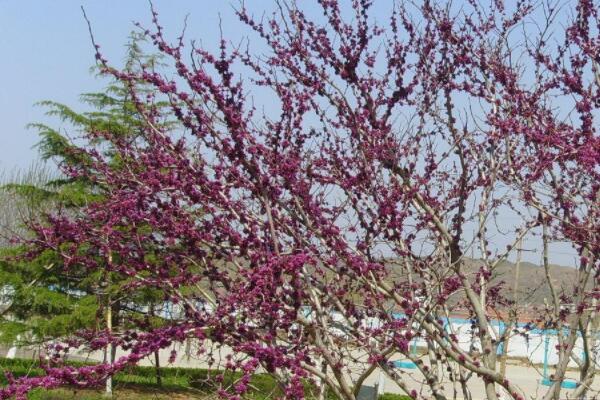
What does the redbud tree look like?
The redbud tree is a clustered or single-stemmed shrub, 2-5 m tall; the bark and small branches are grayish-white. The leaves are papery, nearly round or triangular-round, 5-10 cm long, and about as wide as they are long or slightly shorter than long, with an acute apex and a base ranging from slightly to deeply heart-shaped; both surfaces are usually hairless, the young leaves are green, and only the petiole is slightly purplish; the leaf margin is membranous and transparent, clearly visible when fresh.
The flowers are purplish-red or pink, borne in clusters of 2-10 or more, clustered on old branches and the main trunk, with more flower clusters especially on the main trunk and fewer flowers on the younger branches toward the top; they usually open before the leaves, but flowers on young twigs or young plants open at the same time as the leaves. The flowers are 1-1.3 cm long; the pedicels are 3-9 mm long; the base of the keel petal has dark purple markings; the ovary is tender green, glossy and hairless in bud, later densely covered with short soft hairs, and contains 6-7 ovules.
When does the redbud tree bloom?
The beautiful, dignified redbud flower, excellent in both color and fragrance. Its blooms are large, purplish-red, with five petals, adorned with white vein-like markings in the center. The flowering period begins in October, and it is most luxuriant from mid-November to January of the following year; at a glance, tree after tree and branch after branch are as brilliant as rosy clouds. It is not until February and March that it gradually fades, and the profusion of fallen blossoms then carpets the ground with colorful drifts. Cities in southern China often like to use this tropical ornamental tree as a street tree and landscaping tree.
What are the uses of the redbud tree?
1. Redbud flowers can be enjoyed ornamentally
The redbud's flowers are large in shape and carry an enticing fragrance. The blooms have five petals and are mostly red or pink. They are very common in southern regions and are also one of the most commonly seen ornamental flowers in scenic areas throughout the south.
2. The medicinal effects of redbud
The bark strips of redbud can be used as medicine; they are bitter in taste, neutral in nature and non-toxic. Clearing heat and cooling the blood, and dispelling wind and removing toxins, are its main medicinal effects. It is commonly used to treat rheumatism pain and hemorrhoids in humans. When used as medicine, redbud is mostly taken as a decoction, with a dosage of about 1 to 2 qian; alternatively, redbud can be steeped in liquor and, once prepared, applied externally, which can also produce good therapeutic results.
3. Redbud can treat swelling and toxins in humans
Redbud has a good therapeutic effect on swelling and toxins in humans. In treatment it can be used in combination with other Chinese medicines. The specific usage is 3 liang of redbud bark, 3 rou of pubescent angelica root and 2 liang of red peony root, 1 liang of raw Atractylodes macrocephala, and finally 1 rou of wood wax is added; process them together into powder, then mix with hot oil, and once mixed, apply directly to the area with swelling and toxins, changing the dressing once a day. The therapeutic effect is especially outstanding.
Appendix: Cultivation methods for the redbud tree
1. The redbud tree has very strong adaptability. It likes a sunny environment, tolerates summer heat and also cold, and tolerates drought, but fears waterlogging. It is not demanding about soil and can grow in poor, thin soil, but grows better in loose, fertile, well-drained sandy soil. It is suitable for planting in high, dry, sunny places; low-lying waterlogged spots and overly shaded spots are not suitable for planting. It is suitable for planting in most parts of the country and is an excellent colorful-leaf ornamental tree species, combining leaf viewing and flower viewing in one.
2. Redbud likes a moist environment. After planting, it should be watered thoroughly immediately; in summer, water it promptly and you can also spray the leaves; after rain, drain promptly to prevent excessive water from rotting the roots. After autumn begins, if the temperature is not high, watering should be controlled to prevent autumn growth. Before winter begins, water thoroughly to protect against freezing. With sufficient fertilizer, the branches are luxuriant and the leaves dense, and the flowers are numerous and brightly colored; with insufficient fertilizer, the branches are sparse and the leaves thin, and the flowers are few and pale. Sufficient base fertilizer should be applied at planting time; leaf mold fertilizer, barnyard manure or dried chicken manure are preferable, and it should be thoroughly mixed with the planting soil before use, otherwise the root system will be burned.
3. Under normal management of the redbud tree, apply a nitrogen fertilizer once each year after flowering to promote vigorous growth, and apply a phosphorus-potassium compound fertilizer once in early autumn to help flower bud differentiation and safe overwintering after the new branches become woody. In early winter, in conjunction with watering against freezing, apply cow or horse manure. During cultivation, the renewal of flowering branches should be strengthened. Practice has shown that old branches over 5 years old bear fewer flowers, and the flower buds move upward, affecting the ornamental effect, so they should be renewed in time.