Fragrant Lemon Price Per Jin, How Many Years Until It Fruits, How to Eat It, and Its Benefits and Effects
Fragrant lemon is an evergreen small tree of the genus Citrus in the family Rutaceae, native to Southeast Asia, and its current main producing areas are the United States, Italy, Spain, and Greece. The main domestic producing areas are Tong'an in Xiamen and Gudiao Village in Bozhi Town, Zhaoqing City, Guangdong. So, how much does fragrant lemon cost per jin? How do you grow it? How many years until it fruits? How do you eat it? What benefits and effects does it have? It is understood that fragrant lemon costs 3.8 yuan per jin, and prices vary from region to region.
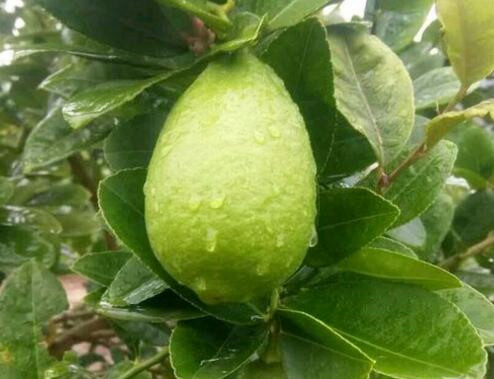
How do you grow fragrant lemon?
1. Digging pits and planting
The planting spacing is 3*2.2 m. Before planting, cut back the leaves appropriately, coat the roots with a rooting agent mixed with yellow clay slurry, fill with fine soil and firm it down, water thoroughly to settle the roots, and cover the tree basin to retain moisture.
2. Fertilizer and water management
Because fragrant lemon is a fibrous-root plant, it is best to apply light fertilizer frequently, and composted organic fertilizer liquid is preferable, as it is slightly acidic, which helps the plant absorb it and will not burn the roots. In the first and second years after young trees are planted, apply nitrogen fertilizer as a top dressing to promote crown formation, but afterward nitrogen fertilizer should be controlled and the application of calcium-magnesium-phosphate compound fertilizer increased. In autumn, apply organic fertilizer as a base fertilizer, and combine it with foliar top dressing during the growing season to strengthen the tree's nutrition and promote flower bud formation and flowering and fruit set.
For fruiting fragrant lemon trees, fertilization should focus on the period after flower drop to fruit enlargement and the period when autumn shoots sprout. Fertilizer can be applied as decomposed bran fertilizer or human manure and urine, and urea and phosphorus-potassium fertilizer should often be applied as top dressing according to growth conditions. Top dressing should use the method of light fertilizer applied frequently, that is, many times and in small amounts, to prevent loss. Lemon is not drought-tolerant, so water or irrigate promptly.
If chemical fertilizers are used, compound fertilizer can be diluted about 20 times and watered on, but it should not be used every time you water; once every 10 days or so is suitable. Solid organic fertilizer or granular chemical fertilizer can also be applied in holes in the pot, but the amount should be better too little than too much; in a 400-type pot, about 200 grams of organic fertilizer or about 30 grams of chemical fertilizer each time is enough.
3. Intertillage and weeding
In the dry seasons of summer and autumn, intertillage should be carried out before the drought to keep the soil loose and reduce water evaporation. In summer, leguminous green manure can be planted between the fruit tree rows as a cover to prevent soil erosion; weeds under the tree canopy should be removed, and the weeds should be used to cover the tree canopy.
4. Pruning
Young fragrant lemon trees grow vigorously and have a strong tendency to flower, so pruning should be light rather than heavy, leaving more branches and leaves, with the principle that a small amount of sunlight can penetrate the canopy. In spring, summer, and autumn, mainly pinch or shorten excessive vegetative branches promptly. In winter, mainly cut off diseased and pest-infested branches, dead branches, and fruiting branches.
5. Flower and fruit retention
Lemon has a vigorous growth habit, and for fruiting trees, measures such as root cutting, water control, and branch girdling can be used to control excessive growth. Paclobutrazol 500-fold solution can also be sprayed 2 to 3 times in the early stage of shoot growth to inhibit shoot growth, or sprayed in September to October before autumn shoots mature to promote flower bud formation. For fruiting trees, 10 to 15 kg of decomposed bran fertilizer water and 1 to 2 kg of phosphate fertilizer can be applied 20 days before full bloom; when 3/4 of the flowers have dropped and after young fruit appears, foliar top dressing should be carried out, using 0.3% urea + 0.3% potassium dihydrogen phosphate; or 0.3% urea + 5 to 7 mg/L 2,4-D solution; or spraying the canopy with 50 mg/L Qibao "920", once every 20 days, 2 to 3 times continuously, which can significantly increase the fruit-setting rate. For orchards deficient in boron, spray 0.1% to 0.2% borax during flower bud differentiation, and spray once more after flower drop. If there is continuous rainy weather in spring, be careful to shake the petals off, accelerate the greening of young fruit, and prevent damage to young fruit by tortricid moths and other pests.
How many years until fragrant lemon fruits?
Fragrant lemon flowers and fruits continuously throughout the four seasons, with almost year-round fruit harvest. Some people also grow fragrant lemon as a potted plant, and at this time the fragrant lemon does not fruit, which makes flower lovers anxious. In fact, how many years it takes for fragrant lemon to fruit is related to the seedling.
If lemon seeds are used, the seedlings that grow are called seedling trees, and getting them to fruit is not easy; it takes about 7-8 years.
If you want to grow it in a pot, you are best advised to buy seedlings or graft. A well-grown potted lemon will bloom and fruit every year.
How do you eat fragrant lemon?
1. Cut fragrant lemon into slices and use them directly to make infused water.
2. When cooking fish or braised meat, cut a few slices of lemon and stew them together; it is super delicious. Also, when steaming pork ribs in black bean sauce, cut lemon into minced bits and add a little; it is very refreshing.
What benefits and effects does fragrant lemon have?
1. Fragrant lemon is a fruit that can reduce inflammation and kill bacteria. This fruit contains a large amount of vitamin C. After it enters the human body, it can eliminate many kinds of bacteria and also reduce the harm of viruses to the human body. It has a good therapeutic effect on many common human diseases such as enteritis, tracheitis, and upper respiratory tract infections.
2. Fragrant lemon has a natural fragrance. It contains a large amount of natural aromatic oil. When people usually place it in a house, it can give the whole space a light fruity scent and has the important effect of refreshing the mind and relieving fatigue.
3. Beauty care is also one of the important effects of fragrant lemon. It can cleanse the intestines and remove toxins, clear toxins from the human body, and also reduce the deposition of pigment on the surface of the skin. Eating it regularly can prevent age spots and also whiten the skin. In addition, taking out the juice of fragrant lemon and making a mask with egg white to apply to the face can also reduce the formation of wrinkles and make people's skin firm, smooth, and delicate.