How much is a jin of Scutellaria barbata seeds? Detailed explanation of planting methods and medicinal effects
Scutellaria barbata aliases: Ganshanbian, Shouhuangqin, Yashuacao, Tianjicao, Shuihuangqin, Xiaye Hanxincao. It is distributed in Argentina, southern Brazil, Uruguay, and parks and other places in mainland China, and is commonly cultivated. So, how much is a jin of Scutellaria barbata seeds? How is it planted? What effects and functions does it have? It is understood that the price of Scutellaria barbata seeds is 50 yuan/jin, and prices may vary in different regions.
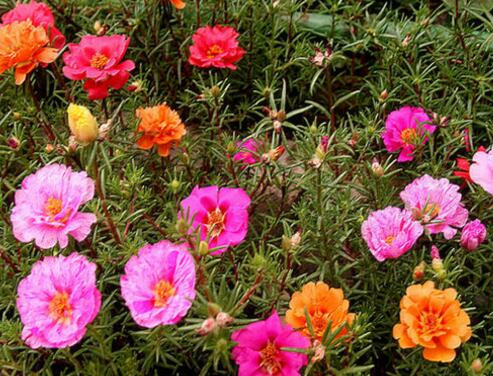
How is Scutellaria barbata planted?
1. Land preparation and fertilization: Choose a good plot, spread 2000 kg of decomposed barnyard manure per 667 sq m, plow to a depth of 15 cm, and while plowing, spread 50 kg each of ammonium dihydrogen phosphate and urea per 667 sq m. Rake fine and level, and make beds 1.2 m wide.
2. Seedling raising and transplanting: In the prepared bed, sow at 12-15 g/sq m. Before sowing, soak the seeds in 60°C water for 24 h, remove and let them dry slightly, mix them evenly with fine sandy soil (passed through a fine sieve) at a ratio of 1 to 100, and then spread evenly into the bed. Cover with straw mats or agricultural film, spray water once a day, and keep moist. They germinate and emerge in 15-20 days. After all seedlings have emerged, remove the covering, then spray water once, and thereafter spray water once every 3-4 days. When the seedlings are 5 cm high, transplant them to the field, with row spacing and plant spacing of 20 cm each, and 1 plant per hole.
3. Direct sowing in the field: To ensure that all seeds sown directly germinate, it is best to sow on rainy days. The time is from September to early October, by drilling or hole sowing. For drilling, open furrows at a row spacing of 25-30 cm, with a furrow depth of about 4 cm; for hole sowing, open holes at a hole spacing of about 30 cm. When sowing, spread the seeds evenly in the furrows, cover with 0.5 cm of loose fine soil fertilizer or plant ash, and it may also be covered with agricultural film or straw mats to keep the soil moist. After all seedlings emerge, remove the covering and carry out good seedling-stage management.
4. Cultivation, weeding, and topdressing: After emergence, when the seedlings are 1-2 cm high, apply 1 time of dilute human feces and urine water while weeding, applying 1000 kg per 667 sq m as a seedling-promoting fertilizer. When the seedlings are 4-5 cm high, thin and fill in seedlings, finally setting the plants at a plant spacing of 3-4 cm, and at the same time fill in the missing plants. After thinning or setting the plants, apply human feces and urine water 1 time each. Thereafter, keep the field free of weeds, and after each harvest, topdress 1 time to promote the sprouting of new branches and leaves. After the last harvest in November, apply a heavy winter fertilizer, applying 200 kg of decomposed barnyard manure and 25 kg of cake fertilizer or superphosphate per 667 sq m. After mixing and composting, apply it in furrows between rows. After application, cover with soil and earth up to help keep warm and prevent cold.
5. Drainage and irrigation: During the seedling stage, keep the soil moist frequently and do not let it lack water. In dry seasons, irrigate in time. In the rainy season and after each heavy irrigation, dredge ditches and drain in time to prevent water accumulation from drowning the roots and seedlings.
6. Harvesting and processing: Choose a sunny day, cut from the stem base 2—3 cm above the ground, leaving the stem base to help sprout new branches. After cutting the whole plant, wash off the mud and sand, and dry it in the sun. It can be harvested 3—4 times a year.
What effects and functions does Scutellaria barbata have?
1. The whole plant of Scutellaria barbata is used as medicine and has functions such as clearing heat and detoxifying, activating blood and removing stasis, reducing swelling and relieving pain, and fighting cancer. It is cold in nature and sour in taste, and the whole plant contains various components such as vitamins, trace elements, and amino acids. It has the effects of cooling blood and detoxifying, dissipating stasis and relieving pain, reducing swelling, and clearing heat and draining dampness.
2. Scutellaria barbata can reach 55 cm in height, grows densely in clumps, has abundant and gorgeous flowers, and has a long flowering period. It is an excellent companion flower for decorating lawns, slopes, and roadsides, and is also suitable for planting at flowerbed edges and in flower borders. Potted plants are small and exquisite and can be displayed for viewing on balconies, windowsills, corridors, in front of doors, beside ponds, and in courtyards and many other places.