How to Grow Musella lasiocarpa? How Many Years Until It Blooms, Is It Edible, and What Are Its Benefits and Effects?
Musella lasiocarpa is also known as the thousand-petal lotus, ground golden lotus, and undying golden steel, among other names. It originated in Yunnan, China, and is a flower native to China. It has been designated by Buddhist temples as one of the “Five Trees and Six Flowers.” So how do you grow Musella lasiocarpa? How many years until it blooms after planting? Can it be eaten? What benefits and effects does it have?
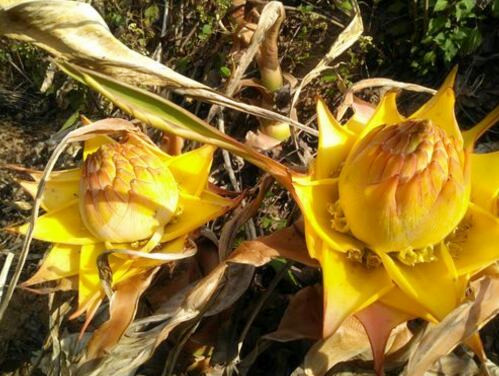
How to Grow Musella lasiocarpa?
1. Propagation Methods
Division propagation is the main method. In early spring or autumn, take the small offsets that have grown from the roots, along with their stolons, cut them from the mother plant and plant them separately. It can also be propagated by seed.
2. Field Management
In the warm regions of the south, it is often grown in the open ground. After division planting in spring and autumn, attention should be paid to watering to keep the soil moist; water appropriately during the dry season, and ensure timely drainage during the rainy season.
In early spring and late autumn, dig trenches around the plant and apply decomposed organic fertilizer, and mound fertile soil around the base of the pseudostem. Apply an appropriate amount of topdressing during the vigorous growth period, which can promote growth and flowering. After flowering, the aboveground pseudostem gradually dies back and should be cut down promptly to encourage regrowth the following year; in cold regions, it is best grown in a greenhouse, and the overwintering temperature should not be lower than 1°C.
3. Pest and Disease Control
When grown indoors in the north, if ventilation is poor, it is susceptible to scale insect damage. A 1000-fold dilution of 40% omethoate emulsifiable concentrate can be sprayed for control.
How Many Years Until Musella lasiocarpa Blooms After Planting?
Musella lasiocarpa can bloom once it reaches the vigorous growth stage after planting, but this also depends on the growing environment. In the north, it may never bloom in its lifetime or may bloom only once every many years. In the south, such as Xishuangbanna, it may bloom every year.
Can Musella lasiocarpa Be Eaten?
Musella lasiocarpa is edible. The edible parts are the tender pseudostem and flowers, which can be cooked directly. The pseudostem can be stir-fried, boiled, or pickled. After removing the leaf sheaths from the pseudostem, wash it, cut it into shreds and stir-fry with shredded meat for a unique flavor; boiling it with beef or mutton broth gives a delicious taste. The flowers can be used in soup or made into a cold dressed dish. Boil them with ham and broad bean kernels to make a soup dish; for a cold dish, first cut the petals into shreds, blanch in clean water for 3—5 minutes, remove and drain, then add seasonings. According to the experience of farmers in Huangcaoling, Jingdong, boiling Musella lasiocarpa flowers with pig heart and eating it can treat heart disease.
What Benefits and Effects Does Musella lasiocarpa Have?
1. When in bloom, it looks like a golden lotus surging out of the ground, creating a magnificent landscape. In gardens, it is suitable for planting by windows, in wall corners, beside rockery stones, or in mass plantings, and it is also suitable for container growing as an ornamental.
2. The flowers can be used as medicine and have an astringent and hemostatic effect. They are used to treat leukorrhea, red flooding, and lower intestinal bleeding. The stem juice is used to counteract alcohol intoxication and monkshood poisoning.