What about the price, flowering period, planting and bonsai of privet (Ligustrum quihoui) seedlings as hedge material?
Ligustrum quihoui is a small shrub in the genus Ligustrum of the family Oleaceae, also called small-leaved holly, small white wax, chinaberry green, and small-leaved water wax tree. It is an excellent tree species for making bonsai. So how much does a Ligustrum quihoui seedling cost? In which month does it bloom? How do you plant it? How do you care for it as bonsai?
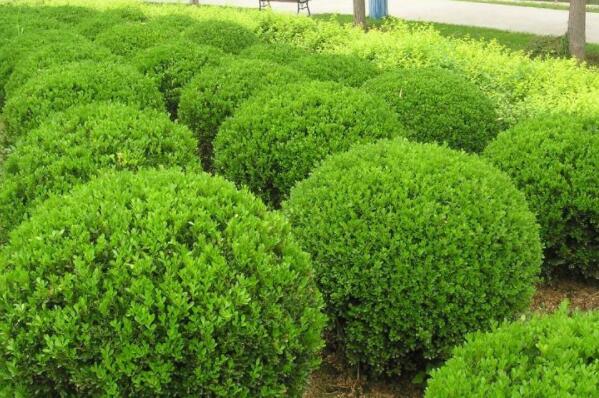
How much does a Ligustrum quihoui seedling cost?
| Nursery stock name | Height (cm) | Unit | Price |
| Ligustrum quihoui | 40~50 | plant | 0.16~0.35 |
| Ligustrum quihoui | 60~70 | plant | 0.23~0.55 |
| Ligustrum quihoui | 80~100 | plant | 0.35~0.65 |
In which month does Ligustrum quihoui bloom?
Ligustrum quihoui blooms from April to May, and its seeds mature from November to December. When ripe, the fruit skin is black, and it must be harvested in good time. The fruit does not fall off on its own after ripening, so you can use a pole pruner to cut off the fruit clusters, strip off the fruit, soak the fruit in water, rub off the fruit skin, wash clean, and dry in the shade. If you do not sow immediately, you can store them dry in bags, or mix 2 parts wet sand with 1 part seeds for storage.
How do you plant Ligustrum quihoui?
1. Nursery site selection
Ligustrum quihoui is suitable for planting in fertile, loose soil rich in organic matter. It requires ample light, no less than 8 hours of light per day, a relatively high terrain, and no waterlogging on rainy days. Good farmland is best, such as wheat fields, rice fields, and so on; fields used for growing ordinary crops are all acceptable. Nature has its own rules, and what kind of tree suits what kind of soil cannot be settled by just scattering seeds anywhere.
2. Land preparation
1. Deep plowing: People need food, machines need fuel, and planting nursery stock requires fertilizer. With no fertilizer or too little fertilizer, the saplings grow small, thin, and weak. Ligustrum quihoui likes fertilizer. If the land fertility is poor, spread organic fertilizers such as soybean cake, rapeseed cake, and fermented chicken manure before plowing to improve soil structure and increase fertility. It is appropriate to use 5 tons of chicken manure per mu and 200 jin of rapeseed cake, then plow, with a depth of at least 30 cm. After plowing, harrow level and break the soil into fine crumbs.
2. Making beds: Ligustrum quihoui can only be sold and used after growing for 1~2 years. During this period there is a lot of management work to do. To make management easier, we need to make the land into beds of a fixed width, with 1.5 m as the standard, rake them level, and make the head high and the tail low, which helps with drainage and irrigation.
3. Sowing
Sowing Ligustrum quihoui has strict requirements. Seeds with low moisture content have a low germination rate, while seeds with high moisture content have a high germination rate, the same as with large-leaved privet seeds and golden privet seeds. So you should buy fresh seeds, and not be greedy for cheapness and buy a pile of seeds with no chance of germinating, delaying a whole season's harvest and causing huge losses. Ligustrum quihoui seeds are sown in drills, with 30 cm row spacing and 10 cm plant spacing. After sowing, water thoroughly, then cover with insulation film or something like rice straw to retain moisture and warmth. They generally germinate in about 10 days.
4. Seedling-stage management
After germination, management work gradually increases, such as watering, fertilizing, weeding, and pest control. Small seedlings have poor drought resistance. There is less rain in spring, so you must often observe soil moisture and must not let Ligustrum quihoui dry out, which would affect its growth rate. Fertilize once a month, each time spreading 25 kg of compound fertilizer per mu before rain. If it does not rain, use a broom to sweep down the granules resting on the leaves. Chemical agents can be used for weeding. Ligustrum quihoui has few diseases and pests, so just pay attention and observe; generally there will be no pest problems throughout the growing season.
How do you care for Ligustrum quihoui bonsai?
1. Placement: Ligustrum quihoui bonsai is generally best placed in a spot with ample sunlight and good air circulation; in summer it should be appropriately shaded and not exposed to blazing sun; in winter it can tolerate cold slightly, but in northern regions it is best placed indoors in a sunny spot.
2. Watering: Because it is transplanted with its crown, in order to shorten the recovery period and help the plant enter normal growth as soon as possible, pay special attention to watering. After planting, water thoroughly twice, frequently spray the crown, and wash the leaves. Remember not to rush to fertilize. It is best to keep the potting soil moist at all times, especially in summer, watering morning and evening and spraying water on the leaf surface to ensure fresh green leaf color and vigorous growth. After the Ligustrum quihoui shape has been formed, besides the two waterings for greening up and overwintering, water frequently in spring and summer, and make sure the water soaks through.
3. Fertilizing: Ligustrum quihoui is not strict about fertilizer. Applying 1~2 times of fully decomposed cake fertilizer water each year in spring and autumn is enough. If individual trees or parts of a tree turn yellow or grow poorly, foliar topdressing can be carried out. Commonly used fertilizers include potassium dihydrogen phosphate, ammonium molybdate foliar fertilizer, and so on.
4. Pruning: Ligustrum quihoui has extremely strong sprouting ability. To control its growth, promptly remove unwanted buds in spring. After new shoots appear, it is best to cut off the first 1-2 nodes to prevent leggy growth. At ordinary times, pay attention to pruning excess branches and leggy branches at any time to maintain the tree shape.
5. Repotting: It is best done once every 2-3 years, preferably before budding in February-March in spring, and also possible in autumn. While repotting, trim the root system, remove 1B2 of the old soil, and replace it with fertile, loose growing medium to promote growth.
6. Pest and disease control: Common pests of Ligustrum quihoui include scale insects and aphids. They can be killed by spraying with 80% dichlorvos at 1500 times dilution, and scale insects can also be scrubbed off.