How much does purple leaf lettuce cost per jin? Full analysis of growing methods and edible benefits
Botanically, purple leaf lettuce is classified as a loose-leaf lettuce. It is an annual or biennial herbaceous plant of the genus Lactuca in the Asteraceae family, native to the Mediterranean coast, with the leaves as the main edible part, suitable for both raw and cooked consumption. So, how much does purple leaf lettuce cost per jin? How is it grown? How is it eaten? What benefits and effects does it have? It is understood that purple leaf lettuce costs 10 yuan/jin, though prices vary in different regions.
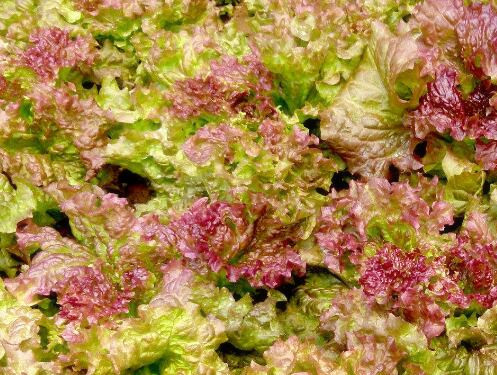
How is purple leaf lettuce grown?
Raising seedlings
1) Sowing period: Purple leaf lettuce can be cultivated at any time except in the hottest season.
2) Selection of seedling-raising site: For year-round production in the Beijing area, the seedling-raising site is open ground and protected ground for half a year each. Usually, purple leaf lettuce seedlings are raised in open ground in April, May and September. From June to August, shade and rain protection measures must be taken. From October to March of the following year, seedlings must be raised in protected ground.
3) Sowing: Planting 1 mu of purple leaf lettuce requires 12-15 sq m of seedbed, usually by direct sowing of dry seeds. But in summer and early autumn, purple leaf lettuce has difficulty emerging, so it is best to sow after sprouting. The sowing rate is 15-20 grams. For spring and autumn seedling raising in open ground, if sowing is done for quick emergence, a film cover can be added to increase temperature and preserve soil moisture, then removed after emergence; for summer seedling raising, shade, cooling and rain protection measures must be taken. During the seedling stage, watering is needed, especially for plastic-tray seedlings, which need more spraying: once a day in winter and spring, and three times a day in summer. No topdressing is needed during the seedling stage. For seedling raising in protected ground, attention must be paid to temperature management; the suitable germination temperature is 18-20°C. When the room temperature is insufficient in winter and spring, for seedlings raised in a solar greenhouse, strive to get more light during the day and add covers at night for cold protection and heat preservation.
4) Seedling separation: When about 10 days after sowing, the cotyledons are fully grown and two true leaves appear, the seedlings can be separated. Seedling separation can use field seedlings or nutrient-soil block seedlings, with a spacing of 5 cm × 5 cm, and the suitable growth temperature for young seedlings is 20°C during the day and 12-14°C at night. Before planting in winter and spring, the temperature must be lowered to harden the seedlings. When the seedlings grow to 4-5 leaves, they are ready to be planted.
Planting
Choose a plot with fertile soil, heavy fertilization from the previous crop, and strong water and fertilizer retention capacity. For summer cultivation, choose soil with good drainage and a plot at higher elevation that can both be irrigated and drained. Spread 3-4 cubic meters of organic fertilizer and 50 kg of compound fertilizer. Mostly make flat beds. Plant with soil blocks. The plant and row spacing is 15 cm × 30 cm, and water promptly after planting.
Field management
1. Watering: After the seedlings recover, determine the watering frequency according to soil moisture and growth conditions, generally watering once every 5-7 d, with a small amount of water, keeping the soil moist; after the head forms, watering must be controlled to prevent uneven moisture from causing head splitting and heart rot.
2. Topdressing: Base fertilizer is the main source; in the early heading stage, apply a nitrogen fertilizer with water once to promote leaf growth; about 15 d later, apply a second topdressing, preferably a nitrogen-phosphorus-potassium compound fertilizer, 15-20 kg per mu; when the heart leaves begin to curl inward, apply compound fertilizer once more, about 20 kg per mu. Liquid fertilizer "Luoxiaowang" can also be used for foliar topdressing 3-4 times.
3. Pest and disease control: The main diseases are downy mildew, soft rot, viral disease, etc., and the main pests are leafminers, whiteflies, aphids, etc. Pest and disease control should focus on prevention, strengthening field management and other comprehensive measures. For chemical control of downy mildew, choose 72% Kelu at 600-800 times dilution; for soft rot, use 72% agricultural streptomycin at 3000 times dilution for control. For aphids, use 10% imidacloprid at 2000 times dilution; and always pay attention to the interval between applications and the safe harvest period before marketing.
4. Harvesting: According to market demand, once the head has formed and feels firm when gently pressed by hand, it can be harvested.
How is purple leaf lettuce eaten?
1. Tomato lettuce egg drop soup
Main ingredients: tomato 100 g, purple leaf lettuce 50 g, egg 1.
Auxiliary ingredients: appropriate amount of scallion, 0.5 spoon of beef powder, appropriate amount of salt.
Steps
Wash the tomato and cut into small pieces, wash the lettuce and cut into small florets, beat the egg with a little salt until even, and cut the scallion into chopped scallions.
Boil water in a pot, and after the water boils, add the tomato.
After the red soup is cooked out, add the lettuce, add a little beef powder and salt, pour in the egg liquid, gently push with a spoon until it sets, then turn off the heat.
What benefits and effects does purple leaf lettuce have?
1. Purple vegetables contain a most special substance — anthocyanins. Besides having strong antioxidant capacity, preventing high blood pressure, and slowing liver dysfunction, anthocyanins also have great effects in improving vision and preventing eye fatigue. Because purple vegetables have unique nutritional components, their nutritional value is higher than ordinary green vegetables, and their market prospects are relatively good, making them a development direction for future vegetable varieties.
2. Purple leaf lettuce is extremely rich in nutritional value. It contains anthocyanins, carotene, vitamin E, vitamin B1, B2, B6, and is also rich in minerals such as phosphorus, calcium, potassium and magnesium, as well as a small amount of copper, iron, zinc and selenium. Its benefits to the human body include aiding digestion, stimulating bile formation, cooling the blood, promoting blood circulation, diuresis, sedation, aiding sleep, preventing waste accumulation in the intestines, and having anti-aging and anti-cancer functions. It can also be grown as a foliage potted flower, placed on a balcony, for both viewing and eating.