How much is one jin of Myoga? Thirty-mu planting prospects and costs
Myoga is a perennial herb of the genus Zingiber in the ginger family, with a plant height of up to 1.5 m; the rhizome is white with a slight fragrance. It flowers from July to September and fruits from September to November. So how much is one jin of Myoga? What are its planting prospects? How much does it cost to plant thirty mu?
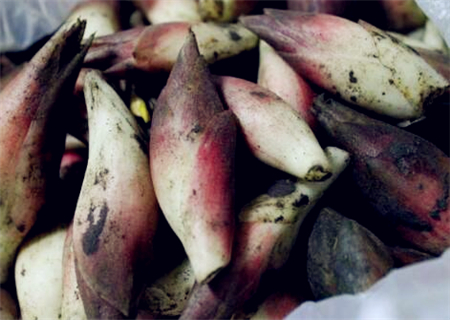
The current market price of Myoga is 2—3 yuan per kilogram.
How much does it cost to plant thirty mu of Myoga
Myoga is a high-efficiency plant that is planted once, grows for many years and is harvested for many years. In the first year, each mu can bring in about 5,000 yuan, and in the following years no further cost is needed, with each mu reaching more than 8,000-10,000 yuan per year.
Myoga fruits can be sold on the market directly after being picked, and the fresh produce is very much in demand. Those red Myoga buds, shaped like small bamboo shoots and also like large crystal heads, make people feel very curious, and they scramble to buy them; after buying them and taking them home, the taste is special, and they buy them every day afterwards. According to farmers who grow Myoga, selling fresh Myoga generally brings in about 5,000 yuan per mu, and in the following years the yield is higher year after year, with income reaching more than 10,000 yuan at times. If the scale of development becomes large enough and a processing factory is set up, they will buy as much as there is, and there is no worry about finding a market for the product.
There are many ways to eat Myoga fruits: cut into slices or shreds and stir-fried with fresh chili peppers, or stir-fried with meat, with bright color, crisp texture and fragrant taste. They can be boiled, roasted and torn into thin strips for cold dressing, and can also be made into pickles and so on.
Myoga is planted using root clumps, and afterwards it spreads and expands by division of the clumps. Generally, 200 jin of seed clumps are used per mu, and planting is carried out in spring and autumn. At present, seed clumps are rare nationwide and extremely precious, so a small amount can be introduced and planted first before expanding the area.
Main producing areas of Myoga
Myoga is distributed in Sichuan, Guizhou, Guangxi, Hubei, Hunan, Jiangxi and Guangdong; it grows under forest shade and by streams, at an altitude of 300-1900 m.
Myoga planting prospects
1. Myoga is a native plant unique to China and has a strong local character.
2. Myoga is a wild variety that has not been artificially bred, in line with the concept of green and healthy.
3. As a vegetable, Myoga can be eaten in many ways. It can be directly shredded and stir-fried, and is mostly pickled together with chili peppers in a sour vegetable jar to make pickles. Used as a side dish, it has a beautiful color, a unique flavor, a special taste and a rich fragrance with an endless aftertaste, and many consumers are particularly fond of it.
4. Myoga is rich in nutrients, especially containing various amino acids, protein and abundant cellulose. The cellulose it contains is also a polysaccharide nutrient that does not produce heat energy. Regular consumption helps keep the digestive tract unobstructed and maintain normal bowel movement, can treat constipation, relieve indigestion and strengthen the stomach, and has special effects for diabetes.
5. Therefore, Myoga is a purely natural dietary fiber food that serves both as food and medicine.
6. More importantly: the current planting scale of Myoga is limited, and the planting areas are also limited, and many people still know very little about Myoga.
12