How much is hops per jin? 2018 price trends and planting techniques in Chinese producing areas
Hops are an indispensable raw material for brewing beer. About 1000 years ago, the Germans added hops to beer, giving beer its current crisp taste and fragrant aroma. So how much are hops per jin now? What about the 2018 price trend? Where are the producing areas in China? The hop planting techniques are compiled for you as follows:
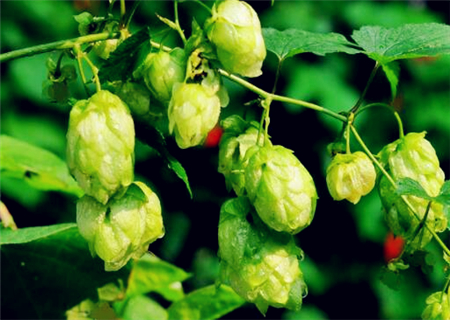
According to the latest price display on Alibaba, hops are 68 yuan per jin. Domestic and imported prices are different, and different varieties are also different.
What is the 2018 hop price trend?
In 2018, China's three major beer groups set aside past grievances and joined forces to raise prices. At the beginning of the new year, they threw a heavy bomb into the market.
“The so-called price increase at present is a price increase of local products in local areas by major beer manufacturers, not a comprehensive price increase. The current local scope is still unclear. The price increase actually conveys a signal that, under the situation of stagnant growth in China's beer sales, price increase is only one means, and all major groups want to increase profits.
Therefore, the hop price trend in 2018 may rise.
Chinese hop producing areas
In China, it is widely distributed in the Tianshan and Altai mountain ranges of **, concentrated in the Irtysh River and its branch basins in the Altay region; the Emin River basin in the Tacheng region; the Ili River basin in the Ili region and other places. In addition, hops are also distributed in Ningxia, Gansu, Sichuan, Shaanxi and Yunnan. It is mostly cultivated in various parts of China.
Methods of planting hops
Growth habits: likes coolness, is cold-tolerant and heat-averse. The suitable growth temperature is 14-25°C, and it requires a frost-free period of about 120 days. It is a long-day plant and likes light. The annual sunshine hours need to be 1700-2600 hours. It is not choosy about soil, but loam with deep, loose, fertile soil and good aeration is suitable. Neutral or slightly alkaline soil is acceptable. The spicate inflorescence is ellipsoid, 2.5-3 cm long, 1.5-2.5 cm in diameter. The bracts are imbricate, about 45 in number, mostly scattered, broadly ovate or ovate-lanceolate, with obtuse-acute apex, a few gradually acute, and the base rolled. The surface is brown or brownish red, and the veins on the inner surface obviously protrude upward. The base wraps one fruit, nearly spherical, with longitudinal ridges on the surface and a short tip at the apex; the outer surface has red powdery particles attached at the base.
Field management
1. Bud cutting. Bud cutting is an important measure to artificially regulate growth and development. Through bud cutting, excess buds are removed and a few strong buds are left, so that nutrients are concentrated on these strong buds and develop into strong aboveground stems and underground root systems. Bud cutting can also remove rotten roots, diseased roots, and insect pupae, playing a role in preventing and controlling diseases and insects. In most areas of China, bud cutting is carried out in spring, but in the ** region it is carried out in autumn. Spring bud cutting should be early rather than late, and the bud cutting time should not be dragged out too long. The method is to dig up the soil around the rhizome until all old roots are exposed, then use a wooden knife to remove the soil outside the pit, and use a sharp bud-cutting knife to cut off new rhizomes or rotten roots 1.5-2 cm from the new and old rhizomes, leaving only 5-8 healthy buds at the new and old rhizomes. The cut of the bud-cutting knife is required to be smooth, and the rhizome must not be cut broken. After cutting, expose to the sun for 1-2 hours before covering with soil. 2. Thinning and final thinning of seedlings. Start thinning seedlings after the seedlings emerge, and finalize the seedlings when the seedlings are about 20 cm high. The number of seedlings retained depends on soil fertility, variety, plant and row spacing, and trellis shape. Generally, in plots with large plant spacing and high trellises, keep 2-3 plants per plant.
3. Leading vines, tying vines, and thinning branches and leaves. When the seedlings are 40-60 cm high, use thin cable rope or plastic rope to tie the branches and vines along their growth habits to the galvanized wire, once every 3-5 days. Do it on sunny days when the plants are slightly wilted to prevent breaking the branches and vines. When the seedlings are 2 m high, start thinning branches and leaves, removing side vines below the galvanized wire pull line and branches and leaves that are too dense, overlapping, or diseased, so as to improve ventilation and light transmission, promote robust growth of the main vines and reduce disease infection.
4. Irrigation. If there is a lack of water during the growth period and before overwintering, it will affect growth and yield. In particular, sufficient water must be ensured during the flowering period. In the ** region, about 7-8 irrigations are needed throughout the entire growth period.
5. Fertilization can be carried out in combination with irrigation. Apply nitrogen fertilizer at the seedling stage, 10-15 kg per mu, and apply compound fertilizer once each at the bud stage and flowering stage. 8-10 kg per mu, and apply organic fertilizer before overwintering, about 3000 kg per mu.
6. Intertillage and weeding. After each irrigation or rain, intertillage and weeding should be carried out in time. Generally, deep hoeing is suitable in the early and late growth stages, while shallow hoeing is suitable during the flowering period, to avoid damaging roots and affecting yield.
Propagation methods
1. Seed propagation is mainly used for crossbreeding. Because the seed coat is hard and most seeds develop poorly, the germination rate is very low, about 6%-12%. Therefore, seed selection is required before sowing. Select plump seeds, soak them in 35°C warm water or place them in a warm place at 23-25°C for germination. When the average temperature reaches 20°C, they can be sown, covered with about 2 cm of soil. After sowing, water frequently to maintain soil moisture, and they can emerge in 3-5 days. Newly emerged seedlings should avoid direct sunlight and need shade with curtains. As the seedlings grow, insert rods in time to support the seedlings and tie the vines onto the trellis. The middle stage of seedling growth (late July to mid-August) needs fertilizer and water the most, and topdressing can be applied 1-2 times, with frequent intertillage, weeding, and pest and disease control. Hops production all uses asexual propagation.
2. Underground stem cutting propagation. This method is simple and easy to carry out, and is commonly used in production in China. In late autumn or early spring when cutting buds, take underground stems that are robust, 10-14 cm long, 1.5-2 cm thick, with smooth cuts at both ends as seed stems for direct planting. If they cannot be planted in time, they can be temporarily planted in trenches dug in high, dry terrain, with a trench depth of 60-80 cm. The seed stems can be tied into small bundles according to variety, hung with variety labels, and placed in the trench. One layer of soil, one layer of seed stems, temporarily planted, and record the position of each variety. If the seed stems need to be transported elsewhere, packaging should try to avoid water loss and heating and mildew.
3. Green branch cutting method. This method has a high propagation coefficient and can be carried out under greenhouse and seedbed conditions. It has been applied in production abroad. In Beijing, taking green branches with 2 bud nodes from late May to early June for cutting has a high survival rate, up to 100%. It is also possible to take green branches with 1 bud node in mid-July and treat them with 1000 microliters/liter indoleacetic acid alcohol solution, and the rooting rate can also reach 96.7%.
4. Bud planting method. When cutting buds, take plump and robust young buds 6-13 cm long with a small amount of fibrous roots and plant them in the nursery at a spacing of 30 cm x 60 cm; require all buds to be planted into the soil, with the bud tip 3 cm from the ground, cover with 2 cm of soil, maintain soil moisture, and they can emerge in 15-20 days. Manage them according to the requirements for young seedlings and strengthen management.