How much does a sisal seedling of the Asparagaceae family cost per plant? A detailed explanation of profit per mu and planting techniques
Sisal, also known as pineapple hemp, belongs to the Agavaceae family, Agave genus. It is a perennial tropical hard-leaf fiber crop and is the most widely used and most extensively applied hard fiber in the world today. So how much does a sisal seedling cost per plant? How much can you earn from planting one mu? What are the techniques?
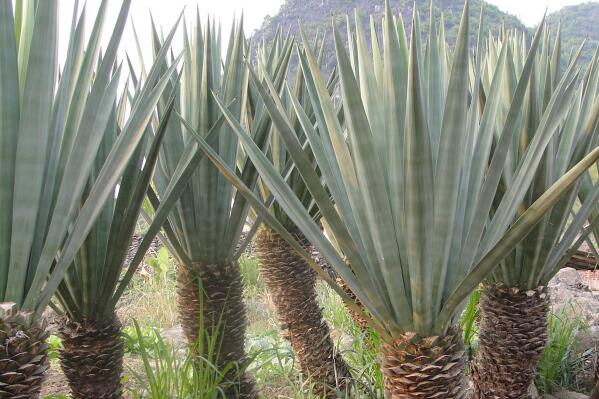
How much does a sisal seedling cost per plant?
| Seedling name | Crown width (cm) | Price (yuan) |
| Sisal | 30 | 1.8~2.5 |
| Sisal | 50 | 4.5~7 |
| Sisal | 60 | 8~11 |
| Sisal | 80 | 18~25 |
| Sisal | 100 | 30~45 |
How much can you earn from planting one mu of sisal?
1. The yield per mu of sisal can reach about 3 tons, but the plant fiber extracted from one mu can only reach between 300KG and 500KG at most. Sisal likes high-slope environments with high temperature, high humidity and evenly distributed rainfall, especially ideal climates with high daytime temperatures, dryness and ample sunlight, and frequent fog and dew at night, so these issues must be paid attention to when planting.
2. Calculated at the current purchase price of 250 yuan/ton, the output value per mu is about 2,500 yuan, which is an increase of more than 1,000 yuan per mu compared with planting drought-tolerant crops such as cassava, corn and sugarcane. Sisal is a perennial leaf fiber crop and is also the most widely used and most extensively applied hard fiber in the world today. Because the characteristics of hard fiber include being white, tough in texture (strong tensile strength) and highly elastic.
What are the sisal planting techniques?
1. Environment: Sisal likes to grow in high-slope environments with high temperature and high humidity, and the rainfall must be distributed very evenly. Especially during the day, it needs a climate with light, dryness and high temperature, and at night an environment with fog and dew is best.
2. Soil: Sisal has a very strong ability to adapt to the environment. It is relatively tolerant of barren soil and drought, but fears waterlogging. Its growth ability is very strong, and its range of adaptation is also very wide. It is suitable for planting in well-drained, loose, fertile sandy soil with a low groundwater level. If the soil is often moist or has poor drainage, it is not suitable for planting.
Temperature: It is suitable for growing in an environment of 27-30°C. The maximum temperature cannot exceed 40°C, and the minimum temperature cannot be lower than 16°C. The average annual rainfall is 1200-1800mm, and the diurnal temperature difference range cannot exceed 7-10°C. Its cold tolerance is very low. Frequent cold exposure will cause physiological leaf spot disease, which is unfavorable to the growth of sisal.
3. Pest and disease control: Focus on preventing and controlling diseases such as anthracnose, leaf spot disease and band blight. Specific measures include planting windbreak forests and cover crops; paying attention to field drainage; cultivating strong seedlings; paying attention to the ratio of nitrogen, phosphorus and potassium, and applying more potassium fertilizer; timely weeding; doing a good job of removing pathogens in winter; chemical control, etc. For anthracnose, Bordeaux mixture can be sprayed after heavy rain; for zebra-stripe disease, Dexon (1:200), cresol soap (1:200) and Kuiyangjing (1:1100) can be sprayed, continuously 3-4 times. The main insect pests include scale insects, weevils and red spider mites. For scale insects, rosin mixture can be spread; for weevils, green bait can be used to trap and kill them when adults first emerge from the soil. For red spider mites, 0.3-0.5 degree Baume lime sulfur mixture can be sprayed once every 5-7 days, continuously 2-3 times.
4. Harvest: 2-3 years after planting, when the number of leaves reaches 40-50, the leaf length is more than 1 m, the leaves form a 45° angle with the ground, the leaf color becomes lighter and the white wax powder disappears, it is the suitable harvest period. When cutting leaves, 25-30 leaves should be left, and they should be cut 2-3 cm near the leaf base. The cut leaves should be tied into bundles in time and transported to the factory for processing, and this must not exceed 2-3 days.