Cynanchum paniculatum Medicinal Plant Price Per Jin, Planting Methods, and Effects and Functions
Cynanchum paniculatum is distributed in Heilongjiang, Jilin, Liaoning, Hebei, Henan, Shandong, Inner Mongolia, Jiangsu, Zhejiang, Jiangxi, Fujian, Hubei, Hunan, Guangdong and other places. It has extremely high medicinal value. So, how much does Cynanchum paniculatum cost per jin? How is it planted? What effects and functions does it have? It is understood that the price of Cynanchum paniculatum is around ten to twenty yuan per jin, and prices vary from region to region.
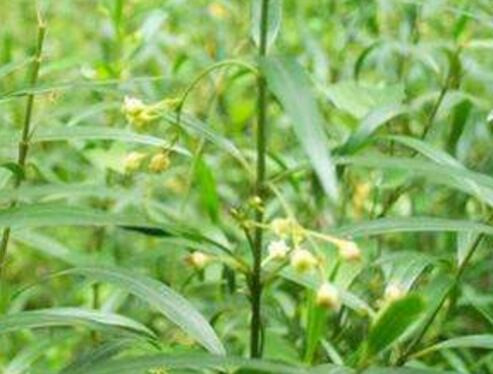
How is Cynanchum paniculatum planted?
Site Selection and Land Preparation
It is best to choose forest edges or ditch sides that are slightly shady and moist, rich in humus, with deep soil layers and good drainage, and sandy loam soil for planting. Apply 2000-3000 kg of fully decomposed farmyard manure per 667 sq m. Add 30 kg of superphosphate as base fertilizer, and plow deeply about 30 cm. Level and harrow fine. Make beds about 20 cm high and 1.3 m wide, with the bed surface shaped like a turtle shell, and dig drainage ditches around the perimeter.
Propagation Methods
In production, seed propagation or division propagation can be used.
Seed Propagation
The sowing period is in early to mid-April. Mix the seeds with plant ash, and sow in drills with a row spacing of 15 cm. The ditch depth is 1-2 cm. After sowing, cover with fine soil, cover with thin thatch, water, and keep moist. Remove the covering grass when seedlings emerge after about 2 weeks. Transplant when the seedlings are about 10 cm tall. The sowing rate is 1.0-2.5 kg per 667 sq m.
Seedling Raising and Transplanting
Select mature, plump seeds that are more than 2 years old with a germination rate above 85%. Sow in spring from February to April. Mix the seeds evenly with plant ash or fine sand, and evenly scatter them into sowing furrows about 2 cm deep. Sprinkle a layer of plant ash or humus soil on top, then cover with grass to retain moisture, with a row spacing of 12-15 cm. Seedlings emerge in about 15 days, and the covering grass should be removed promptly after emergence. Through a series of management practices such as thinning, final thinning, loosening the soil, topdressing, and weeding, carefully dig out the seed roots after the plants wither in winter and before the seedlings sprout the following spring, and transplant them at a row spacing of 20-25 cm and a plant spacing of 10-12 cm. Water immediately after transplanting to settle the roots. With this method of propagation, the sowing rate per mu should be controlled at 1.5-2.5 kg, and the seedlings (seed roots) raised can be planted in about 10 mu of field.
Division Propagation
In late autumn or early spring, dig out the underground rhizomes of Cynanchum paniculatum, select plants with robust rhizomes, white color, dense nodes, and no pests or diseases, cut off the overly long fibrous roots for medicinal use, keep roots about 5 cm long, then cut the rhizomes according to the number of buds, divide the mother clump into several plants, ensuring each plant has 1-2 buds. The planting method is the same as seedling raising and transplanting.
Field Management
Thinning and Final Thinning
Start thinning when the seedlings are 5 cm tall, and final thinning when they are 7-8 cm tall, with a plant spacing of 5-6 cm and a row spacing of 15 cm. The principle of retaining seedlings is to remove those that are too small or too large and keep plants of relatively uniform size. When missing seedlings or broken rows are found, transplant seedlings to fill the gaps.
Cultivation and Weeding
During the seedling stage, Cynanchum paniculatum grows slowly, and weeds easily grow on the bed surface, so weeding should be carried out 2-3 times in combination with cultivation. After the plants close the rows and during the seedling or growth period, weeds should be pulled by hand.
Earthing Up Around the Roots
When the seedlings are about 20 cm tall. Proper earthing up around the roots can promote underground growth and increase yield. The specific method is to mix livestock manure with burned soil or other soil free of weed seeds, crush it, and cover the bed surface with a thickness of no more than 3 cm.
Topdressing
After final thinning, topdress promptly. Dissolve 5 kg of urea in 1000-1500 kg of water and pour it at the roots of the plants; before the rainy season arrives in mid-June, apply 20-30 kg of high-quality three-element compound fertilizer per mu, open shallow ditches between rows, and cover with soil after application. Some plant ash can be broadcast to increase potassium supply and promote underground growth. Topdress once about every 1 month, 3 times in total, mainly with livestock manure water.
Drainage and Irrigation
After the seeds germinate and before seedlings emerge, attention should be paid to spraying water to keep the surface soil moisture moderate and improve the emergence rate. Irrigate promptly in case of drought. Before the rainy season arrives, dig drainage ditches well to ensure there is no standing water in the field after rain, so as to prevent root rot from water accumulation.
Staking to Prevent Lodging
Between the rows, along the direction of the bed, set up a stake about 1 m high every 5 m, and connect the stakes with plastic rope at 25 cm, 45 cm and 65 cm above the ground to prevent Cynanchum paniculatum from lodging and reducing yield.
Pest and Disease Control
From May to June, root rot begins to occur in Cynanchum paniculatum, and poor drainage or low-lying terrain is more likely to lead to a major outbreak of the disease. The roots of affected plants turn black. Control measures include: timely drainage during the rainy season, timely removal of dead diseased plants and disinfection of diseased holes with lime, avoiding continuous cropping, and control with root rot powder, carbendazim, tu jun xiao, chlorothalonil or Trichoderma fungi. The main pests harming Cynanchum paniculatum are aphids and cross-shaped long bugs, which can be killed by spraying with 1500 times dilution of 40% omethoate or 20 mL of 20% fenvalerate mixed with 50 kg of water, once a week for 2-3 consecutive times.
Harvesting and Processing
Harvest 2-3 years after seed propagation and seedling transplanting, and 1-2 years after division propagation. In autumn and spring, harvest the aboveground and underground parts of Cynanchum paniculatum separately. After harvesting, remove soil and impurities, sun-dry until half dry, tie into small bundles, then sun-dry or shade-dry. After drying, the aboveground part is grayish green and the underground part is dark brown. Those that are dry, plump, correct in color, free of impurities, and strong in odor are considered the best.
What effects and functions does Cynanchum paniculatum have?
1. Used for various painful conditions such as rheumatic arthralgia, waist pain, pain from falls and injuries, abdominal pain, and toothache. Cynanchum paniculatum has a good effect of dispelling wind and relieving pain, and is widely used for various painful conditions caused by wind-dampness, cold coagulation, qi stagnation, and blood stasis. It is also used for postoperative pain and cancer pain, with a certain analgesic effect. It can be used alone or combined with related drugs according to the syndrome.
2. Used for skin diseases such as eczema, rubella patches, and stubborn tinea. Cynanchum paniculatum has the effect of dispelling wind and relieving itching. It can be used alone internally or decocted in water for external washing, and can also be combined with Sophora flavescens, Kochia scoparia fruit, Dictamnus dasycarpus bark and other drugs that clear heat and drain dampness. In addition, Cynanchum paniculatum can also neutralize snake venom and treat venomous snake bites. It can be used with Lobelia chinensis internally or externally.