How much does cinnamon cost per jin? Detailed explanation of cultivation methods, culinary uses, and effects and benefits
Cinnamon, also known as yugui, mugui, yushu, dagui, lagui, ping'an tree, and Chinese cassia bark, is the dried bark of the cinnamon plant in the Lauraceae family. It originated in China and is now widely cultivated in the tropical and subtropical regions of Guangdong, Guangxi, Fujian, Taiwan, China, Yunnan and other provinces and regions. So, how much does cinnamon cost per jin? How is it cultivated? How is it eaten? What effects and benefits does it have? It is understood that cinnamon costs around 12 yuan per jin, though prices vary from region to region.
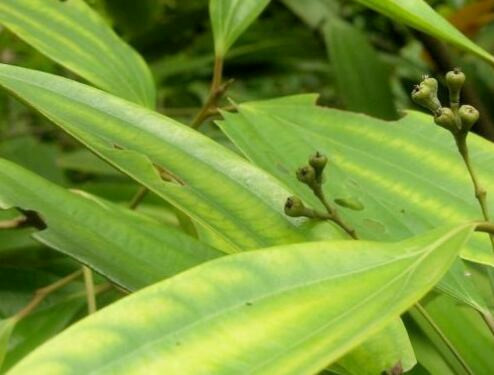
How is cinnamon cultivated?
1. Land preparation
Site selection
It prefers a warm, humid climate with plenty of sunlight, and is best suited to well-drained, fertile sandy loam, gray calcareous soil, or red sandy loam with an acidic reaction (pH 4.5-5.5).
Soil preparation
After plowing and breaking up the soil, make beds 1 m wide and 15-20 cm high. Drainage ditches should be dug around them.
2. Propagation techniques
Generally, the seed seedling and transplanting method is used. After the seeds mature, sow them immediately after harvesting, or store them mixed with wet sand, but for no more than 20 days, as they lose their germination ability after that. Use the drill sowing method, with a row spacing of about 15 cm and a furrow depth of 3-4 cm, sowing 1 seed every 3-4 cm. After sowing, cover with soil, water, and cover with dry grass. When the seedlings are 10 cm tall, thin them, leaving 1 seedling every 6 cm. After 3 years, when the seedlings are about 1 m tall, transplant them on cloudy and rainy days in February to March, with a row and plant spacing of about 2×3 m.
3. Field management
They germinate 20-40 days after sowing. At this time, clear weeds, set up shade frames to prevent scorching sun exposure, pay frequent attention to watering, keep the soil moist, and prevent drought. When the seedlings are 16-20 cm tall, remove the shade frames and pay attention to irrigation and fertilization. After afforestation, weeding, loosening the soil, and fertilizing must be done 3 times each year.
4. Pest and disease control
The pest includes the larvae of the camphor red longhorn beetle. When found, the affected parts can be cut off and burned, and the insects can be caught and killed, or fumigated with sulfur vapor. During the cinnamon seedling stage, disease prevention is the priority. Each time foliar fertilizer is sprayed, insecticides and fungicides can be added and sprayed together. If brown spot disease, anthracnose, powdery mildew, etc. appear after transplanting, spray with Penke at 600 times dilution or Deqing at 3000 times dilution. If there are stem borers, leaf rollers, cinnamon silkworms, etc., spray with Miesha at 2000 times dilution or malathion at 1500 times dilution. If longhorn beetles bore into the trunk or branches and cause damage, soak absorbent cotton in 80% ddvp stock solution, insert it into the bore hole, and seal the opening with mud.
5. Harvesting and storage
When the trees are more than 10 years old and the phloem has accumulated an oil layer, they can be harvested and stripped. The bark can be stripped in both spring and autumn, with the bark stripped in August-September of autumn being of superior quality. For ring stripping, cut the bark according to a length slightly longer than the commercial specification (41 cm), strip off the cassia bark, and then cut it into strips slightly wider than the specification width (8-12 cm). Strip production, that is, scoring lines on the tree according to dimensions slightly larger than the commercial specification length and width, stripping them off the tree one by one, and processing them by the pit oil sealing method or the method of covering with a thin mat outside a basket. Bark stripped in April-May is called spring cassia and is of poor quality, while bark stripped in September is called autumn cassia and is of good quality. After the bark is sun-dried, it is called cassia bark, and processed products include guitong, banggui, qibianggui, and yougui.
Precautions
After stripping cinnamon bark, directly apply a wound-healing and antiseptic film to the ring-stripping wound. This allows the wound to quickly form a tough, soft film that tightly adheres to the wood, protecting the growth of the wound healing tissue, preventing infection by rot disease, preventing soil and rainwater contamination, preventing freezing, and preventing the wound from drying and cracking. At the same time, use Hushu Jiangjun year-round to paint the tree body to prevent bark pests and diseases.
How is cinnamon eaten?
1. Mutton and cinnamon soup:
Put 6 grams of cassia bark into about 1 jin of stewed meat. After stewing, whether eating the meat or drinking the soup, it can warm the middle and strengthen the stomach, warm the waist and knees, and treat cold abdomen and gas bloating.
2. Cinnamon powder:
Grind 3 grams of cassia bark into a fine powder, take it twice a day with warm water. It can treat stomach bloating and cold stomach pain; adding cinnamon bark powder to dishes during cooking can help control blood sugar and cholesterol.
3. Cinnamon brown sugar tea:
Take 3-6 grams of cassia bark and 12 grams of brown sugar, decoct in water and remove the residue, then take it warm in 2 divided doses. It can treat postpartum abdominal pain in women: before menstruation, use 3 grams of cassia bark, 9 grams of hawthorn flesh, and 30 grams of brown sugar, decoct in an appropriate amount of water for three to five minutes, and take it in 2 divided doses. It can treat abdominal distension and pain during menstruation.
4. Cinnamon paste:
Grind 6 grams of cassia bark and 6 grams of clove together into a fine powder, put it into a plaster, and apply it to the child's navel to treat diarrhea in children.
5. Cinnamon and aconite egg soup:
Take 3 grams of cassia bark, 9 grams of aconite, and 1 egg. Decoct the cassia bark and aconite in water, remove the residue, crack the egg into it, and after it is cooked, eat the egg and drink the liquid, twice a day. It can treat excessive leukorrhea.
What effects and benefits does cinnamon have?
Tonifies primordial yang, warms the spleen and stomach, removes accumulated cold, and unblocks the blood vessels. It treats decline of the gate of life fire, cold limbs and faint pulse, yang collapse and desertion, abdominal pain and diarrhea, cold hernia and running piglet qi, cold pain in the waist and knees, amenorrhea and abdominal masses, yin abscess, wandering abscess, and deficiency yang floating upward, with heat above and cold below.