How much does a Boston fern cost per plant? Detailed explanation of care methods and effects and functions
Boston fern is also known as round spleenwort, comb grass, phoenix egg, centipede grass, stone yellow skin, etc. It is native to tropical and subtropical regions, and grows wild in mountain forests across South China. It has relatively high ornamental and medicinal value. So, how much does a Boston fern cost per plant? How do you care for it? What effects and functions does it have? It is understood that the price of Boston fern varies according to specification; for example, the price for the 0.2-0.4 specification is 3.8 yuan per plant. Some prices are around 8 yuan per plant, depending on which type you need.
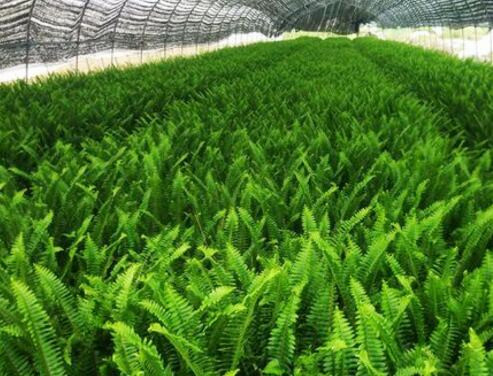
How do you care for a Boston fern?
1. Soil
For the cultivation soil, mix 4 parts loam, 4 parts leaf mold, and 2 parts sand. When growing it as a hanging basket, an equal mix of leaf mold and vermiculite can be used as the growing medium. The Boston fern has a relatively shallow root system and is somewhat epiphytic, so the growing medium should be loose, fertile, and well-drained. For potting soil, generally use leaf mold or peat soil mixed with a small amount of garden soil; fine sand and vermiculite can also be added to increase water permeability. When growing it as a hanging basket, an equal mix of leaf mold and vermiculite can be used as the growing medium; it is lighter in weight and suitable for hanging. For household pot cultivation, to keep the soil moist, some sphagnum moss, peat moss, etc. can be mixed into the growing medium, which is very beneficial to the growth of the Boston fern.
2. Temperature
The Boston fern is not tolerant of severe cold, so in winter you should do a good job of keeping it warm. Keeping the temperature above 5°C will prevent frost damage; above 8°C it can still grow slowly, but it should not be placed near a heat source, otherwise high temperatures often cause excessive growth that affects the overall plant shape. In winter cultivation, special attention should be paid to preventing nighttime frost and cold wind. The Boston fern also fears extreme summer heat. When summer temperatures are high, transpiration is intense, so you must do a good job of preventing heat and cooling, pay attention to maintaining good ventilation, and continuously spray water on the plant; this can also make the leaf color more tender green. In summer, with sufficient watering and spraying, the Boston fern can still grow normally at temperatures of 30°C-35°C. Spring and autumn have suitable temperatures and are the vigorous growth periods for the Boston fern. Attention should be paid to good ventilation, and the pot should be turned frequently to prevent growth from leaning to one side.
3. Light
The Boston fern is relatively shade-tolerant. As long as it can receive scattered light, it can be placed indoors for display and viewing for a relatively long time, and it almost does not need special lighting. During cultivation, when light is too strong, it often causes the Boston fern's leaves to dry up, wither, and fall off. For household cultivation, especially avoid sudden exposure of a Boston fern that has been placed indoors for a long time to strong light. In this situation, even for a very short time, it can cause leaf dehydration, wilting, scorched leaf edges, and yellowed leaves, seriously affecting its ornamental value. Although the Boston fern is a relatively shade-tolerant plant, long-term shading without light will also lead to weak growth, faded leaf color, and leaf drop; at the same time, because the leaves elongate, its original posture changes, causing uneven growth and poorer ornamental quality. Therefore, when displaying it indoors, in order to maintain a good ornamental effect for a long time, attention should be paid to letting it see light regularly. In spring and autumn, it can receive a little light in the morning and evening, ensuring 4 hours of light per day. In winter, the Boston fern can be placed in a sunny spot in front of a window; in summer, when light is strong, the Boston fern can simply be kept indoors in a place with scattered light.
4. Fertilization
As a fern, the Boston fern does not bloom or set seed, consumes little nutrients, and has relatively low fertilizer requirements, but regular fertilization should still be noted during cultivation. Fertilization of the Boston fern is mainly nitrogen-based. During the vigorous growth periods in spring and autumn, apply dilute cake fertilizer water once every half month to 1 month, or a nitrogen-based organic liquid fertilizer or inorganic compound liquid fertilizer. The fertilizer must be dilute and must not be too concentrated, otherwise it is very easy to cause fertilizer damage. An appropriate amount of fertilization can maintain long-lasting emerald green leaf color and make the plant full of vigor and vitality. The leaf color of the Boston fern is relatively lighter than that of other foliage plants; this is its own normal performance, not a lack of nutrients. During cultivation, some people always think this is nutrient deficiency and keep fertilizing, with the result that the leaf color improves somewhat, but the plant grows weakly and the leaves become too long, affecting the overall posture. This point needs attention.
What effects and functions does the Boston fern have?
1. Economic
This species is an ornamental fern commonly cultivated around the world. The tubers are rich in starch, can be eaten, and can also be used medicinally.
2. Landscape
Boston fern ornamental value: potted Boston fern can adorn desks, tea tables, windowsills, and balconies. It can also be hung in pots in living rooms and studies. In gardens, it can be used as a shade groundcover plant or arranged at wall corners, beside rockeries, and by ponds. Its leaves can be used as accompanying material for cut flowers and vase arrangements. In Europe and the United States, Boston fern is processed into dried leaves and dyed, becoming a new type of indoor decorative material. If Dendrobium is used as the main material, paired with Boston fern, broadleaf lady palm, and Buddhist pine, it is concise and lively, full of a contemporary feel. If Gerbera is used as the main flower in a wall arrangement, paired with Boston fern and broadleaf lady palm, it has a strong visual decorative effect.
3. Ecological
The Boston fern can adsorb heavy metals such as arsenic and lead, and is known as the “soil cleaner.” The arsenic absorption capacity of centipede grass from soil exceeds that of ordinary plants by 200,000 times. One planting can be harvested for many years, and it can be harvested three times each year. After adsorbing a large amount of heavy metals, it is burned on site. The entire treatment process is strictly controlled by industrial procedures. Not only is the volatilization of arsenic during the burning of centipede grass effectively controlled, but the spread of heavy metals in contaminated soil is also reduced, blocking heavy metals from entering the food chain so as to avoid secondary pollution.
4. Medicinal
The Boston fern is a traditional Chinese medicinal material. The whole plant and tubers are used as medicine, and it can be harvested throughout the year. It is mainly used to clear heat and drain dampness, calm the lungs and stop coughing, and soften hardness and dissolve accumulations. It is often used for colds with fever, cough, pulmonary tuberculosis with hemoptysis, dysentery, acute enteritis, etc.
Indications: treating jaundice, strangury with turbid urine, painful and difficult urination, dysentery, hernia, breast abscess, scrofula, scalds, and cuts.
Nature, flavor, and meridian tropism: bitter and pungent, neutral.