Butterhead lettuce price per jin, growing and cooking methods, and its effects and benefits
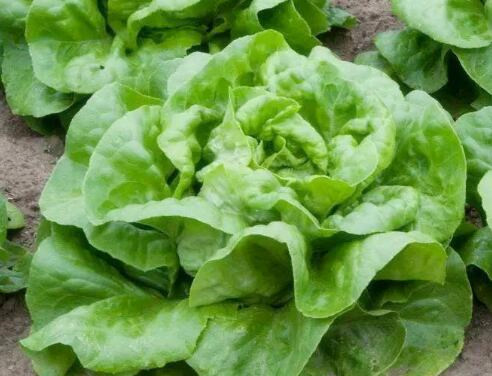
Butterhead lettuce belongs to the Asteraceae family, genus Lactuca, and is an annual herbaceous crop. The leaves are ovate, tender green, with a relatively flat surface and horizontal wrinkles on the middle and lower parts, good marketability, and soft leaf texture. It is deeply loved by consumers. So, how much does butterhead lettuce cost per jin? How do you grow it? How do you make it delicious? What effects and benefits does it have? It is understood that butterhead lettuce costs 2-4 yuan per jin, and prices vary from region to region.
How is butterhead lettuce grown?
1. Sowing and seedling raising
Sowing period for butterhead lettuce in the Beijing-Tianjin region: for the spring crop, sow and raise seedlings from February to April, and harvest from May to June; for the autumn crop, sow and raise seedlings from late July to late August, and harvest from October to November. After sowing, germination occurs in 3-4 days at a suitable temperature of 15-20°C. Because butterhead lettuce seeds are relatively expensive, production generally adopts the method of raising seedlings and transplanting. Generally, the seeding rate for a seedbed is 0.75-1.5 kg per mu, sown appropriately sparsely to cultivate strong seedlings. One mu of seedbed can plant 10 mu of land. For autumn butterhead lettuce sowing and seedling raising, seed treatment is generally required. First soak the seeds for 12 hours, then rinse them clean with water, wrap them in damp gauze, place them in a low-temperature environment of 5-6°C for two days, and take them out for sowing when most of the seeds begin to show white. After sowing, the soil covering should not be too thick, generally about 0.5-1 cm. In summer and autumn, with high temperatures and frequent rain, shade netting should be used to cover and shade after sowing.
2. Field planting and management
Butterhead lettuce has a shallow root system, so soil that retains water and fertilizer well and is fertile should be chosen for cultivation. General planting density: for early-maturing varieties, row spacing 23 cm × 20 cm; for mid- and late-maturing varieties, 33 cm × 24 cm. Taking butterhead lettuce as an example, when planting, leafy butterhead lettuce can be planted somewhat more densely, with row spacing of 20-25 cm, while head-forming butterhead lettuce has row spacing of 30-40 cm. Plant with a soil ball. The planting depth should be such that the soil ball is level with the ground surface. After planting, water thoroughly in time to promote rapid recovery. Generally, the seedlings recover and survive 6 days after planting. After recovery, topdressing and watering can begin. Head-forming butterhead lettuce can be given appropriate seedling hardening for 5-7 days, then topdressing and watering.
Butterhead lettuce is generally topdressed 3-4 times. After field planting and recovery, apply a recovery fertilizer once, with a relatively dilute concentration. Overwintering spring butterhead lettuce is topdressed once after field planting, and generally no fertilizer is applied in winter. In spring, continuous topdressing is needed 2-3 times.
Harvesting: butterhead lettuce should be harvested promptly after maturing; a slight delay in harvesting will affect quality. Spring-planted loose-leaf butterhead lettuce can be harvested about 40 days after field planting, and autumn-planted butterhead lettuce can be harvested about 50-60 days after field planting.
How do you make butterhead lettuce delicious?
Eating butterhead lettuce raw preserves the most nutrition; wash it clean and dip it in sweet bean sauce. Another way is to blanch it in boiling water, then rinse it in cold water, and eat it with sesame paste dressing. This dish is available in restaurants; for the cold salad, wash the lettuce, put it on a plate, drizzle with sesame oil, soy sauce, a little salt and MSG, and finally add some chili oil or mustard oil.
What effects and benefits does butterhead lettuce have?
1. Butterhead lettuce contains more dietary fiber and vitamin C than Chinese cabbage, and has the effect of eliminating excess fat, so it is also called weight-loss lettuce;
2. Because its stems and leaves contain lactucin, it tastes slightly bitter and has effects such as pain relief and sedation, lowering cholesterol, and assisting in the treatment of neurasthenia;
3. Butterhead lettuce contains effective components such as mannitol, which has diuretic effects and promotes blood circulation;
4. Butterhead lettuce contains an “interferon inducer”, which can stimulate normal human cells to produce interferon, thereby producing an “antiviral protein” that inhibits viruses.