Price, flowering period, differences from white orchid (Michelia alba), and planting methods of 4-5 m tall yellow magnolia (Michelia champaca)
The yellow magnolia tree has grayish-white bark, alternate single leaves, blue-green in color, leathery and glossy, oblong-elliptic. It likes a sunny, warm, humid and well-ventilated environment, and is neither tolerant of shade nor of intense heat and scorching sun. So, how much does a 4-5 m tall yellow magnolia cost? When is its flowering period? What is the difference between it and the white orchid? What are its planting methods?
I. How much does a 4-5 m tall yellow magnolia cost?
It is understood that a yellow magnolia 4-5 m tall with a trunk diameter of 11-12 cm costs between 500-600 yuan; as prices vary from region to region, this price is for reference only.
II. When is the flowering period of the yellow magnolia?
The yellow magnolia blooms continuously from June to October. If the winter temperature is suitable, flowers will keep opening continuously, only the fragrance is not as rich as that of summer flowers.
III. What is the difference between it and the white orchid?
1. Different flower colors
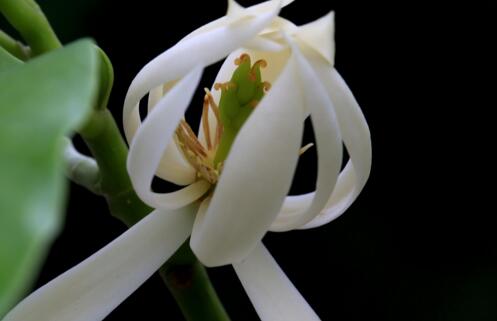
When they are in bloom, their flower color is the most obvious difference. The flower color of the white orchid is usually white, and its fragrance is relatively light. The flower color of the yellow magnolia is pale yellow, like the color of an orange, and its fragrance is extremely rich. It can thus be seen that they can easily be distinguished from each other by their flowers.
2. Different flowering periods
Under normal circumstances, the flowering period of the white orchid is from April to September, that is, it blooms in summer, but it usually does not bear fruit. The flowering period of the yellow magnolia, however, is longer; it generally blooms continuously from June to October. In addition, if the winter temperature is suitable, it will also keep blooming continuously. We can distinguish them by their flowering times.
IV. What are the planting methods?
1. It requires fertile, loose, well-drained growing soil.
It can be prepared with 5 parts pine needle leaf mold, 2 parts coarse chaff ash, 2 parts coarse sand, and 1 part rotted barnyard manure; avoid fine sandy soil or heavy clay soil with poor air permeability. For potting, use a clay pot (unglazed pot) with good ventilation and air permeability; avoid glazed pots, porcelain pots, purple clay pots, etc. It is best to use a relatively deep cylindrical flower pot, place an empty flower pot upside down under the pot, and raise it on bricks to prevent poor drainage; line the bottom of the pot with about 5 cm of cinder and crushed stone.
2. Water should be appropriate. The white orchid has fleshy roots; if the potting soil is too wet, the leaves will turn yellow and fall off, or even the roots will rot and the plant will die, while if it is too dry, the tips will wither and the leaves will curl. It is a flower that fears both waterlogging and drought. During the flowering period, when the petals open too widely, it indicates insufficient water, while with suitable water they remain in a bud-like state; when the surface of the potting soil looks dry and the soil is hard and cracked, water it immediately. When watering, the water temperature and soil temperature must be consistent; do not suddenly water with cold or hot water. Watering must be thorough; frequently giving half-watering will cause shallow roots. In spring and autumn, the white orchid should not be watered much; in midsummer, water daily and it must be done in the evening; from late autumn, begin to reduce the amount of watering; in winter, water once every 10 days. In the rainy season, it should be moved to a place sheltered from rain.
3. It fears alkalinity. The white orchid likes acidic soil, with a soil pH requirement of 5.5-6.3. In northern regions, the white orchid is difficult to grow precisely because most of the water and soil there tend to be alkaline, which dissolves the protoplasm of the white orchid's cells, causing slow development and poor growth. Watering it regularly with fermented rice-washing water gives better results.
4. It fears concentrated fertilizer. The white orchid likes phosphorus and potassium fertilizers, but avoid too high a concentration, otherwise reverse osmosis will occur, causing "physiological drought" in the plant, with wilting in mild cases and death by burning in severe cases. The fertilizing principle for the white orchid is: "apply diluted, apply often, apply in the evening." Practice has proved that using dilute human excrement and urine or soybean cake water, mixed with smashed fish scraps, rotten shrimp, chicken innards, etc., after being composted, at a ratio of 1:9 fertilizer to water, applied once every 3-5 days, and mixed with calcium sulfate at the time of application, gives better results and can make the white orchid's fragrance stronger.
Decorative application: The white orchid has an upright, branched plant shape and is elegant and poised. In the south it can be cultivated in open-ground courtyards. In the north, potted plants can be used to decorate courtyards, halls, and meeting rooms. Small and medium-sized plants can be placed in living rooms and studies. Because it fears smoke, it should be placed in a place with circulating air.