Introduction to the price, lifespan, best planting locations and methods of the ornamental pepper
Ornamental pepper, also known as five-color chili, is a variety of chili and a perennial herbaceous plant of the Solanaceae family, genus Capsicum, but it is often cultivated as an annual. So how much does ornamental pepper cost per jin? How long can it live? Where is it best to plant it? The planting methods are now organized as follows:
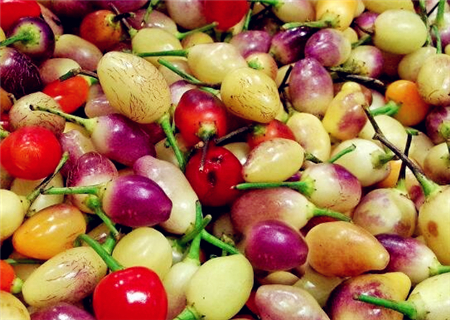
According to the latest price display on Alibaba, the price of ornamental pepper is now 8-10 yuan per jin.
Ornamental pepper is an annual herbaceous plant and dies after the fruit matures in autumn.
Cultivation techniques for ornamental pepper:
I. Seedling raising
The suitable temperature for germination is above 25°C. If a plastic film shed is used for heat preservation, it can be cultivated in all four seasons. Sowing is best done in a seedbed or pot. The soil should be fertile, loose and well-drained. The soil must be sieved and disinfected. Simple disinfection methods include sun exposure, fumigation and high-temperature treatment, the purpose of which is to kill bacteria or insect eggs in the soil.
Before sowing, spray the seedbed with enough water. After the water seeps in, evenly scatter the seeds, then cover with fine soil 1 cm thick, and finally spray water to moisten the bed. If the temperature is low, build an arched film cover; if the temperature is too high, remove the film to avoid burning the young sprouts.
After the young sprouts emerge, apply 1-2 moderate waterings of human feces and urine or a 0.1% urea solution. After watering, immediately use a fine watering can to sprinkle clean water to wash off the fertilizer solution on the leaves, so as not to burn the young leaves. When the seedlings grow to 5-6 true leaves, they can be transplanted.
II. Pot cultivation
For flower pots with a diameter of 15-25 cm, one plant should be planted per pot; larger pots can hold 2-3 plants.
The soil used should mainly contain farmyard manure, supplemented by phosphate fertilizer, urea and compound fertilizer. The soil in the pot should be loose and well-drained, and sufficient sunlight should be maintained. If the indoor temperature is suitable in winter and care is proper, it can continue to bloom. The ornamental fruit period of potted plants can often be extended to the New Year.
III. Field cultivation
For open-field cultivation, sowing is required from March to May each year. Before transplanting, sufficient base fertilizer must be applied to the field, with more than 1,000 kg of human and livestock manure per mu, and 50 kg of phosphate fertilizer or compound fertilizer is suitable.
The transplanting density requires a row spacing of 40-50 cm and a plant spacing of 30 cm. Provide enough water to keep moist, weed thoroughly, and at the beginning of the flowering period apply 10 kg of urea per mu. If conditions permit, apply plant vitality agents such as Yemianbao and Fengchanling.
IV. Pest and disease prevention
In dry and hot weather or during many cloudy and rainy days, growth becomes weak. Water during high temperature and drought. In the rainy season, dig field drainage ditches well to prevent water accumulation from causing leaf drop, flower drop and fruit drop. For pest and disease control, refer to plant insecticides and spray according to the symptoms.
V. Management
After planting, keep the field moist and remove weeds from the field. At the beginning of the flowering period, apply 10 kg of urea per mu and spray plant vitality agents such as Yemianbao and Fengchanling.
Water promptly in high temperature and drought weather; in the rainy season, dig field drainage ditches well to prevent water accumulation from causing flower and fruit drop.
Pay attention to pest and disease control.
VI. Harvest
The fruit of open-field ornamental pepper generally begins to mature successively in mid-to-late August. It should be picked and cut in time to increase yield and improve economic benefits. The cut mature peppers can be sold on the market or strung up and hung in a ventilated and dry place to dry into dried peppers for storage.