Can Bulb Plants Like Lilies Be Kept in the Bedroom? Post-Bloom Care and Cultivation Techniques
The lily is a perennial herbaceous bulb plant native to China, also known as Qiangshu, Fanjiu, Shandan, Daoxian, Chongmai, Zhongting, Moluo, Chongxiang, Zhongfenghua, Baihesuan, Dashifusuan, Suannaoshu, Yehehua, and others. So can lilies be kept in the bedroom? How do you care for them after blooming? What are the cultivation techniques?
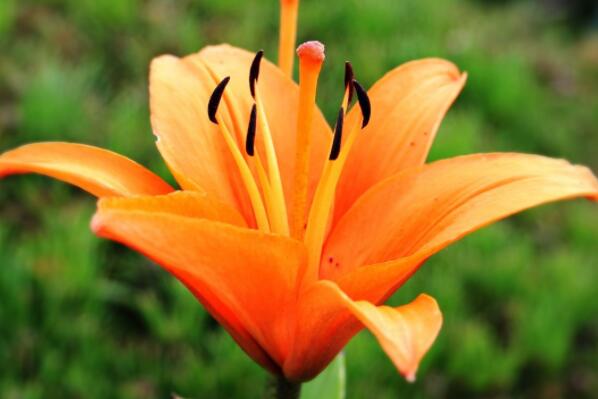
Can Lilies Be Kept in the Bedroom?
The fragrance released by lilies can raise the excitability of people's central nervous system, helping them maintain a good mental state. Placing lilies in a suitable spot can help regulate mood.
Lilies can also purify the air, effectively absorbing and removing household odors, formaldehyde and other harmful substances.
In addition, lilies carry a beautiful meaning——harmony for a hundred years, so they are also regarded as an indispensable auspicious flower in weddings.
Although lilies can regulate mood, the main function of a bedroom is to sleep. The rich fragrance of lilies can make people overly excited, causing headaches and insomnia. Lilies also produce abundant pollen, and if accidentally inhaled, it may cause respiratory allergies.
Therefore, it is best not to put lilies in the bedroom; keeping them in the living room for people to admire is enough.
How Do You Care for Lilies After They Bloom?
Lilies generally bloom from April to July; the flowering period depends on the variety and planting time, and the whole growing process takes about 90-120 days.
1. Lilies are bulbous plants. In the early stage before flowering, pay attention to care; at this time do not easily touch or move the flowerpot, to avoid the buds dropping off. Do not water the flowers frequently either; wait until the potting soil is dry, then spray with water.
2. After flowering, you can buy a little cut-flower preservative, which can extend the flowering period and let the flowers bloom longer. If you do not have cut-flower preservative, using rice-washing water from home is also good, because rice-washing water contains relatively more nutrients, which can benefit the growth of the plants.
3. After the flowers slowly fade, cut off the spent flowers and leave 20~30CM of the above-ground part. A few people, because they watered too much, have the lower leaves of the lily drop off completely; in that case leave the above-ground part longer, keeping a few leaves, and do not prune it into a bare stalk. Then at this time you should reduce watering even more, as this benefits growth the following year; too much watering will cause withering and root rot.
4. For normal fertilizing, Peter's Professional at 1:1000 is still once a week; other compound fertilizers once a month. Control the concentration well yourself, and do not burn the flowers to death. Homemade organic fertilizer is not recommended. Usually you can more or less leave it alone, but by no means dig it up.
5. When winter comes and it begins to turn yellow and wither, put it in a corner of the balcony where rain cannot reach and direct sunlight cannot reach. At this point stop watering and fertilizing; if the potting soil is too dry, add a little water, and continue like this until spring arrives.
Appendix: Lily Cultivation Techniques
I. Site Selection and Land Preparation
It is advisable to choose sandy soil or humus loam with high, dry terrain, facing the sun, deep soil layer, loose texture and good drainage for planting; in mountainous areas, you can choose a semi-shaded, semi-sunny open forest or gentle slope for planting. After selecting the site, deep-plow the soil more than 25 cm before planting. Along with land preparation, apply 2000 kg of decomposed stable manure or compost and 25 kg of superphosphate per mu as base fertilizer, plus 0.6 kg of 50% diazinon, and plow them into the soil at the same time for soil disinfection. Then, break up the soil finely and rake it level to make high beds or flat beds 1.3 m wide, with furrow width of 30 cm. Open relatively deep drainage ditches around the perimeter to facilitate drainage.
II. Planting
Autumn planting is preferable. From late September to early October; before planting, select small bulbs with tightly closed scales, white color, regular shape, and no damage or pest and disease damage as planting stock. After selection, soak the seed bulbs in 2% formalin solution for 15 minutes to disinfect, take them out and dry them, then plant. On the prepared bed surface, open horizontal furrows at a row spacing of 25 cm, about 12 cm deep, and place 1 small bulb (planting stock) every 15 cm (plant spacing), with the tip pointing up, cover with fine soil, plant straight and firm, rake the bed surface level, cover with a layer of fallen leaves, press them down with dead branches, and remove them when sprouting the following spring. The seeding rate per mu is 150~200 kg.
III. Field Management
1. Cultivation, Weeding and Fertilizing
In the second year after planting, carry out the first cultivation and weeding after the seedlings emerge evenly in spring; shallow hoeing is advisable, and do not injure the bulbs. Along with weeding, apply topdressing once: per mu, use 1000 kg of decomposed human and livestock manure water, 20 kg of superphosphate plus 800 kg of compost, mix evenly, and apply in furrows opened between the rows, then cover with soil. The second time, before flowering in May, along with cultivation and weeding, apply per mu 500 kg of decomposed cake fertilizer, 20 kg of superphosphate plus 800 kg of compost, mix well and apply in furrows opened between the rows. The third time, after flowering in July, along with weeding, apply phosphorus and potassium fertilizer once more, in a slightly larger amount, by the same method as the first time. Each fertilizing should avoid direct contact between the fertilizer liquid and the seed bulbs, so as to avoid causing bulb rot.
2. Bud Removal
Except for seed-production plots, when buds appear from May to June, promptly cut off the flowering stems so that nutrients are concentrated on bulb growth, which benefits yield increase. Pay attention to drainage and irrigation: lilies are afraid of waterlogging, so in the high-temperature and rainy summer season and after heavy rain, dredge the ditches and drain promptly to avoid disease. In dry weather, irrigate promptly.
IV. Pest and Disease Control
1. Leaf Spot
Damages stems and leaves. Affected leaves develop round lesions, slightly sunken; as a large number of conidia appear, the lesions turn dark brown or black, and in severe cases the leaves die. After lesions appear on the stem, the stalk becomes thinner. In severe cases it rots, falls over and dies.
Control methods:
1) Select disease-free bulbs as seed, and disinfect the bulbs with benzalkonium bromide or formalin before planting;
2) Dredge ditches and drain promptly, lower field humidity, maintain ventilation and light transmission, and enhance plant disease resistance;
3) Before and after onset, spray 1:1:100 Bordeaux mixture, or 65% zineb 500-fold solution, once every 7 days, spraying 3~4 times in succession, which can also control bulb rot.
2. Viral Disease
It is a whole-plant disease. Leaves show yellow-green mosaic patterns, with an uneven surface and black lesions, causing the leaves to die early and the plant to grow stunted; in severe cases the whole plant dies. It is mostly caused by virus infection.
Control methods:
1) Choose disease-resistant varieties, and select disease-free mother plants for seed production;
2) Spray promptly to eliminate virus-transmitting insects, such as aphids and seed flies;
3) Apply more phosphorus and potassium fertilizer to promote robust plant growth and enhance disease resistance.
3. Aphids
They appear in early summer. They suck the sap of tender stems and leaves, causing the plants to wither at the top, affecting growth, and transmitting diseases. Control method: spray with 40% dimethoate 1000-fold solution to kill them.
4. Seed Flies
Also called root maggots. The larvae damage the bulbs, which eventually rot; in severe cases the above-ground plants die.
Control methods:
1) Disinfect the soil;
2) Pour 90% trichlorfon 800-fold solution at the roots, which also controls cutworms.
V. Harvesting
It should be done around the Beginning of Autumn in the second year after transplanting, when the stems and leaves wither, choosing a sunny day to dig them up. Remove the soil, stalks and fibrous roots; the large bulbs are offered for sale, and the small bulbs are kept for seed.
First separate the large bulbs into pieces, store them separately by large, medium and small size, wash off the soil, and drain the water drops. Then, put them into boiling water to blanch briefly: about 10 minutes for large pieces, 5-7 minutes for small pieces; when the edges are soft and there are very small cracks on the back, scoop them out quickly, put them in clean water to rinse off the viscous liquid, and immediately spread them thinly on a drying mat to sun-dry. Do not turn them at will before they are dry, to avoid breaking them. At night bring them indoors, spread them flat to air-dry, and never stack them. Take them out to sun again the next day; after two days of sunning they can be turned once. When they are 90% dry, fumigate with sulfur, then repeat the sunning until completely dry. In rainy weather, they can be dried with gentle heat.
VI. Yield and Quality
1. Yield
Generally the fresh lily yield per mu is 800~1000 kg. The drying ratio is about 20%.
2. Quality
Those with thick flesh, white color, firm texture and semi-transparency are the best.