Convolvulaceae Purple Sweet Potato: Planting Methods, Suitable Growing Regions and Yield per Mu Explained
Purple sweet potato, also known as black potato, shao potato and so on, is a planting project much welcomed by growers in recent years, with planting characteristics such as low input and high output. So how do you grow purple sweet potato? Which places are suitable for growing it? What is the yield per mu in jin?
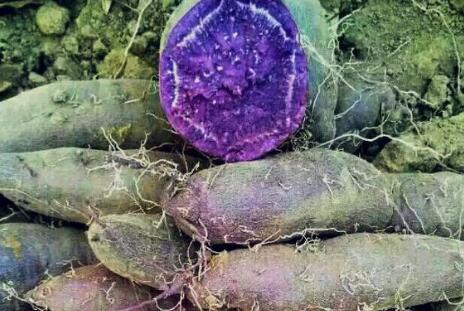
How do you grow purple sweet potato? Which places are suitable for growing it?
1. Select good varieties and carefully choose seed potatoes
The choice of seed potatoes should be determined according to the specific use. Generally, excellent varieties with strong stress resistance, drought and barren tolerance, and relatively few pests and diseases are chosen. At present, the main purple sweet potato varieties include Purple Sweet Potato King, Xinzi, Lingzi, Qunzi No. 1, Jingshu No. 6, Yuzi 263, Yanzi 176, Violet, Jihei and so on. Among them, the fresh-eating varieties "Ningzishu No. 1" and "Ningzishu No. 4", the processing variety "Japanese Aya Murasaki (Norin 47)" used for processing, and the dual-purpose varieties "Eshu No. 8" and "Shanchuanzi". The selected seed potatoes are required to be free of pests and diseases, with tuber size of 100-250 grams. After selecting the seeds, do a drying treatment and then spray with 800-fold New High Lipid Membrane solution, which can repel pests and diseases, isolate viral infection, strengthen respiratory intensity, and increase the seed germination rate.
2. Cover with film for early breeding and cultivate strong seedlings
Seed selection and seedling raising is an important stage in purple sweet potato cultivation, and purple sweet potato seedling raising can adopt the "two-stage seedling raising method". In the first stage, around mid-to-late March, make a seedling bed 1.2 m wide and 20-30 cm high inside a shed, dig 15-20 cm deep on the seedling bed, spread a layer of organic fertilizer at the bottom of the bed - either farmyard manure or cow pen manure and grass will do - and after splashing with human and livestock manure and urine, cover with soil. Generally, potato seedlings are best inserted horizontally or obliquely, and care must be taken to distinguish head from tail; they must not be arranged upside down. Spraying New High Lipid Membrane on the plant surface can prevent bacterial infection, improve resistance to natural disasters, increase photosynthetic intensity, and protect the seedlings so they grow strong. The density of arrangement is preferably about 2-3 cm between tubers.
After the seed potatoes are arranged, cover them with soil, ensuring the top is level while the bottom is not, that the seed potatoes do not touch the cow manure and grass, and cover with soil just until the seed potatoes are no longer visible. Then cover with a thin layer of rice straw, water the entire seedling bed thoroughly with clear manure water, and then close the shed to raise temperature and retain moisture; in the second stage, around early-to-mid April, when the seedlings are 5-7 cm tall, divide and transplant the seedlings, with a plant-to-row spacing of 35 cm × 70 cm, and cover with a small arched shed to continue keeping warm and raising seedlings. During seedling raising, pay attention to ventilation to prevent burning the seedlings, and apply topdressing to promote growth. During the seedling raising process, cut and plant at the right time. When the sprouted seedlings grow to more than 20 cm, begin cutting and planting; the roots of the seedlings should be treated with 800-fold New High Lipid Membrane solution, which can effectively prevent the seedling body from transpiring water, isolate pests and diseases, protect the root tips and root sheaths, shorten the seedling revival period, and quickly adapt to the new environment.
3. Prepare the land and make ridges, apply sufficient base fertilizer
Purple sweet potato is suitable for planting on plots with relatively high terrain and convenient drainage and irrigation, and the soil is best loose and fertile; sandy loam with relatively high organic matter is the best. Deep plow and make ridges, with a ridge width of 40-50 cm, a ridge height of 25-30 cm, and a ridge spacing of 66-86 cm. During land preparation, apply sufficient base fertilizer. Generally, apply 15-20 loads of decomposed chicken manure, 20-25 kg of compound fertilizer, and 15 kg of potassium sulfate per mu; the chicken manure is all broadcast before plowing, the chemical fertilizer is applied in furrows when making ridges, and along the furrows broadcast 2-2.5 kg of 3% phoxim granules per mu to prevent underground pests.
4. Insert early at the right time, with reasonable close planting
Raise good seedlings and transplant at the right time, and water promptly in case of drought. Generally, planting from mid-May to early June is best, generally single-row planting, with a plant spacing of 30-35 cm. The suitable planting density for purple sweet potato per mu is 3000-3500 plants. The best time for planting is on cloudy days when the soil is neither dry nor wet, or after rain when the sky clears and soil moisture is suitable; on sunny days with high temperatures, planting is best done in the afternoon; planting cannot be carried out in heavy rain, to prevent the formation of woody stems.
5. Strengthen management and control seedlings at the right time
Field management must be done well in purple sweet potato cultivation. Carry out timely intertillage and weeding according to crop needs, combine intertillage with earthing up and ridge repair, water reasonably, promptly lift the vines, loosen them, and break off root hairs; when lifting the vines, do not disrupt the direction, still place them back in their original place, and after lifting the vines spray Diguo Zhuangdiling, so that the nutrient transport vessels of the underground fruit become thicker, improve the vigor of underground fruit expansion, make the fruit surface smooth and the fruit shape robust, and increase yield. At the same time, attention must also be paid to pest and disease control. Purple sweet potato has relatively few pests and diseases, but one must not be negligent; underground pests include cutworms and red ants, and spraying targeted drugs plus New High Lipid Membrane greatly increases the effective component rate of the pesticide. The main field pests are large borers and leaf rollers, which should be promptly killed with agricultural Baoding and the like. Purple sweet potato diseases mostly occur in the hot, rainy summer season, and at the initial stage of onset they should be controlled with agents such as Dasheng M-45 and carbendazim. When controlling pests and diseases, control them early, prohibit highly toxic and high-residue pesticides, and improve the commercial quality of purple sweet potato.
Topdressing must be applied promptly during plant growth. If the base fertilizer is relatively sufficient, topdressing may be omitted in the early growth stage; on the contrary, about 10 days after planting, combined with the first weeding, apply seedling-promoting fertilizer, which can be watered with dilute human or livestock urine water or biogas water once or twice. After 40-50 days, combined with intertillage, apply tuber-setting fertilizer. After 60 days of growth, once it enters the tuber expansion period, no more topdressing may be applied. When the plant grows to a certain extent, attention must be paid to seedling control and topping. When the potato vine grows to 80 cm, promptly remove the terminal bud of the main vine to promote the development of side vines, so that nutrients are sent downward to form tubers, and at the same time pull out weeds. Generally in July-August, combined with weeding, the vines can be lifted 1-2 times to prevent the formation of adventitious tubers and ensure yield. Note that the vines only need to be lifted, not turned over, and vine lifting must stop after mid-August.
6. Harvest at the right time to ensure quality
If purple sweet potato is harvested too early, the yield of storage roots will be significantly reduced; if harvested too late, the storage roots are often affected by low-temperature chilling injury, and storage tolerance is greatly reduced. Therefore, it must be harvested at the right time. Generally in mid-to-late October, when the daily average temperature drops to 15°C, stem and leaf growth and tuber expansion stop, and harvesting can begin, at the latest before frost. Choose sunny weather with no rain to harvest purple sweet potato, so as to avoid too much soil on the tubers, which affects the commercial appearance.
How many jin is the yield of purple sweet potato per mu
One mu of purple sweet potato planting can produce: 3000 jin-4000 jin.
Variety classification
1. Jizishu No. 1
This variety was bred by the Crop Research Institute of the Shandong Academy of Agricultural Sciences and passed Shandong provincial approval in July 2012. Its outstanding feature is the "three highs": first, high anthocyanin content, with an average content of 76.38 mg/100g fresh tuber; second, high dry matter and starch content, with dry matter content of 36%-40% and starch content of 25%-27%; third, high yield potential, and through measures such as plastic film mulching, formula fertilization, full-process chemical control during the growth period, and effective pest and disease prevention and control, standardized and large-scale planting can be achieved, fully giving play to the variety's yield potential.
More than 2000 mu of "Jizishu No. 1" underwent actual harvesting acceptance; 1.04 mu was randomly selected, and the machine-harvested actual total yield was 2740.6 kg, equivalent to an average of 2635.21 kg per mu, setting a record for large-scale high yield of high-anthocyanin-type purple sweet potato in China.
2. Jishu No. 18
This variety was bred by the Crop Research Institute of the Shandong Academy of Agricultural Sciences, with a yield of more than 3000 kg per 667 square meters.
3. Guangshu 135
This variety was bred by the Guangdong Academy of Agricultural Sciences, with a yield of 2000-2500 kg per 667 square meters.
4. Ningzi No. 4
This variety was bred by the Grain and Oil Crop Research Institute of the Jiangsu Academy of Agricultural Sciences, with a yield of about 1500 kg per 667 square meters.
5. Jingshu No. 6
This variety is formed by crossing Brazilian sweet potato with Chinese sweet potato, with long stems and vines and both skin and flesh purple, high sweetness and good quality; the yield is 1500-2000 kg per 667 square meters, with a high dry matter rate, mainly used for deep processing and pigment extraction.
6. Purple Sweet Potato King
Purple Sweet Potato King: this variety has high fresh tuber yield and outstanding quality, with purple-black skin color and purple flesh color, rich in selenium, with a sweet, fragrant and glutinous taste and delicate flesh; it is an excellent sweet potato variety for fresh eating and health care, especially suitable for making potato paste, sweet potato mash, fried potato chips and so on, and is the first choice variety for making a series of purple sweet potato leisure health foods.
7. Qunzi No. 1
Developed by the Henan Academy of Agricultural Sciences. Features: 1. Short vines, many branches, high vegetable yield. 2. High yield. Spring sweet potato yield per mu is more than 3000 kg, summer sweet potato about 2000 kg.
8. Yuzi 263
Bred by the Zhejiang Academy of Agricultural Sciences. The yield is about 2000 kg. The flesh is delicate, with few fibers, high sugar content and good taste; it is a good variety for eating.
9. Xuzishu No. 1
In 2003 it entered the Jiangsu provincial sweet potato variety production test. After five years of trial planting and identification at more than 20 sites, "Xuzishu No. 1" is a new high-yield, purple-fleshed variety, with fresh tuber yield steadily above 2000 kg per mu, 3-5 times higher than the Japanese purple-heart varieties "Shanchuanzi" and Ayamurasiky and others. This variety has red skin and purple heart, with bright purple flesh when cooked, and good taste. The suitable density per mu is about 3300 plants. It is relatively tolerant of late planting, and waterlogging has a relatively large impact on yield. It is suitable for planting in most areas of northern China and the middle and lower reaches of the Yangtze River.
10. Nanzishu 008
This is a new variety bred by the Nanchong Academy of Agricultural Sciences in Sichuan Province. This variety has purple-red top leaves, green mature leaves of medium size, long spindle-shaped tubers, purple skin color, purple flesh color, smooth tuber skin, attractive tuber shape, and excellent eating quality when cooked. Spring cultivation generally produces about 19,500 kg/ha of fresh tubers and about 31,500 kg/ha of vine and leaf yield. Autumn cultivation produces 9,750 kg/ha of fresh tubers and 12,750 kg/ha of vine and leaf yield. Growing this variety as an autumn sweet potato can not only increase fresh tuber yield, but also provide fresh green fodder for the breeding industry in autumn and winter.
11. Zhezishu No. 1
Crop and Nuclear Technology Utilization Research Institute of the Zhejiang Academy of Agricultural Sciences. In the 2007 provincial sweet potato variety comparison test, the average yield per mu of fresh tubers was 2148.7 kg, an increase of 49.7% over the control 1 Yuzi 263, reaching an extremely significant level. This variety has good sprouting ability, vigorous growth at the seedling stage, long stems and vines, heart-shaped serrated leaves, and green leaf color; tubers are concentrated, with a relatively large number, with an average of 5.1 tubers per plant, an average single tuber weight of 106.1 g, and a proportion of medium tubers of 50-250 g of 58.7%; tubers are spindle-shaped or long spindle-shaped, with purple tuber skin and purple tuber flesh, and a smooth surface; the dry matter rate of tubers is 35.3%, and the fresh tubers taste relatively sweet and starchy when steamed and boiled; resistance identification by the Xuzhou National Sweet Potato Research Center shows high resistance to stem nematode, resistance to root rot and vine wilt, moderate resistance to black spot, and good storage tolerance.
12. Guangzishu No. 1
The top leaves are purple at the edge, the leaf shape is shallow compound, the leaf veins are purple, the stems are green with purple, the plant shape is semi-erect, the tubers have purple-red skin and purple flower-colored flesh, the tuber shape is spindle-shaped and relatively attractive, with good storage tolerance and good sprouting ability. The dry matter rate is 30.62%, the eating quality score is 81.3 points, the starch rate is 19.51%, and the vitamin C content is 23.54 mg per 100 grams. It has moderate resistance to sweet potato blast. From 2002 to 2003 it participated in the provincial high-quality group regional test; combining the two-year regional test results, the average fresh tuber yield per mu was 2375.0 kg.
Which has higher nutritional value, sweet potato or purple sweet potato
Purple sweet potato is more nutritious than sweet potato. Compared with sweet potato, purple sweet potato contains a nutritional component that sweet potato does not contain - anthocyanin. The anthocyanin content of purple sweet potato is something ordinary sweet potato does not have, and the role of anthocyanin lies in protecting the liver, enhancing blood vessel elasticity, and having an antioxidant effect. Simply put, purple sweet potato has the effect of preventing cardiovascular and cerebrovascular diseases, and the health hidden dangers of modern people happen to come mostly from this category of diseases. At the same time, the selenium content in purple sweet potato is also much higher than in sweet potato; both of these components are nutritional elements beneficial to the human body, so purple sweet potato has higher nutritional value.
Precautions for eating purple sweet potato
1. People allergic to purple sweet potato should not eat it
Purple sweet potato may also become an allergen. If one is allergic to purple sweet potato, eating it may cause allergic symptoms such as skin redness and swelling, frequent diarrhea, indigestion, headache, sore throat, and asthma, so such people should also avoid eating purple sweet potato.
2. Purple sweet potato cannot be eaten raw
Many people, for convenience, directly eat purple sweet potato raw after washing it, but doing so is incorrect. Purple sweet potato contains a large amount of starch, which is difficult to digest when it directly enters the human body; only after high-temperature treatment can it be absorbed and utilized by the human body, so purple sweet potato is not suitable for eating raw.
3. Purple sweet potato is best not eaten alone
Although purple sweet potato is good, it is a food ingredient with relatively single nutrition. Eating only purple sweet potato at ordinary times cannot satisfy the body's need for protein and some other nutritional components, and easily causes malnutrition in the human body. Therefore, when eating purple sweet potato, it is best to pair it with high-protein food ingredients, which will make the nutrition more balanced and also facilitate the body's absorption and utilization of nutritional components.