How much is golden endive per jin? Analysis of yield and income per mu from rural cultivation
There is a new type of Chinese cabbage that is not only high-yielding but also sells at a high price, with a market price reaching 10 yuan per jin, which makes it far more valuable than ordinary Chinese cabbage. Moreover, the yield per mu of this cabbage is also astonishing, producing several thousand jin from just one mu. Its appearance closely resembles the magnolia flowers blooming on trees, and since it is bright golden-yellow in color, local people call it golden endive.
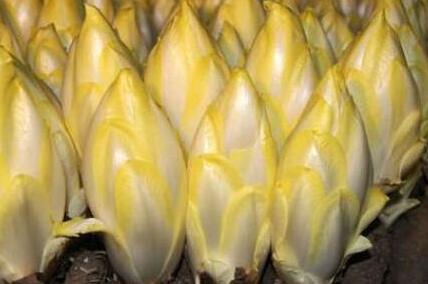
Golden endive, also known as chicory bud, belongs to the heading chicory family. After being introduced from Europe at a cost, it began to be cultivated in China. Currently, only rural areas in a few provinces nationwide are growing it, making it relatively rare. It is mainly supplied to airlines and some large supermarkets, and is regarded as a premium vegetable. Because it contains a compound found only in wild lettuce, it has high disease resistance, can reduce pest damage during cultivation, and requires little pesticide spraying, truly earning its reputation as a green, healthy and safe vegetable.
Golden endive is mainly used for cold dressed dishes. Besides its food value, it also has certain medicinal value, primarily in clearing the liver and promoting bile secretion, relieving hangovers and aiding weight loss. For women and people with high cholesterol, regular consumption can help lower body fat and cholesterol levels, which is beneficial to health.
At vegetable markets it generally sells for 5 yuan per jin, which makes golden endive relatively cheap compared with ordinary vegetables. Some farmers worry they cannot make money from it. In fact, growing this vegetable can generate income of around 6,000 yuan per mu. This is because it requires little pesticide spraying and takes a short time from harvest to market.
Nutritional composition
Chinese cabbage is rich in nutrients. In addition to carbohydrates, fats, proteins, crude fiber, calcium, phosphorus, iron, carotene, vitamin B1 and vitamin B2, it also contains abundant vitamins. Its vitamin C and vitamin B2 content is 5 times and 4 times higher than that of apples and pears respectively; its trace element zinc content is higher than that of meat, and it contains molybdenum, which can inhibit the absorption of nitrosamines. Among these, vitamin C can increase the body's resistance to infection and is used to prevent and treat scurvy, bleeding gums, and various acute and chronic infectious diseases. The cellulose contained in Chinese cabbage can enhance gastrointestinal peristalsis, reduce the retention time of feces in the body, and help digestion and excretion, thereby reducing the burden on the liver and kidneys and preventing the occurrence of various stomach diseases.
The pectin contained in Chinese cabbage can help the human body eliminate excess cholesterol. More importantly, Chinese cabbage also contains trace amounts of molybdenum, which can inhibit the formation and absorption of nitrosamines in the human body, playing a certain anti-cancer role. In addition, Chinese cabbage itself contains very few calories, so it will not cause calorie storage. Chinese cabbage also contains very little sodium, so it will not cause the body to retain excess water and can reduce the burden on the heart. Middle-aged and elderly people as well as obese people can also lose weight by eating more Chinese cabbage. Traditional Chinese medicine considers it slightly cold in nature and non-toxic, nourishing the stomach and promoting body fluid production, relieving irritability and quenching thirst, promoting urination and bowel movements, and clearing heat and detoxifying, making it an excellent cooling and purgative yet nourishing food. It can be used to treat colds, fever with thirst, bronchitis, cough, food stagnation, constipation, difficult urination, chilblains, etc. In short, Chinese cabbage is an excellent vegetable and medicine for supplementing nutrition, purifying the blood, clearing the intestines and stomach, preventing diseases, and promoting metabolism, all of which are beneficial to human health. It is suitable for the general public, 100 grams per serving.
Traditional Chinese medicine considers Chinese cabbage to be slightly cold in nature and sweet in taste, with functions of nourishing the stomach and promoting body fluid production, relieving irritability and quenching thirst, promoting urination and bowel movements, and clearing heat and detoxifying. It can improve constitutions such as yin deficiency with excessive fire and assist in the treatment of diseases such as heat strangury. It is an excellent vegetable for supplementing nutrition, purifying the blood, clearing the intestines and stomach, preventing diseases, and promoting metabolism, suitable for the general public. There has long been a folk saying: “Fish generates fire, meat generates phlegm, cabbage and tofu keep you safe and sound.”
Napa cabbage is rich in water content, reaching as high as 95%. In dry winter weather, eating more napa cabbage can effectively nourish yin and moisten dryness, as well as benefit the skin and enhance appearance. Napa cabbage is rich in vitamins, and eating it regularly can provide antioxidant and anti-aging effects. Napa cabbage also contains abundant minerals such as calcium, zinc and selenium. Its dietary fiber is also very rich, and regular consumption can lubricate the intestines and promote bowel movements, promote detoxification, and has a good effect on preventing colon cancer.
In addition to its rich nutrition, napa cabbage also has high medicinal value. Napa cabbage is slightly cold in nature and has the effects of clearing heat and relieving irritability, promoting urination and bowel movements, and nourishing the stomach and promoting body fluid production. It mainly treats heat in the lungs and stomach, restlessness and thirst, difficult urination, constipation, erysipelas, and carbuncles.
Its appearance is also quite peculiar. Seen from a distance, it resembles a spring bamboo shoot, with a somewhat pointed head and yellowish leaves tightly wrapped together. This spring bamboo shoot cabbage is mostly grown in Tianjin and other places, and local farmers call this cabbage “golden endive.”
Golden endive has strong adaptability to the environment. It not only has strong pest resistance but can also withstand low temperatures, and can be grown in both southern and northern China.
Vegetables refer to a category of plants or fungi that can be used for cooking and prepared into food. Vegetables are one of the essential foods in people's daily diet and are a type of green food. Vegetables can provide various vitamins, minerals and other nutrients necessary for the human body. According to statistics from the International Food and Agriculture Organization in 1990, 90% of the vitamin C and 60% of the vitamin A required by the human body come from vegetables. In addition, vegetables contain a variety of phytochemicals that are widely recognized as effective components for health. Currently, various substances in fruits and vegetables whose nutrients can effectively prevent chronic and degenerative diseases are being discovered through research.