How much is roselle (Roselle hibiscus) per jin? Weight-loss benefits and cultivation techniques
Roselle, also known as roselle hibiscus, Roselle, and mountain eggplant, among other names, is cultivated in Fujian, Taiwan, China, Guangdong, Hainan, Guangxi, and southern Yunnan in our country. So how much does roselle cost per jin? Does it have weight-loss benefits? How is it cultivated? Here is a summary for you:
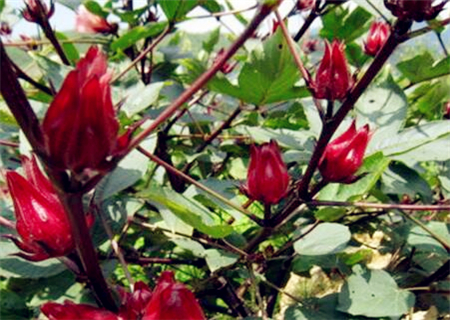
According to the latest prices on Alibaba, the current price of roselle is around 28 yuan per jin.
Roselle cultivation techniques
1. Soil requirements: Roselle is a plant that fears waterlogging but not drought. It is best to choose a sunny site with deep soil and good drainage, using sandy loam for planting. Apply 1000-1500 kg of farmyard manure per mu.
2. Planting density: According to soil fertility, plant spacing and row spacing: 0.6-0.8 cm, with 1300-1500 holes sown per mu being appropriate.
3. Sowing time: Soak the seeds for 12 hours before sowing. Sowing from mid-to-late April to early May is more suitable. For dibbling, put 3-4 seeds per hole; for raising seedlings in nutrient pots and transplanting, transplant promptly when the seedlings are 12-15 cm tall.
4. Field management: (1) Timely pest control: Seedlings emerge 5-7 days after sowing. Spray with 2.5% lambda-cyhalothrin at 50 ml/mu to control pests. Pesticides must be sprayed before flowering. Spraying pesticides is strictly prohibited during the flowering period, so as to avoid pesticide residue remaining in the calyx and affecting product quantity. (2) Timely thinning, final thinning, and pinching: When the seedlings grow to 10-15 cm, thinning should be carried out, removing weak and diseased seedlings, leaving only one healthy seedling per hole, and removing the rest to fill gaps in missing holes. Thinning should not be too late, otherwise it will affect seedling growth. When the seedlings are 80 cm tall, pinching should be carried out to promote strong branches, more flowers, and thicker calyces. (3) Fertilization and irrigation: Roselle does not need large amounts of water and fertilizer, but land with poor fertility should be appropriately topdressed. Apply compound fertilizer 20 kg, urea 8 kg, and zinc fertilizer 5 kg per mu by watering to promote seedling growth; before flowering, apply compound fertilizer 30 kg and potassium sulfate 20 kg per mu to meet the needs of flowering. (4) Intertillage, weeding, and drainage: When the plants are 30 cm tall, combine topdressing with earthing up, and carry out intertillage 2-3 times at the appropriate time. In summer, due to abundant rain, weeds grow densely, so weeds must be pulled by hand to avoid competing with roselle for fertilizer and water. During the rainy season, pay attention to digging ditches for drainage to prevent seedling death and root rot.
5. Harvesting and sun-drying: Roselle is mainly harvested for its calyces. Entering mid-to-late October, when the seeds inside the flower buds become hard or brown, cut off the fruiting branches, remove the calyx together with the fruit, and after shrinking, remove the calyx. When removing the calyx, a thin metal tube can be used to push out the round fruit. The calyx must remain intact and must not be split or peeled off. Roselle is acidic and very prone to mold, so it must be sun-dried promptly.
Benefits of drinking roselle hibiscus soaked in water
Roselle is roselle hibiscus, and it does have a weight-loss effect.
Promotes digestion
Roselle hibiscus has the function of strengthening the spleen and promoting digestion. Roselle hibiscus contains many plant acids, including malic acid, vitamin C, and many amino acids, which can stimulate the secretion of gastric acid, increase the acidity of the gastric environment, and promote food digestion. Drinking roselle hibiscus tea can help stimulate appetite and strengthen the spleen.
Clears heat and reduces internal fire
Roselle hibiscus has a heat-clearing effect. Roselle hibiscus is cooling in nature and has the effect of clearing heat and reducing internal fire. Consuming roselle hibiscus in summer is very beneficial for the throat, as it can clear heat and reduce internal fire.
Diuretic
Roselle hibiscus has a diuretic effect. The water extract of roselle hibiscus is weakly alkaline and has a diuretic effect. Roselle hibiscus is mostly consumed as tea, which also has a diuretic effect.
Promotes blood circulation and removes blood stasis
Roselle hibiscus has the effect of promoting blood circulation. Roselle hibiscus contains many minerals and a large amount of iron. Iron is a major component in the synthesis of human red blood cells, can promote blood circulation, accelerate blood metabolism, and has the effect of promoting blood circulation and removing blood stasis. Drinking roselle hibiscus tea also greatly promotes the hematopoietic function of bone marrow. It is also a very good choice for patients with anemia.
Beautifies and removes spots
Roselle hibiscus also has the effect of beautifying the skin and removing spots. Roselle hibiscus contains a large amount of protein, vitamin A, vitamin C, malic acid, and other components, and has a certain antioxidant effect. It oxidizes and eliminates pigment under the skin, can eliminate spots, and beautify and nourish the skin. Women who drink roselle hibiscus tea regularly can make their skin better.
Protects and supports the liver
Roselle hibiscus has the effect of protecting and supporting the liver. The glutathione and anthocyanins contained in roselle hibiscus can protect the liver and enhance the detoxification function of liver cells.
Lowers blood pressure
Roselle hibiscus has a certain blood pressure-lowering effect. Roselle hibiscus contains a variety of organic acids, which can lower blood pressure and reduce swelling through diuresis. People with high blood pressure who often drink roselle hibiscus tea are doing something very healthy for their bodies.
Anti-cancer
The anti-cancer effect of roselle hibiscus is also very strong. Roselle hibiscus contains protocatechuic acid, anthocyanins, roselle polyphenols, and other anti-cancer components, which can inhibit oxidation in the body and inhibit the appearance and growth of cancerous cells in the body. Therefore, roselle hibiscus is a good choice for health preservation.
Suitable groups:
Generally, all people can consume it, and it is suitable for people with high blood pressure and people who stay up late.
Brewing method: Take one large spoonful of roselle hibiscus and put it into a pot, then pour in boiling water. Just steep for 5 minutes and it is ready to enjoy. It is sweet and tasty even without honey or granulated sugar.